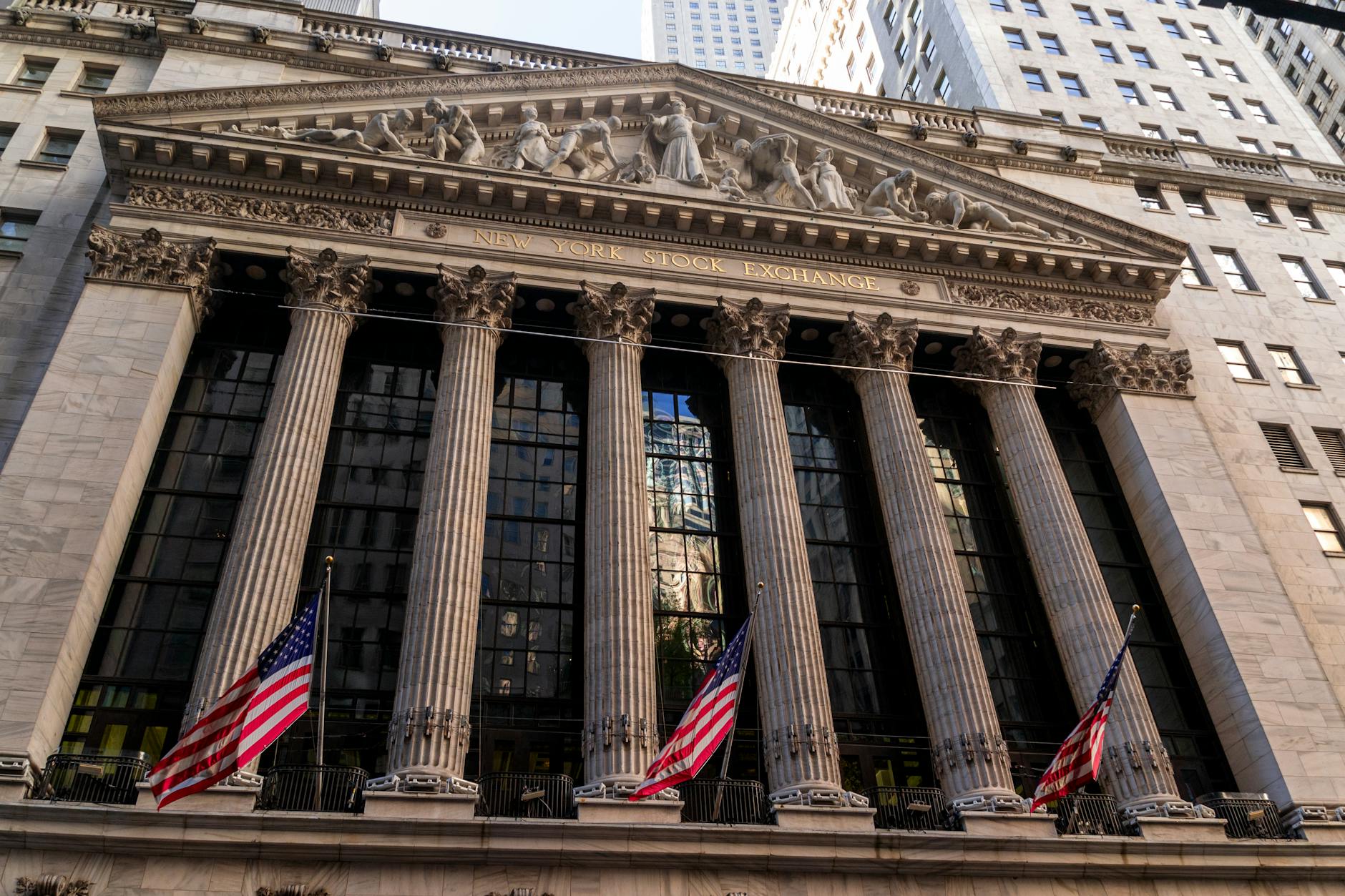
A market that keeps climbing while the ground shifts
Wall Street has entered a familiar and disorienting phase: asset prices are rising even as the economic and geopolitical picture grows harder to read. The S&P 500 has pushed to fresh highs, supported by a broader risk rally that lifted the Nasdaq and helped pull down Treasury yields after reports of a tentative U.S.-Iran ceasefire framework and a possible extension of the truce. The move was typical of this market’s reflexes—when uncertainty briefly recedes, investors rush back into equities, especially the largest technology and growth names.
Yet the larger story is not simply that stocks are up. It is that the market’s ascent has become increasingly dependent on a small set of companies and on a belief that the Federal Reserve will remain on hold for longer, even as inflation has reaccelerated and first-quarter GDP was revised down. That combination—records in the index, caution in the economy—has become the defining paradox of the spring.[2][3]
In other words, Wall Street is not behaving as if the economy is healthy in the broad, even-handed sense. It is behaving as if a few large firms can outgrow everything around them.
The index is rising, but the leadership is narrow
The recent advance has had all the hallmarks of a late-cycle market led by megacap platforms, semiconductor names and other companies with balance-sheet strength, pricing power and exposure to secular capital spending rather than the consumer cycle. Bloomberg’s market coverage described the S&P 500 as climbing to another record high while the Nasdaq gained more sharply, with the 10-year Treasury yield edging lower in the same session.[1][3] Those moves are not unusual in isolation. What matters is the pattern: equities are being bid higher partly because investors see less immediate geopolitical risk, but also because they continue to crowd into the same limited group of winners.
That crowding has not gone unnoticed. The index’s gains have been accompanied by outsized moves in names tied to artificial intelligence infrastructure, cloud software and enterprise hardware. Dell’s latest earnings were described by Bloomberg as a “massive upside” surprise, with the shares surging nearly 40% and analysts scrambling to keep up.[3] That kind of reaction reveals more than enthusiasm for one company. It suggests a market desperate for proof that the enormous capital expenditure cycle behind AI is still translating into real demand and real profits.
At the same time, not every growth story has been rewarded equally. MongoDB, after a harsh selloff, reportedly reversed sharply in after-hours trading, underscoring how punishing the market can be when expectations are stretched and how quickly sentiment can turn when a company beats just enough to restore faith.[1] In this environment, earnings are less a scorecard than a referendum on whether the prevailing narrative still holds.
Earnings season has become a stress test for credibility
The latest reporting season has reinforced a stark division in corporate America: firms with strong AI exposure, sturdy margins or obvious pricing power are being treated as strategic assets, while everything else is being valued as if growth has become optional. That helps explain why individual earnings releases have been producing dramatic after-hours moves rather than the modest adjustments one associates with a stable market.
Bloomberg’s coverage cited a number of extreme reactions, from sharp declines after earnings despite beats, to violent rebounds once management commentary reassured investors about future demand.[1] The message is not that earnings are weak across the board. It is that valuations are now so elevated in some sectors that merely “good” is not enough; companies must outperform with conviction, and preferably tell a story that makes next year look even better than this one.
This dynamic is especially pronounced in technology. The market has awarded a premium to anything that can plausibly be linked to the build-out of AI data centers, networking gear, storage, chips or enterprise software. Dell’s surge was not just a one-day anomaly; it was a sign that investors still believe the capital-spending cycle is broadening beyond the obvious chip leaders.[3] But the same logic can turn ruthless in reverse. If buyers conclude that infrastructure demand is peaking, or that the cycle has been prematurely priced in, the selloff can be violent.
That asymmetry explains why the S&P 500 can keep making records even as the average listed company faces a less forgiving reality. The index is not the economy. It is a weighted average of corporate power, and the power is concentrated.
Layoffs remain a feature, not a footnote
The broader corporate backdrop is still shaped by cost-cutting. Layoffs have become a recurring tool across sectors—from technology to finance to consumer-facing businesses—as management teams respond to slower top-line growth, a more expensive capital environment and the pressure to preserve margins. The fact that such restructuring continues even as indices set records speaks to an uncomfortable truth: public markets are rewarding discipline and scale, not necessarily broad-based expansion.
In the current cycle, layoffs often serve two purposes at once. They are a signal to investors that executives are taking costs seriously, and they are a defensive move against a macro environment that remains uncertain despite the market’s risk-on mood. The market may be celebrating a temporary easing in geopolitical tensions, but businesses are still making plans for a world in which inflation remains sticky, demand softens and the Federal Reserve does not deliver the quick relief that rate-sensitive sectors have been hoping for.[2]
That tension is visible in consumer data as well. A separate Bloomberg segment highlighted new government figures showing Americans saving less, with one analyst describing it as less a confidence play than a “desperation play.”[4] Whether or not that framing is too stark, the underlying signal is clear: households are under strain. When savings rates fall because people are trying to keep up with higher costs, it is hard to argue that the economy’s foundation is as strong as the equity market suggests.
The Fed is still the hinge on which everything turns
For all the market chatter about geopolitics, it is still the Federal Reserve that ultimately anchors valuation. The latest inflation data, as discussed on Australian and Bloomberg market coverage, showed price pressures accelerating at the fastest pace in three years in April, driven by higher energy costs tied to the Iran conflict.[2] At the same time, first-quarter GDP was revised down to a 1.6% annualized increase, a reminder that growth is slowing even as prices rise.[2]
That is not the kind of backdrop that encourages policymakers to ease. Instead, it supports the view that rates will remain higher for longer. Bloomberg reporting suggested economists were moving toward the expectation that the Fed could hold rates unchanged well into next year.[2] For equities, the implication is uncomfortable but manageable so long as growth continues to justify premium multiples. For the real economy, the implication is harsher: borrowing stays expensive, credit-sensitive businesses remain cautious and corporate America is incentivized to keep trimming.
Markets have grown accustomed to treating every sign of lower Treasury yields as evidence that relief is coming. But yields can fall for several reasons, not all of them benign. In this case, a decline in the 10-year yield followed investors’ embrace of risk after the ceasefire reports and reflected some mix of lower geopolitical fear and slower-growth assumptions.[1][2] That is a subtle but important distinction. A market can cheer falling yields for a day and still be signaling that the economy is losing momentum.
M&A is returning, but not with the old exuberance
Mergers and acquisitions have not disappeared, but they remain selective. The market environment is more conducive to strategic deals than to broad animal spirits: large companies with abundant cash, durable earnings and complementary assets are more likely to transact than highly levered buyers chasing growth at any price. In a world of elevated financing costs and volatile policy expectations, boardrooms are inclined to treat M&A as a tool for consolidation, not a declaration of confidence.
That matters because merger activity often functions as a real-time referendum on how executives read the cycle. When dealmaking is frenetic, it usually means management teams believe the cost of waiting is greater than the cost of overpaying. When it is cautious, it means leaders are still trying to understand whether the next six months will bring relief or another shock. Right now, the latter instinct dominates.
Wall Street’s rally has therefore not translated into a wave of euphoric takeover speculation. Instead, it has produced a market that is willing to pay up for certainty and punish ambiguity. Firms that can credibly claim scale advantages, recurring revenue or exposure to long-duration growth themes attract interest; everything else gets scrutinized for break-up value, cost savings or strategic optionality. The result is an M&A market that feels less like a boom than a sorting mechanism.
A confident market with a defensive psychology
The most revealing feature of the present moment is that investors are acting confident while remaining deeply defensive. They are buying records in the S&P 500, but they are also rotating into a narrow set of defensive growth and quality names, watching Treasury yields for confirmation and treating each macro release as a test of whether the rally is sustainable. The mood is not euphoria. It is discipline dressed up as optimism.
That helps explain why the market can absorb bad news as long as it is not catastrophic. Slower GDP growth can be interpreted as a reason for eventual Fed easing. Higher inflation can be blamed on temporary energy shocks. A geopolitical truce, even one that remains tentative, can quickly justify a risk-on session. Every data point is pulled into the same logic: the market wants to believe that earnings growth will outrun policy restraint.
But the economy is not offering a clean story. Households are under pressure, firms are cutting costs, inflation is reasserting itself, and the central bank has little incentive to rush. The great irony of this market is that the more it rises, the more it depends on a narrow bet: that corporate America’s strongest firms can keep compounding fast enough to overpower everything else.
If they can, the rally may still have room to run. If they cannot, the present calm will look less like a new era of confidence and more like a final burst of concentration before the market is forced to broaden, or break.