The center of gravity has shifted east
For decades, Western cultural capitals imagined Asia as a destination for exports: a place that made things, not tastes. That hierarchy now feels obsolete. Japanese anime and manga, South Korean pop and television, and the wider ecosystem of Asian cinema and street culture have moved from niche enthusiasm to the mainstream grammar of global youth culture. What used to be a subculture is now a market, a mood, and, increasingly, a language of identity.
Japan remains the most interesting paradox in that transformation. It is at once the guardian of an older cultural model—meticulous craft, serial storytelling, obsessive fandom—and one of the most future-facing media economies in the world. Manga’s growth is now being driven by digital platforms and cross-media adaptation, with Asia-Pacific, led by Japan, accounting for more than 62% of the global manga market share in 2025, according to one market analysis. The same forces that once spread anime through television and physical volumes now accelerate it through streaming, mobile reading, and global fandom infrastructure.
That matters because the cultural story of Asia is no longer merely about diffusion. It is about convergence. Anime borrows from cinema. Manga borrows from video games. K-pop borrows from fashion, internet culture, and performance art. K-drama borrows from melodrama, serialized pacing, and the prestige aesthetics of global television. Tokyo, Seoul, and the film cities of East and Southeast Asia increasingly function less like separate ecosystems than like connected laboratories of attention.
Anime and manga: from subculture to operating system
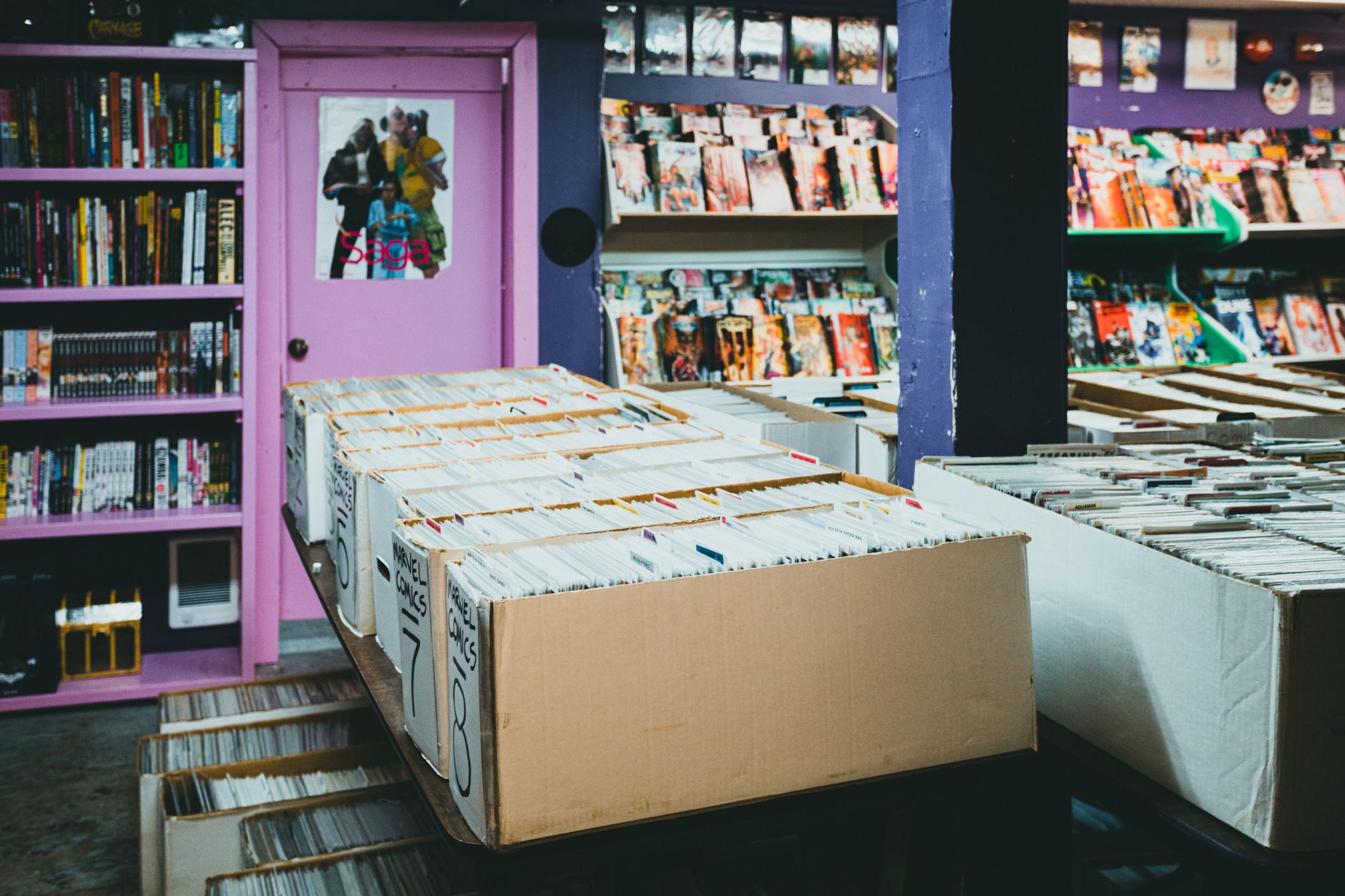
Anime and manga have become more than entertainment; they are now a structural layer in the global economy of imagination. A recent market forecast projected the global manga market to rise from about $13.95 billion in 2025 to $73.01 billion by 2035, an extraordinary expansion that reflects digital consumption, franchise development, and the rising international demand for Japanese pop culture. The numbers matter, but the deeper story is cultural. Manga is no longer simply a printed medium. It is an intellectual property engine, a template for platform growth, and a narrative reservoir that feeds animation, games, collectibles, fashion collaborations, and live events.
That helps explain why contemporary anime is often designed less as a standalone work than as a node in a larger system. The hit series is now the doorway to merchandise, pop-up cafes, exhibitions, stage adaptations, and streaming renewals. This is not a sign of artistic decline. It is a sign that Japanese popular culture has learned to monetize attachment with unusual sophistication. The industry understands that fandom today is not passive consumption but repeated participation.
And yet anime still carries an aesthetic seriousness often underestimated by outsiders. Its range is broader than the clichés of giant robots and sword-wielding heroes. The medium can be intimate, philosophical, brutal, comic, and deeply literary. It treats genre not as a cage but as an instrument. In that sense, anime is one of the most flexible storytelling systems ever built, able to hold childhood wonder, adult anxiety, and national memory in the same frame.
There is also a notable retro turn. New cycles of enthusiasm increasingly draw from older properties, revived styles, and nostalgia-driven collector culture. Character goods, anniversary editions, remasters, and exhibition circuits all suggest a market that does not merely chase novelty; it mines its own archive. In Japan, the past is not discarded. It is reissued, repackaged, and returned to circulation with new audiences attached.
K-pop and K-drama turned fandom into infrastructure
If Japan built the template for transmedia fandom, South Korea industrialized it. K-pop and K-drama have transformed emotional intensity into a global business model. They succeed not only because they are polished, but because they are engineered for repetition: songs with hooks designed for streaming, drama plots calibrated for binge viewing, and stars whose public personas are extended through social media, behind-the-scenes content, and fan interaction.
K-pop’s achievement is often described as musical, but its real power lies in organization. It fuses performance, fashion, choreography, digital marketing, and community management into a single exportable system. Fan labor amplifies it further. Online communities subtitle, translate, clip, rank, and circulate content with a speed that traditional media could never match. The result is not merely popularity but a form of distributed promotion in which the audience becomes part of the production machine.
K-dramas have achieved something similar in television. Their appeal is not limited to a single genre or demographic. They combine emotional clarity with serial structure, aesthetic polish with social melodrama, and local specificity with universal legibility. They can feel both deeply Korean and instantly exportable. This balance is difficult to manufacture, which is why South Korea’s screen culture has become such a formidable competitor to older Western models of prestige television.
What K-pop and K-drama reveal is that Asia’s cultural rise is not accidental. It rests on the deliberate building of ecosystems: talent pipelines, training systems, platform strategy, and a willingness to think across media. The lesson for other industries is uncomfortable. In the age of global attention, culture is not simply made; it is managed.
Asian cinema now defines the prestige conversation
Asian cinema has undergone its own quiet revolution. For much of the late twentieth century, East Asian film was often framed in the West as either art-house exception or festival discovery. That framing is now too small. Directors across Japan, South Korea, China, Taiwan, Thailand, and India have reshaped the terms of global film culture, not merely by winning awards but by changing audience expectations about genre, emotion, and visual style.
The international success of Asian filmmakers has widened what prestige can look like. Thrillers can be philosophical. Family dramas can be politically radical. Horror can be social critique. Comedy can carry historical weight. The result is a cinema that often feels more alert to the contradictions of modern life than its Western counterpart, perhaps because many Asian societies have had to negotiate rapid modernization, technological saturation, and social stratification at dizzying speed.
Asian cinema also has a strategic advantage: it is comfortable with hybridity. It moves between arthouse and commercial, local and global, intimate and spectacular. That flexibility has become essential in a fragmented media landscape. Where older film industries often tried to segregate “quality” from “popular,” Asian film cultures have shown that those categories can be mixed without embarrassment.
Tokyo street culture: a city as mood board
No city has done more to turn cultural density into global style than Tokyo. Its street culture is not a single aesthetic but a constant negotiation between discipline and improvisation. Fashion districts, record shops, convenience stores, capsule hotels, gaming arcades, themed cafes, and late-night ramen counters collectively produce a visual language that outsiders often read as futurism. In fact, it is closer to urban collage.
Tokyo’s appeal lies in how many subcultures can coexist without being fully absorbed. Harajuku still signals experimentation, Shibuya still stages youth culture as spectacle, Akihabara still performs the circuit between consumer electronics and fan devotion, and neighborhood streets still preserve smaller forms of local life. The city’s genius is its ability to layer the commercial and the intimate so densely that they become difficult to separate.
That layering has become especially powerful in the age of social media. Tokyo is one of the world’s great image-generating cities because it seems to contain multiple time zones at once: retro game culture, hypermodern retail, postwar nostalgia, and near-future design. The city is endlessly photographed, but it is also endlessly reinterpreted. A snack, a subway platform, a vending machine, a corner store, a uniform, or a neon alley can become an aesthetic statement once filtered through global fandom.
Yet the city’s cultural energy is not just visual. It is economic. Character goods, pop-up events, anime pilgrimages, and collaborative retail campaigns all turn urban space into an extension of media property. The city itself becomes merchandise and stage set. That may sound cynical, but it also explains why Tokyo remains so magnetically alive: it understands that modern culture is experienced in fragments, and it builds environments that reward wandering.
Technology culture is the hidden engine
Behind the glamour of pop culture sits something less visible but more decisive: technology culture. The spread of digital reading, streaming platforms, mobile fandom, virtual events, AI-assisted localization, and e-commerce has changed not just how Asian culture travels, but how it is made. Manga’s digital growth is one obvious sign. Another is the way anime, music, and drama are increasingly designed for circulation across screens, not for a single medium.
Japan in particular has often been caricatured as technologically conservative, even in a region famed for innovation. But that stereotype misses the real picture. The country’s consumer technology culture is less about headline-breaking disruption than about design discipline, miniaturization, usability, and the subtle integration of tech into everyday life. That sensibility has fed its cultural industries, where technology is rarely presented as abstract futurism and more often as a practical extension of desire, convenience, and play.
At the same time, the global digital environment has intensified competition. Streaming platforms now fight over anime rights. Publishers adapt quickly to online readership. Fan communities expect immediate access, multilingual releases, and a constant flow of new material. The result is a culture of acceleration that can be profitable, but also exhausting. When every franchise must become a universe, and every audience a community, attention itself becomes the scarce resource.
Still, technology has also democratized access. A teenager in Jakarta, Manila, Sydney, or Mumbai can now participate in the same fandom universe as a college student in Osaka or Los Angeles. That global simultaneity is one of the defining cultural facts of the 2020s. Asian culture is no longer something encountered after translation. It is often consumed first, and translated later.
The new Asia is not one thing
It would be a mistake to flatten all this into a single story of “Asian soft power.” The region’s cultures are not interchangeable, and their success comes from difference as much as commonality. Japanese anime is not K-pop; Korean drama is not Japanese manga; Taiwanese cinema is not Thai horror. What unites them is not style but strategic fluency: each has learned how to move through a global attention economy without surrendering its local textures.
That may be Asia’s most important cultural lesson to the world. The future does not belong only to those who can dominate platforms or imitate Hollywood. It belongs to those who can make specificity travel. Japan’s manga, Korea’s music and drama, and the region’s cinematic and street cultures succeed because they are deeply particular and broadly legible at the same time.
In that sense, the world’s cultural center has not moved east so much as become multipolar. But if the old map has any remaining clarity, it is this: Tokyo still knows how to make the present look like the future, and Asia’s pop cultures have become the most persuasive proof that the future is often built from carefully curated memories.