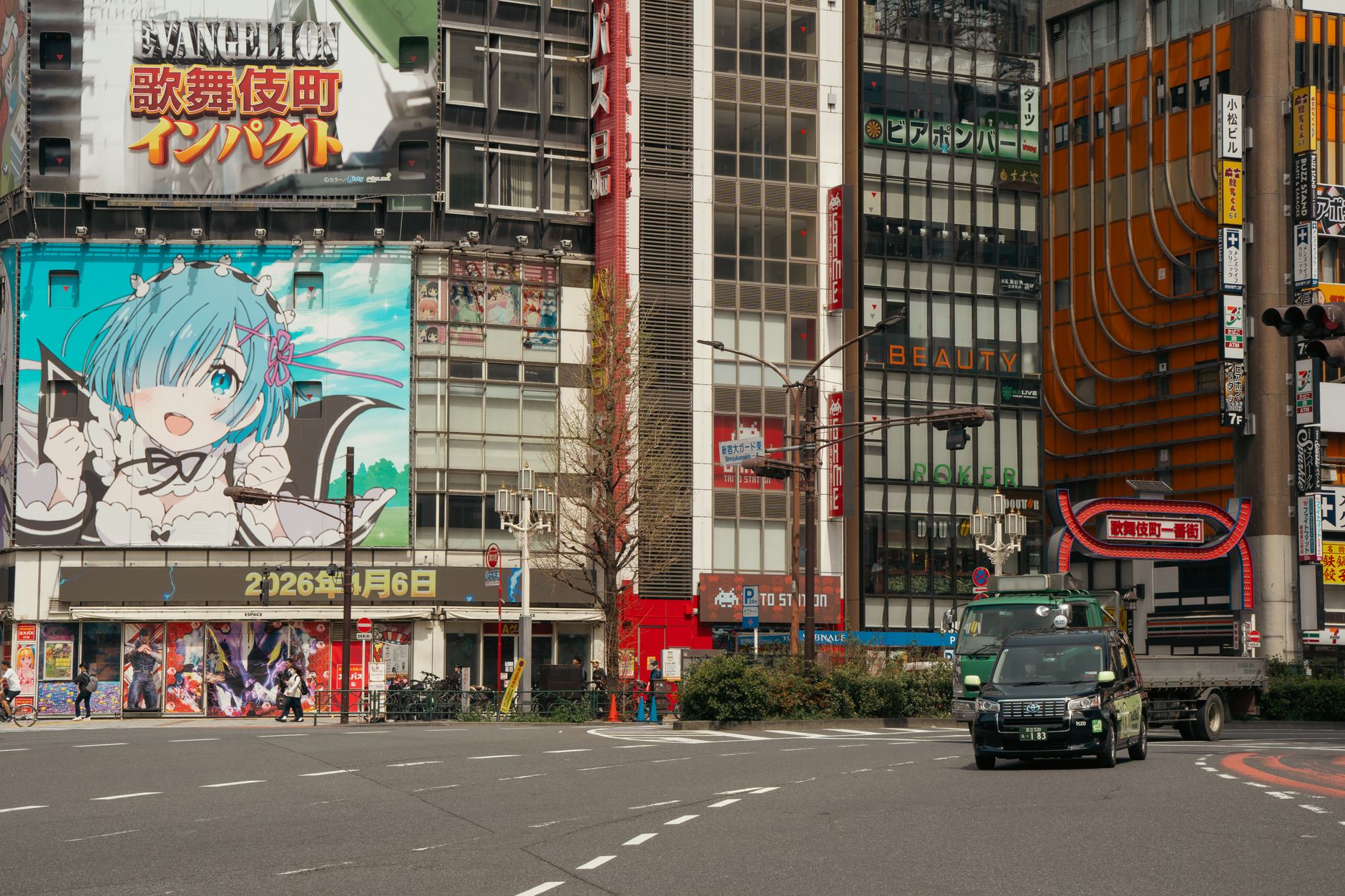
Asia’s most potent cultural exports no longer ask to be admired from afar. They are consumed, remixed, dressed, quoted and lived in. Japanese anime and manga, Korean pop and television, Asian cinema and Tokyo’s endlessly mutable street cultures have become the grammar of a global youth vernacular—one that is increasingly defined not by Hollywood or Paris, but by the creative industries of East Asia.
This transformation is often described as “soft power,” but the phrase can make the process sound polite, even decorative. It is nothing of the sort. What is taking place is a restructuring of aspiration. For a generation raised online, Asia is not merely a place on the map; it is a style system, a narrative engine and a technological aesthetic. The influence is visible in streaming habits, fashion, meme culture, game design, cinematic language and the way cities imagine their own futures.
Japan’s role in this shift remains foundational. Anime and manga, once treated in the West as specialist interests, became global through a combination of distinctive visual language, serial storytelling and the Internet’s ability to collapse geography. Japanese pop culture’s rise abroad was accelerated by the spread of online communities, which helped move otaku culture from the margins to a worldwide audience.[1] That evolution mattered because anime and manga offered something the increasingly fragmented media landscape could not: long-form worlds with emotional continuity, formal experimentation and a willingness to treat young audiences as capable of handling ambiguity.
Anime’s appeal has never rested on childishness. It rests on density. The medium can hold irony, melancholy, futurism and melodrama within the same frame. It can move from intimate schoolyard realism to cosmic violence without breaking its own logic. That elasticity explains why it travels so well. As Japanese culture entered global circulation, anime was not simply exported; it was translated into a new mode of cultural literacy. Entire communities learned to read Japan through character archetypes, studio styles, openings, endings and visual shorthand. Manga, with its pace and intimacy, deepened that relationship by training readers to inhabit pacing as much as plot.
The result is a peculiar form of influence: Japanese culture has become both hyper-specific and universally legible. Tokyo street fashion, capsule hotels, convenience-store aesthetics, toy culture and videogame imagery all carry local meaning, yet they are understood internationally as emblems of a certain kind of modern life—compressed, playful, efficient, and faintly melancholic. The city itself has become a narrative object. Harajuku and Shibuya are not just districts; they are visual arguments about self-invention, youth and crowd behavior.
Tokyo street culture is especially revealing because it shows how tightly consumption and identity have fused. Fashion in the Japanese capital has long functioned less as status signaling than as improvisation, a way of composing the self from fragments. The appeal for outsiders is not only aesthetic. It is philosophical. In an era when many young people feel trapped between inherited categories and algorithmic sameness, Tokyo offers the fantasy of multiplicity: one can be polished and subversive, nostalgic and futuristic, anonymous and hyper-visible all at once.
That tension between individuality and mass circulation is central to Asia’s cultural dominance. Modern fandom is built on it. A teenager in São Paulo, Manila or Manchester can stream a drama, imitate a look, collect merchandise, post fan art, learn phrases, and enter an ecosystem that stretches across borders without ever feeling abstract. Japanese culture pioneered much of this pattern, but South Korea industrialized it with extraordinary speed. K-pop and K-dramas did not merely enter the global market; they rewrote the logic of export by combining tightly managed talent systems, digitally native promotion and relentless audience feedback.
K-pop’s success lies in its total design. Songs are engineered for replay value, choreography for virality, visuals for screenshotting and group identity for endless sorting by fans. In this respect, K-pop is not merely music. It is a media architecture. It borrows from Western pop, but it packages the borrowings with a level of precision that makes the product feel both familiar and new. The fandom is equally central. The industry understands that modern culture is not passively received; it is co-produced by fans who translate, archive, subtitle, defend and circulate content at speed. The audience is not an afterthought. It is the engine.
K-dramas extend this logic into narrative television. Their appeal is not simply polish, though they are often beautifully produced. It is structure. K-dramas are efficient at establishing stakes, sustaining emotional tension and delivering catharsis with a pace that Western prestige television can sometimes avoid. Their tone can move rapidly from comedy to grief to romance, often within the same episode. That tonal agility mirrors the experience of digital life itself, in which intimacy, spectacle and crisis coexist on the same screen. The global rise of K-dramas reveals a deeper truth about contemporary storytelling: audiences are no longer loyal to one center of production if another can offer sharper emotional calibration.
Asian cinema has undergone a parallel journey, though its path has been less uniform. Japanese auteurs, Korean thrillers, Hong Kong action, Taiwanese introspection and the region’s growing festival ecosystem have long shaped global film culture. But the current moment is different. Asian cinema is no longer viewed solely through the lens of art-house discovery. It increasingly informs mainstream sensibilities, from genre pacing to visual composition. Directors and streaming platforms now mine Asian film not only for prestige but for technique: the choreography of suspense, the choreography of the body, the ability to make a corridor feel like a moral landscape.
This is one reason the influence of works from the region has expanded beyond fandom into mainstream production. The global success of Asian storytelling has made executives, streamers and advertisers more alert to the commercial value of specificity. What once looked “too local” now reads as distinctive. Audiences are tired of generic global content and increasingly responsive to worlds that feel rooted in a place, a cuisine, a social code or a slang register. Asia’s media industries are unusually skilled at turning such specificity into export value.
Technology culture is the hidden infrastructure behind all of this. Japanese and Korean cultural influence would be impossible without the devices, platforms and interfaces that carry them. The smartphone made transnational fandom habitual; streaming made it frictionless; social media made it social capital. The spread of Japanese pop culture, in particular, was helped by the Internet’s role in converting niche taste into networked belonging.[1] Technology did not simply distribute content. It changed the shape of desire. Fans could now watch, pause, clip, caption, compare and memorialize. Culture became continuous, portable and measurable.
That technological layer helps explain why Asia’s cultural exports feel so contemporary. They do not merely represent modernity; they are built out of it. The neon palette, the digital choreography, the modular identities, the highly optimized production systems—all of them reflect societies that have lived with high-density urbanism and intense technological mediation for decades. What the rest of the world now experiences as novelty is often the aesthetic residue of everyday life in East Asia.
The broader consequence is that Asia has become central to how the world performs youthfulness. Western youth culture once marketed rebellion through countercultural rupture. The Asia-driven model is different: it offers immersion, collectability and aesthetic totality. You do not simply like an anime, wear a K-pop-inspired look, or watch a Korean drama. You enter a layered field of references in which costume, soundtrack, digital community and personal identity reinforce one another. Cultural participation has become less about allegiance to a nation than about fluency in a set of transnational signs.
“What once looked ‘too local’ now reads as distinctive.”
There is, of course, an irony in this success. Much of what is celebrated globally as fresh Asian cool was produced under highly disciplined industrial conditions. K-pop is famous for its perfectionism, but that perfection can rely on punishing training regimes. Anime’s imaginative freedom often rests on precarious labor. The beauty of these systems should not obscure their pressures. Global admiration tends to flatten the difficult realities of creative work, especially in industries that have learned to convert strain into aesthetic sheen.
And yet the achievement remains extraordinary. Asian cultural industries have succeeded because they understood earlier than most that in the 21st century, power does not flow only through armies, trade balances or diplomacy. It flows through habit. It lives in what people watch after dinner, what they imitate on video, what they pin to a mood board, what they discuss in group chats, what they buy in capsule form, and what they carry with them into the architecture of their own self-image.
Japan’s anime and manga established the template: immersive worlds, emotionally serious fantasy, and a visual language that could leap borders without losing its texture. Korea then demonstrated how to industrialize intimacy at scale, turning pop and drama into global subscription products and fan-driven rituals. Asian cinema supplied the prestige and the grammar of form. Tokyo street culture supplied the dream of style as self-authorship. Technology supplied the delivery system and, in many ways, the audience itself.
The story of Asian culture in the world today is therefore not simply one of diffusion. It is one of translation under conditions of digital abundance. These cultural forms do not replace one another. They overlap, cross-pollinate and intensify each other. An anime aesthetic can inform fashion; K-pop can shape dance trends; a Korean drama can send viewers searching for Japanese stationery, Taiwanese coffee shops or Hong Kong film retrospectives; a Tokyo district can become a template for retail design in London or Los Angeles. Influence now operates by accumulation.
That may be the deepest change of all. Asia is no longer treated as an external source of intriguing content. It has become one of the world’s principal generators of cultural reality. The center of gravity has shifted—not entirely, not permanently, and not without contest—but far enough that anyone trying to understand contemporary taste, especially among the young, must begin in the East Asian metropolis, the streaming platform, the fan forum and the smartphone screen.