The month when the industry reveals itself
June is usually when the video-game business stops speaking in abstractions and starts speaking in dates. This year’s slate is especially revealing. The month is crowded with new releases across PlayStation, Xbox, Nintendo, and PC, but it is not the profile of those releases that matters most; it is the pattern. The industry is leaning on sequels, remakes, ports, and recognizable brands at the very moment it is trying to persuade investors and players that it still has room for surprise.
The most striking feature of the June calendar is not abundance but calibration. Publishers are not merely filling a summer gap; they are testing which kinds of games can still break through in a market where attention is fragmented, budgets are swollen, and the cost of failure has become punishing. Major titles arriving this month include the Xbox and Switch 2 debut of Final Fantasy VII Rebirth, the return of Star Fox on Switch 2, EA’s new UFC 26, the colorful survival game Solarpunk, the tactical shooter Hell Let Loose: Vietnam, and the long-anticipated Gothic 1 Remake. The result is less a parade of novelty than a map of where the industry believes demand still lives.
PlayStation’s showcase: prestige, ports, and the slow return of confidence
PlayStation entered the month with a State of Play that reflected Sony’s current identity: part luxury brand, part platform holder, part curator of prestige projects. The strongest signal was not one announcement but the breadth of the slate. Sony continues to work the premium end of the market, where cinematic production values and recognizable franchises still command attention, but it is also leaning into third-party partnerships and platform exclusives that can sustain the ecosystem without requiring every game to be a tentpole of its own.
The headline-grabber was Marvel’s Wolverine, set for a September 15 release on PS5, a reminder that Sony still knows the market value of a comic-book property reframed through big-budget action. Also notable were Dune Awakening arriving on PS5 on September 22, No Rest for the Wicked coming to PS5 in October, and a wave of other titles that reinforce the sense that Sony’s platform strategy is increasingly about selective prestige rather than sheer volume. This is not a retreat; it is a sorting mechanism. The company appears determined to keep PlayStation associated with quality and event status while relying on the wider ecosystem for breadth.
That approach makes sense in a market where even successful games can take years to pay for themselves. The logic of the current cycle is ruthless: if a publisher cannot guarantee blockbuster scale, it seeks lower-risk familiarity. Sony’s curation of known quantities therefore reads as both defensive and smart. It is easier to build excitement around a trusted intellectual property than to ask players to gamble on a new universe at a time when everyone is budgeting their entertainment time as carefully as their money.
Xbox and the new economics of platform identity
Xbox’s presence in the June conversation is more complicated, because Microsoft has spent years trying to redefine what Xbox even means. The company still sells hardware, but the platform has become increasingly elastic: a brand that stretches across consoles, PC, cloud services, and now, in practice, a broader distribution strategy than the old console war ever imagined. June’s release mix fits that reality. Xbox Series remains relevant, but so does PC, and the overlap between the two has become part of the company’s business model rather than a problem to solve.
Final Fantasy VII Rebirth arriving on Xbox Series is significant less because of the game itself than because of what it represents: the continuing erosion of once-hard exclusivity lines. A franchise that long felt structurally aligned with PlayStation’s identity is now moving more freely across platforms, and that movement reflects a market where publishers need every possible audience. Xbox’s own first-party strength continues to matter, but it increasingly sits inside a larger strategic picture in which Microsoft wants software reach more than platform purity.
That is why Xbox’s best long-term advantage may be its willingness to accept that the old model is ending. Hardware remains important, but the larger business logic is about subscription relationships, cross-platform discoverability, and ensuring that major releases can find the biggest possible audience. In that sense, the platform’s future is tied not to one machine but to a distribution philosophy: games first, box second.
Nintendo’s Switch 2 moment is finally becoming concrete
If there is a single hardware story worth watching this month, it is Nintendo Switch 2. The platform’s launch-era identity is beginning to sharpen, and June’s releases suggest that Nintendo intends to use the new machine the same way it has used every successful platform: by combining nostalgia, first-party weirdness, and selective third-party support.
Star Fox coming to Switch 2 is the kind of announcement Nintendo makes when it wants the room to feel both reassured and curious. It is an appeal to memory, but also to scarcity; the company knows that dormant franchises acquire symbolic value precisely because they have been absent. A revived classic helps define a new platform more quickly than a blank slate can. The same is true, in a different register, of Switch 2 support for Solarpunk and other cross-platform titles. Nintendo wants the machine to feel new, but not isolated.
The most important thing about Switch 2, however, is not the software calendar itself but what it represents for the market. A successful Nintendo hardware cycle can reshape the broader release landscape, because publishers suddenly need to decide whether a title should be built for maximum technological ambition or for a wider, more flexible audience. If Switch 2 gains traction quickly, the industry will once again have to design with Nintendo in mind rather than simply adapting after the fact. That matters not just for sales, but for creative priorities.
PC gaming remains the industry’s laboratory and pressure valve
PC gaming continues to act as the industry’s release valve: the place where experiments, early access launches, and technically ambitious projects can coexist with the biggest multiplatform releases. June’s PC slate underscores how central that segment has become to the entire business. It is where new IP can still get a hearing, but also where old franchises can be rebuilt with a lower barrier to entry than a full console-exclusive rollout would require.
That dynamic helps explain the attention around titles such as Gothic 1 Remake and Hell Let Loose: Vietnam. Remakes are not merely nostalgia plays; they are financial instruments. They reduce market uncertainty by attaching a new production budget to a known commercial memory. In a healthier industry, that strategy would coexist more comfortably with riskier original work. In today’s market, it often crowds original work out. The problem is not that remakes are inherently bad. The problem is that they are becoming the default language of ambition.
There is still room for novelty, of course. Solarpunk, with its bright, resource-building premise, and Witchspire, a co-op witch adventure, both suggest that smaller or mid-scale ideas can still attract serious attention when they are clearly pitched and visually distinct. But even these projects are being marketed inside a system that rewards familiarity. The industry is asking players to try something new while surrounding that new thing with enough recognizable structure to make it feel safe.
Esports and the uneasy search for relevance
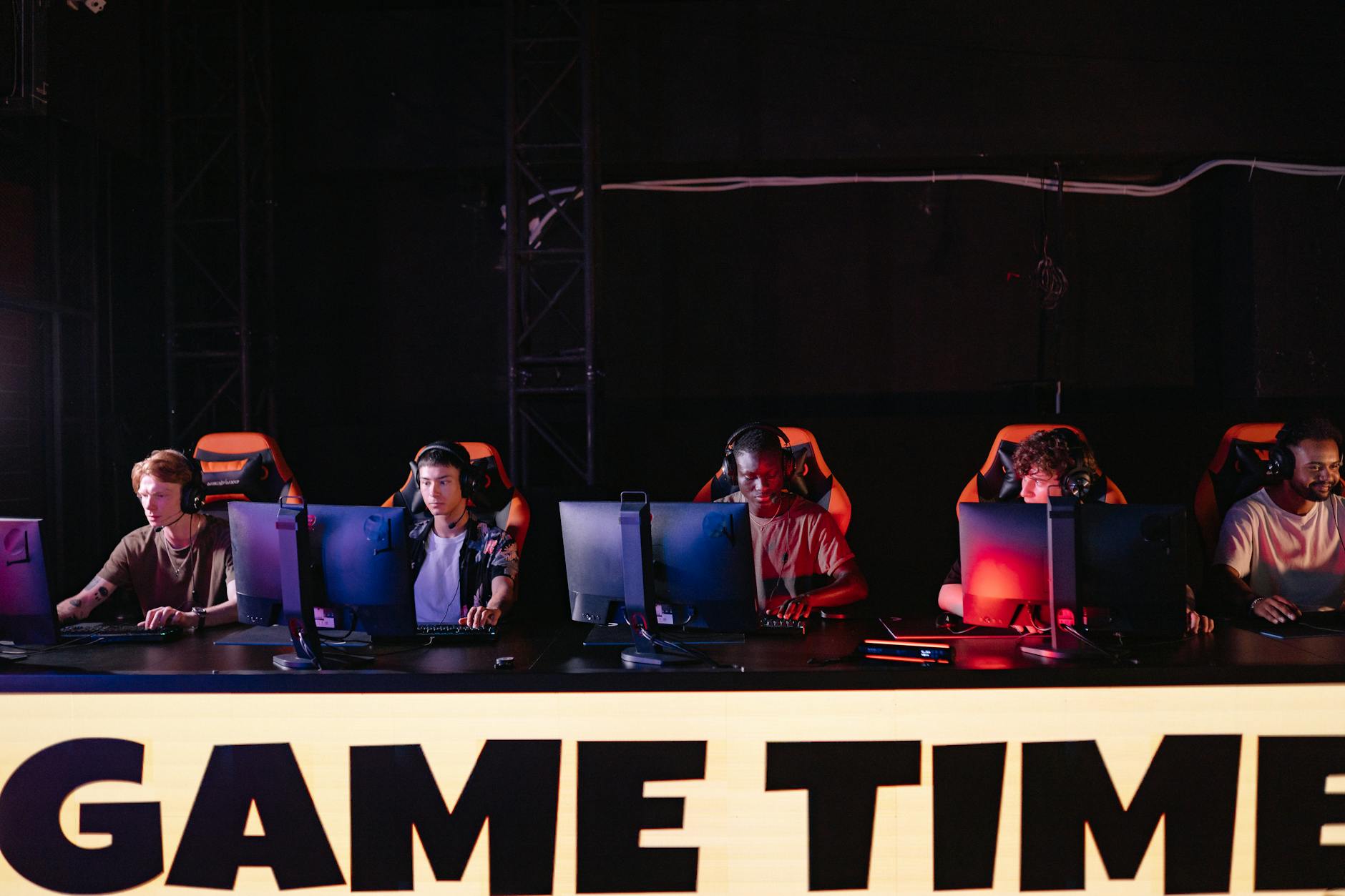
Esports enters this month’s picture less as a booming frontier than as an industry still trying to justify its place in the broader games economy. Competitive gaming remains culturally visible, but its economics are less triumphant than they once seemed. The most sustainable esports ecosystems now are the ones tied to enduring games with clear community structures, established viewership patterns, and a publisher willing to fund the scene for strategic reasons rather than pure profit.
That is why sports games and tactical shooters remain so important to the category. EA’s UFC 26 is not an esports titan in the way a fighting game or a top-tier shooter might be, but it fits a wider commercial pattern: sports titles continue to provide recurring content, regular updates, and a structure that can be made competitive without inventing an entirely new audience. Similarly, NBA The Run and Hell Let Loose: Vietnam reflect how multiplayer design continues to serve as one of the few reliable ways to keep players engaged over time.
The deeper issue is that esports was once sold as the future of gaming culture. It is now better understood as one segment within a much larger entertainment market, and not necessarily the one that will define the next decade. The biggest audiences in gaming increasingly form around creators, social play, and cross-platform communities rather than around a standalone competitive circuit. That does not make esports less important. It makes it less hegemonic.
Acquisitions, consolidation, and the cost of scale
The business backdrop to June’s release wave is still consolidation. The industry has spent the past several years reorganizing itself around a harder truth: scale is expensive, and survival often favors companies large enough to absorb failure. That has encouraged acquisitions, restructuring, and studio reorientation on a global level. When publishers buy studios or when conglomerates tighten their grip on existing teams, the stated aim is usually efficiency, capability, or portfolio expansion. The deeper motive is risk management.
This is where the current wave of releases becomes politically, as well as commercially, important. Remakes and established franchises are not only safer bets for players; they are easier to defend inside boardrooms. New intellectual property can still happen, but it increasingly needs a compelling pitch, a disciplined budget, and a path to monetization that does not depend on heroic optimism. That is a much harsher environment than the one that produced the industry’s last great run of lavish experimentation.
There is a paradox here. The biggest companies in gaming are more global, more technically sophisticated, and more financially powerful than ever. Yet the software they most reliably produce is often less adventurous than the output of earlier, smaller eras. The reason is not a lack of imagination. It is that modern game development has become so capital-intensive that imagination now has to pass through the filters of franchise logic, cross-platform strategy, and shareholder tolerance.
Gaming’s central tension in 2026 is not between art and commerce; it is between scale and spontaneity.
A market that still wants wonder, but on safer terms
June’s release calendar suggests that the industry understands its own constraints better than it used to. Publishers know that players want spectacle, but they also know that they increasingly gravitate toward titles whose worlds, mechanics, or names already feel legible. That is why this month’s most interesting pattern is not the arrival of one defining hit but the coexistence of many carefully managed bets.
PlayStation is selling confidence through curation. Xbox is selling flexibility through reach. Nintendo is using Switch 2 to turn nostalgia into momentum. PC remains the proving ground. Esports is adjusting to a narrower but still meaningful role. And across the board, acquisitions and studio consolidation are shaping what kinds of games can exist at all.
The result is an industry that still knows how to make players feel excitement, but increasingly prefers to do so with a safety harness. That may be prudent. It may even be necessary. Yet it leaves a lingering question hanging over the month: if the business continues to reward the familiar, who will still be allowed to take the kind of risks that once made gaming feel less like an optimized market and more like a frontier?