The Asia-Pacific era has a soundtrack, and it is playing everywhere
For much of the postwar era, the cultural map of global modernity pointed westward. Hollywood set the visual grammar, American pop set the tempo, and European fashion supplied a language of prestige. That arrangement still matters, but it no longer explains the world as cleanly as it once did. Across Asia and Oceania, a different cultural system has matured: highly networked, visually precise, commercially ruthless, and astonishingly portable. Japanese anime and manga, K-pop, K-dramas, Asian cinema, Tokyo street culture, and technology culture now travel together, crossing borders with the ease of a streaming recommendation or a viral clip. The result is not simply the rise of “Asian soft power.” It is the emergence of a regional cultural machine that produces taste as efficiently as it produces merchandise, tourism, and identity.
Japan helped invent the template. South Korea industrialized and scaled it. The wider region—through film, fashion, gaming, design, and digital platforms—gave it density. What makes this moment distinctive is not that Asia has become visible to the world, but that it has become legible on its own terms. The old model exported stars. The new model exports worlds.
Japan’s great cultural alchemy
Anime and manga are often treated in the West as niche genres or youthful subcultures. In Japan, they are better understood as a system of cultural production: a pipeline connecting comics, television, film, games, fashion, toys, tourism, and music. Their appeal lies partly in scale and partly in specificity. Anime can be intimate, psychedelic, philosophical, violent, sentimental, or absurd, often within the same series. Manga can stretch across genres and demographics with a freedom that live-action entertainment rarely matches. That flexibility has made Japanese storytelling unusually adaptable to global audiences.
Just as important, anime and manga have become identity technologies. Fans do not merely consume them; they inhabit them. Cosplay, fan art, convention culture, collector markets, and online discourse turn passive viewing into participatory belonging. In many countries, learning Japanese, wearing Japan-inspired streetwear, or joining anime communities has become a way of affiliating with a broader aesthetic world. That cultural pull, as studies and commentary on anime’s global influence have noted, also feeds back into Japan’s economy through tourism, merchandising, and a halo effect for Japanese goods abroad.
Yet the deeper significance of anime lies in its narrative confidence. Where much global mass entertainment increasingly aims for universality through simplification, anime often achieves universality through particularity. It is saturated with local visual cues, formal conventions, and emotional rhythms that are distinctly Japanese. Audiences abroad are not repelled by that specificity; they are drawn to it. In an era of flattening cultural algorithms, the strange has become valuable.
South Korea turned pop culture into an export sector
If Japan built the first great Asian pop-culture platform, South Korea refined the business model. K-pop is not just a music genre; it is an integrated industrial architecture combining choreography, fashion, beauty, social media, merchandising, and fan labor. Its genius is that it treats attention as infrastructure. Every music video, performance, and public appearance is designed to circulate across platforms, encourage repeat engagement, and sustain a global fan community that behaves less like a passive audience than a distributed marketing force.
K-dramas operate on a parallel logic. Their success is not based on spectacle alone, but on emotional clarity, narrative momentum, and production polish. They often compress romance, family conflict, class tension, and melodrama into tightly controlled series that are easy to stream and difficult to stop watching. Where American prestige television can sometimes feel engineered for critics, K-dramas are engineered for momentum. The result is a format that travels well across language barriers and national borders.
There is also a broader cultural choreography at work. K-pop stars do not simply sing; they embody fashion trends, beauty standards, and digital fluency. K-dramas do not merely entertain; they sell lifestyles, neighborhoods, food, and aspiration. Seoul has understood something that many other capitals have not: in the age of platform capitalism, culture must be designed for circulation from the outset. That makes the Korean wave less a spontaneous eruption than a state-adjacent, industry-coordinated master class in cultural export.
Asian cinema still offers what streaming cannot
It would be a mistake to think of the region’s cultural force as limited to pop franchises. Asian cinema remains one of the most consequential laboratories in global storytelling. Japanese filmmakers helped define modern cinematic restraint, from the moral architecture of Kurosawa to the domestic delicacy of Ozu. South Korean cinema, especially in the past two decades, has become synonymous with tonal dexterity: thrillers that become satires, family dramas that mutate into horror, comedies that expose social fracture. Across the region, from Hong Kong’s action legacy to the art-house authority of Taiwan, Iranian and Southeast Asian cinema, the work often excels because it refuses the easy separation between entertainment and critique.
What makes Asian cinema especially powerful in the streaming era is its ability to surprise. Global platforms have made viewers more open to subtitles and cross-border discovery, but they have also made many films more interchangeable. Asian directors and studios often push in the opposite direction. They make cultural specificity an asset. The food on screen, the apartment layouts, the school rituals, the family etiquette, the city textures—these details become the narrative itself. For international audiences, that can feel like a window into another society. For regional audiences, it can feel like recognition.
“Specificity has become Asia’s most exportable cultural asset.”
That is one reason Asian cinema has remained so influential despite the dominance of franchises. It does not merely deliver content. It delivers social worlds.
Tokyo street culture remains the region’s aesthetic laboratory
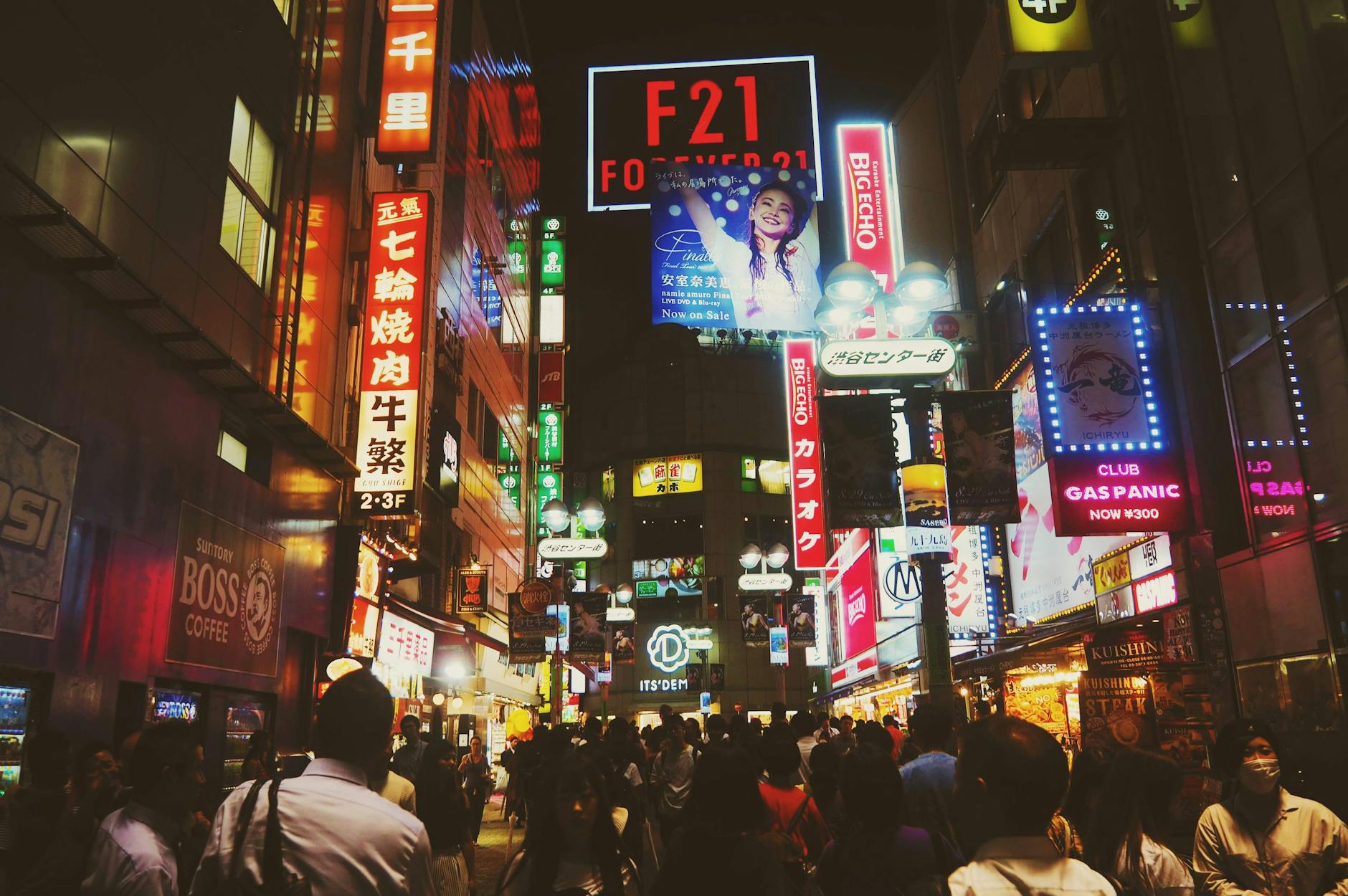
No city in Asia has more consistently transformed subculture into global style than Tokyo. The city’s streets have long functioned as a testing ground where youth identity, craftsmanship, and commercial branding collide. Harajuku, Shibuya, Akihabara, and underground club scenes have each contributed distinct vocabularies to the world: layered streetwear, hyper-curated kawaii aesthetics, otaku visual culture, vintage remixing, and a certain refusal to separate seriousness from play.
Tokyo’s power lies in how it legitimizes contradiction. A person can be obsessively curated and defiantly nonconformist at the same time. They can mix luxury brands with thrifted pieces, digital obsessions with analog objects, and deep fandom with fashion-forward self-presentation. This has made Tokyo street culture enormously influential among designers, stylists, and content creators abroad. It has also helped define a wider East Asian aesthetic that is now visible from Singapore to Seoul, from Bangkok to Sydney.
Unlike many global style capitals, Tokyo does not market itself as a single look. It is an ecosystem of looks. That pluralism gives it longevity. Trends may fade, but the city’s core appeal—its permission to be intensely stylized without apology—remains intact. In a world increasingly mediated by screens, Tokyo offers a rare physical culture that still feels future-facing.
Technology culture gave the region its acceleration
Behind the aesthetics sits a deeper engine: technology culture. Asia’s cultural exports have flourished because the region is not merely producing media; it is building the platforms, devices, and habits that carry media into daily life. Japan’s consumer electronics legacy, South Korea’s broadband and mobile sophistication, China’s platform ecosystems, and the region’s deep integration with gaming, mobile commerce, and social video have all shaped the way people consume culture.
Technology does not merely distribute culture here; it shapes its form. Short-form video favors choreography and visual hooks, which suit K-pop and anime edits. Mobile-first viewing rewards episodic storytelling and fandom engagement, which suits K-dramas and serialized manga adaptations. Algorithmic recommendation systems amplify aesthetically distinct content, which helps regional styles travel farther than they once could. The result is a feedback loop: culture designed for circulation circulates more efficiently, and circulation in turn influences what gets made.
Asia’s technology culture is also notable for how inseparable it is from lifestyle. Gaming cafes, live-stream shopping, fan communities, digital art platforms, and AI-assisted design tools have made media participation more interactive. Consumers are not only watching culture; they are editing it, reposting it, remixed it, and monetizing it. This is especially visible among younger audiences, for whom identity is now built as much through online aesthetics as through offline institutions.
Soft power, hard economics
It is fashionable to talk about cultural influence as if it were an atmospheric phenomenon, drifting freely across borders. In practice, it is closely tied to economics. Anime boosts tourism and merchandise sales. K-pop drives fashion and cosmetics. K-dramas move food, location tourism, and consumer brands. Asian cinema lifts streaming subscriptions and festival prestige. Tokyo street culture helps sell design, apparel, and luxury collaborations. Technology culture turns all of the above into habits, and habits into recurring revenue.
This matters because it changes how nations compete. A country no longer needs only military reach or industrial scale to matter globally; it can also shape aspiration. Japan and South Korea have understood this with unusual clarity. Their cultural products do not simply advertise the nation. They make the nation feel inhabitable. That is a subtler and often more durable form of influence than propaganda or diplomacy.
At the same time, cultural success can create tensions. Global popularity often compresses nuance into brand identity. Anime becomes “Japanese cool.” K-pop becomes “Korean excellence.” Tokyo becomes “future city.” Such shorthand is useful for marketing but dangerous for understanding. It flattens the political, social, and generational conflicts that make these cultures interesting in the first place. The true richness of Asian popular culture lies not in how polished it is, but in how much contradiction it contains: tradition and reinvention, mass production and artisanal detail, global ambition and local code.
The region’s greatest export is not content but confidence
What Asia and Oceania have offered the world is not merely a set of entertaining products. It is a new confidence about what modern culture can look like when it is not forced to imitate a Western ideal. Japanese animation can be philosophical and commercially vast. Korean pop can be meticulously engineered without feeling sterile. Asian cinema can be intimate and globally resonant. Tokyo can be hypermodern without surrendering its eccentricity. Technology culture can intensify human expression rather than erase it.
That combination has altered the cultural hierarchy. Younger audiences in Los Angeles, London, Manila, Mumbai, Jakarta, Sydney, and beyond now treat Asian media not as import but as reference point. They borrow its fashion, imitate its filming styles, learn its languages, and build communities around it. The flow of influence has become more reciprocal, less hierarchical, and far more competitive.
The old global culture industry once asked the rest of the world to look west. Asia now asks the world to look carefully. It rewards that attention with style, emotional range, and a constant reminder that the future of culture may be less about a single center than about a network of cities, screens, studios, and subcultures that already know how to speak to one another.