🔴  Breaking News🇺🇸  USA Edition🇪🇺  Europe Edition🌏  Asia & Oceania🌍  Africa Edition
Wednesday, May 20, 2026
🌙 Evening Brief
The Daily Brief

Your daily newspaper · Every night at midnight

Preferences

S&P 500739.42▲ 0.78%NASDAQ709.98▲ 1.20%DOW498.94▲ 1.00%CAC 4045.33▲ 2.05%DAX42.80▲ 1.81%FTSE 10047.04▲ 1.62%Nikkei90.94▲ 0.72%Apple300.75▲ 0.60%Amazon263.09▲ 1.45%Microsoft417.83▲ 0.10%Google384.96▼ 0.70%Tesla413.06▲ 2.21%Nvidia224.66▲ 1.84%Meta604.70▲ 0.35%Netflix88.08▼ 1.40%Coca-Cola82.21▲ 0.35%Nike43.85▲ 3.37%Disney104.47▲ 2.13%JPMorgan302.22▲ 2.20%LVMH106.78▲ 0.40%TotalEnergies92.17▼ 0.79%SAP178.24▼ 0.31%Gold416.29▲ 1.16%Oil143.39▼ 6.26%S&P 500739.42▲ 0.78%NASDAQ709.98▲ 1.20%DOW498.94▲ 1.00%CAC 4045.33▲ 2.05%DAX42.80▲ 1.81%FTSE 10047.04▲ 1.62%Nikkei90.94▲ 0.72%Apple300.75▲ 0.60%Amazon263.09▲ 1.45%Microsoft417.83▲ 0.10%Google384.96▼ 0.70%Tesla413.06▲ 2.21%Nvidia224.66▲ 1.84%Meta604.70▲ 0.35%Netflix88.08▼ 1.40%Coca-Cola82.21▲ 0.35%Nike43.85▲ 3.37%Disney104.47▲ 2.13%JPMorgan302.22▲ 2.20%LVMH106.78▲ 0.40%TotalEnergies92.17▼ 0.79%SAP178.24▼ 0.31%Gold416.29▲ 1.16%Oil143.39▼ 6.26%
🇪🇺 Europe Edition
POLITICS

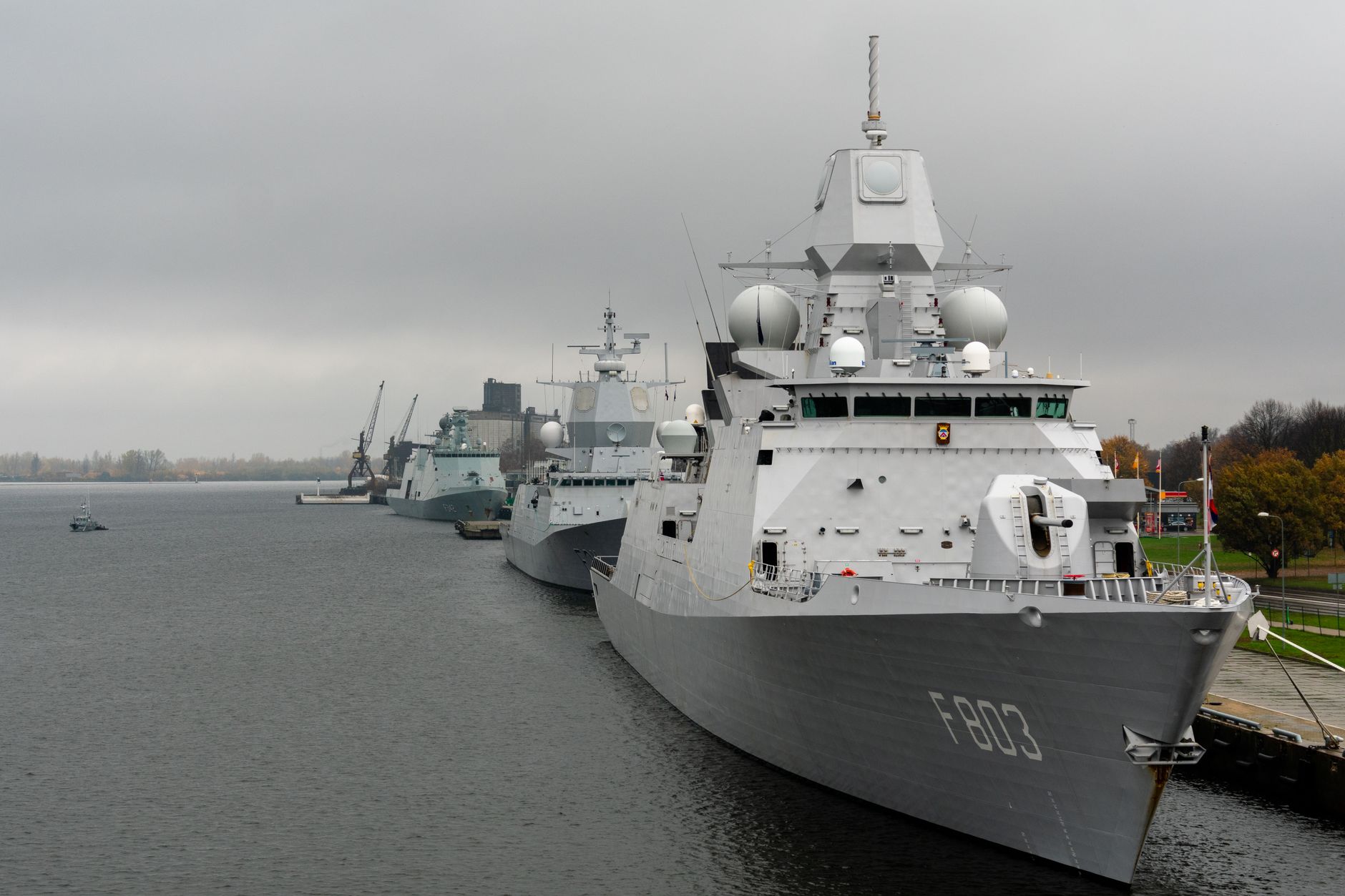
EUROPE DEEPENS DEFENSE UNITY

Europe is increasingly focused on strengthening its own security and strategic autonomy as uncertainty grows around the war in Ukraine and relations with the United States. EU institutions and member states are pushing for more coordinated defense spending, industrial capacity, and common policy tools. The debate also reflects wider concerns about economic resilience, energy security, and Europe’s place in a shifting global order. For a Europe Edition, this is the clearest cross-cutting story because it connects geopolitics, institutions, and the continent’s future direction.

Topic sections
🇬🇧

United Kingdom

UK politics faces a reset after local-election earthquake

Labour's losses and Reform UK's gains have intensified talk of a political realignment rather than a routine protest vote. Ministers now need to prove they can deliver on living standards, public services and immigration before discontent turns into a lasting habit.

London's cost-of-living squeeze keeps the pressure on ministers

Rising rents and stubborn affordability problems are still defining life in the capital. That is feeding broader frustration with economic management and making growth a political as well as a financial test.

Brexit's unfinished business keeps feeding the political mood

Businesses are still dealing with the friction created by trade and labour rules after Brexit. Those costs, combined with migration anger and identity politics, are helping drive the current volatility in UK public life.

🇩🇪

Germany

GERMANY FACES A LEADERSHIP TEST AS POLITICS, INDUSTRY AND EUROPE COLLIDE

Germany is under pressure to prove that its political shift toward a more active European role can be matched by domestic economic strength. The country still has unmatched weight in the EU, but that weight is being tested by weak growth, industrial strain and the need for bigger strategic choices. Berlin’s challenge is to turn talk of leadership into faster investment, stronger defence coordination and a more reliable business climate. Whether it succeeds will shape not only Germany’s standing, but also the direction of Europe’s response to an increasingly unstable global order.

INDUSTRY UNDER STRAIN AS BERLIN PUSHES FOR A NEW GROWTH MODEL

Germany’s industrial base is still powerful, but it is being squeezed by costs, weak demand and structural change. The government is trying to respond with investment and reform, yet business leaders want faster action. For now, the country’s economic story is one of adaptation under pressure rather than renewal completed.

BERLIN SEEKS TO TURN ECONOMIC WEIGHT INTO EUROPEAN DIRECTION

Germany is trying to convert its size into strategic leadership across Europe. That requires hard choices on defence, fiscal policy and integration, not just diplomatic rhetoric. If Berlin can align domestic priorities with European needs, it could define the next phase of the EU.

🇫🇷

France

France balances political turmoil with diplomatic ambition

Bayrou’s government is still trying to stabilize a parliament that no longer behaves like a reliable governing machine. The bigger picture is a France where domestic weakness has not erased international weight, but it has made every policy choice more constrained and more fragile.

Paris remains the stage for France’s political credibility test

The city is functioning as the country’s political barometer, where instability at the top quickly becomes a broader confidence problem. That makes Paris central not just to administration, but to the national mood.

France’s economy is still built on protection, but the bill is rising

Industrial policy and public spending remain central to the French model, but so do debt worries and competitiveness concerns. The next economic battle is less about ideology than about how long the state can keep paying for stability.

🇮🇹

Italy

Il governo prova a tenere insieme conti, crescita e consenso sociale

L’esecutivo continua a presentarsi come garante di stabilità, ma ogni scelta fiscale viene misurata contro l’aumento del disagio sociale. La priorità resta evitare uno scarto tra disciplina di bilancio e protezione dei redditi più deboli. In questo passaggio si decide gran parte della credibilità politica dei prossimi mesi.

Potere d’acquisto e salari restano il nodo più esposto

Il recupero dei redditi procede lentamente e non compensa ovunque il rincaro accumulato negli ultimi anni. Le tensioni su salari, affitti e servizi essenziali continuano a pesare sulle famiglie urbane. Senza un’accelerazione dei salari reali, la crescita rischia di restare incompleta.

Cultura e società: il patrimonio italiano cerca un nuovo modello economico

La cultura non viene più trattata come comparto accessorio, ma come leva di sviluppo e coesione sociale. Restano però forti differenze territoriali nell’accesso ai servizi culturali e nelle risorse disponibili. La vera partita è fare della qualità culturale un vantaggio diffuso, non solo delle grandi città.

🇸🇪

Nordic

Nordic security hardens as Sweden becomes a fuller NATO player

Sweden’s new status is reshaping how the region thinks about defense, from troop movement to air and sea coordination. The latest summit-level diplomacy suggests Nordic capitals want to turn political unity into practical military readiness. For readers across Scandinavia, the story is less about symbolism than about how quickly the region can build credible collective defense.

Nordic Co-operation pushes a new round of cross-border mobility reforms

Officials are focusing on making it easier to work and move across Nordic borders without losing social or administrative protections. The push reflects a broader effort to keep the region economically open even as security concerns rise. For Scandinavia, the challenge is to preserve integration while modernizing the rules that make it possible.

Nordic cultural diplomacy keeps the region visible beyond security headlines

New programming at Nordic institutions is helping sustain the region’s international profile through film, design, and public events. The emphasis on culture gives Scandinavia a softer counterpoint to the hard-security news dominating the day. That balance remains central to how the Nordic countries present themselves to the world.

🇪🇸

Spain & Portugal

Iberia’s stability rests on delivery, not slogans

Spain and Portugal are both benefiting from a more favourable macroeconomic backdrop than much of the eurozone, but that has not erased public frustration over housing, wages, and stretched services. The political centre in both countries survives by promising competence, yet voters are increasingly measuring success by whether everyday costs actually come down. That makes the coming months less about ideological battles than about whether governments can convert growth into broad-based relief.

Spain’s governing formula still depends on managing fatigue

The government’s challenge is not only to pass measures, but to make them feel tangible in a country where voters are tired of institutional drama. That is especially true as housing affordability and territorial questions keep crowding out the more optimistic economic narrative. If the coalition survives, it will be because it can still look more usable than the alternatives.

Portugal’s calm political surface hides hard structural pressures

Lisbon’s current advantage is credibility, but credibility will only last if it translates into services that work better and a labour market that offers more than precarious advancement. The contrast with Spain is instructive: Portugal’s politics may look less turbulent, yet the everyday burdens felt by households are just as real. For now, the country’s greatest asset is still its reputation for steadiness.

🏛️

EU & Brussels

EU enlargement now looks like an institutional reform project, not just a foreign-policy goal

Brussels is treating enlargement as a test of the Union’s internal machinery, with the European Parliament pushing for stronger rule-of-law safeguards and clearer accession conditions. The debate is increasingly about how to adapt voting rules, oversight and legislative procedures before new members arrive. That shift puts regulation and institutional design at the centre of the enlargement file.

MEPs are using their consent power to keep enlargement tied to rule-of-law demands

The Parliament is insisting that accession stay conditional on reforms rather than geopolitical urgency alone. MEPs see enlargement as a strategic necessity, but only if democratic standards are enforced. That makes the chamber a key gatekeeper in the coming accession rounds.

Brussels is rethinking EU regulation to make the system workable in a bigger Union

Officials and lawmakers are focusing on whether current rules can still function once the Union expands. The conversation now includes rule-of-law impact assessments, tighter coordination and more robust enforcement tools. Enlargement is therefore forcing a broader rethink of how EU regulation is made and applied.