🔴  Breaking News🇺🇸  USA Edition🇪🇺  Europe Edition🌏  Asia & Oceania🌍  Africa Edition
Tuesday, May 26, 2026
🌙 Evening Brief
The Daily Brief

Your daily newspaper · Every night at midnight

Preferences

S&P 500749.02▲ 0.45%NASDAQ727.74▲ 1.42%DOW504.40▼ 0.34%CAC 4045.81▲ 1.42%DAX43.66▲ 1.75%FTSE 10047.33▲ 0.51%Nikkei92.79▲ 1.29%Apple310.11▲ 0.42%Amazon263.07▼ 1.22%Microsoft414.50▼ 0.97%Google386.66▲ 0.96%Tesla432.09▲ 1.43%Nvidia213.66▼ 0.78%Meta610.12▼ 0.02%Netflix88.13▼ 0.53%Coca-Cola80.38▼ 1.35%Nike44.54▼ 0.29%Disney102.95▼ 0.05%JPMorgan306.78▲ 0.13%LVMH108.61▼ 2.34%TotalEnergies90.60▼ 1.09%SAP175.85▼ 0.06%Gold413.60▼ 0.05%Oil137.77▼ 2.24%S&P 500749.02▲ 0.45%NASDAQ727.74▲ 1.42%DOW504.40▼ 0.34%CAC 4045.81▲ 1.42%DAX43.66▲ 1.75%FTSE 10047.33▲ 0.51%Nikkei92.79▲ 1.29%Apple310.11▲ 0.42%Amazon263.07▼ 1.22%Microsoft414.50▼ 0.97%Google386.66▲ 0.96%Tesla432.09▲ 1.43%Nvidia213.66▼ 0.78%Meta610.12▼ 0.02%Netflix88.13▼ 0.53%Coca-Cola80.38▼ 1.35%Nike44.54▼ 0.29%Disney102.95▼ 0.05%JPMorgan306.78▲ 0.13%LVMH108.61▼ 2.34%TotalEnergies90.60▼ 1.09%SAP175.85▼ 0.06%Gold413.60▼ 0.05%Oil137.77▼ 2.24%
🇪🇺 Europe Edition
POLITICS

EUROPE WATCHES UKRAINE FUNDING PUSH

The most important Europe-wide story is the EU’s push to secure and coordinate support for Ukraine, with leaders working through the European Council on a new loan and broader funding package. This sits at the center of EU geopolitics because it affects the bloc’s unity, its relations with Russia, and its credibility on security policy. The issue also has economic implications, since member states must balance defense and aid commitments with domestic budget pressures. In parallel, Europe’s institutions are trying to show momentum on cooperation and resilience at a time of wider regional uncertainty.

Topic sections
🇬🇧

United Kingdom

UK’s Brexit drag now shapes politics, growth and London’s future
Brexit’s economic cost is still being revised upward
London is adapting, but Brexit has weakened its old advantages
🇩🇪

Germany

Germany balances new leadership with economic pressure

Merz is moving quickly to redefine Berlin’s role in Europe, but the government must show that its promises on growth, competitiveness, and security can survive the realities of a slow economy. Germany’s size and institutional weight give it outsized influence in the EU, yet that influence depends on whether it can restore confidence in industry and public finances at the same time. The core question is whether Berlin can turn political momentum into durable economic and strategic leadership.

Berlin seeks influence without overreach

Berlin is using the new government’s early phase to signal continuity in Europe while also promising a more forceful approach to security and competitiveness. That balance matters because France, Poland, and other capitals want German leadership to be inclusive rather than unilateral. The success of this strategy will depend on whether Berlin can persuade partners that stronger German leadership means stronger European coordination.

Industry and European strategy are increasingly linked

Germany’s industrial strength still anchors its economy, but the same sector now needs policy support to remain competitive under tougher global conditions. Leaders in Berlin are treating that challenge as part of Europe’s wider need for sovereignty in technology, finance, and defense. The result is a policy agenda in which domestic industrial repair and European leadership are now the same story.

🇫🇷

France

LEAD HEADLINE

France is entering a new stretch where political authority, economic credibility, and social consent are tightly linked. The core issue is not whether the state is strong, but whether that strength can still produce durable reform without triggering renewed resistance. Paris reflects that balance most visibly, because the capital is both the seat of power and the stage on which social pressure is most theatrically expressed. In diplomacy, the government is still trying to translate institutional weight and cultural influence into leverage despite internal uncertainty.

Politics: governability is still the key test

France’s institutional model gives the president major authority, but it does not guarantee political stability. The central question is whether the executive can still build a workable majority for reform. That issue now shapes how both domestic actors and foreign partners read the French scene.

Economy: reform still runs into social limits

France’s economy is not short of state capacity, but it is constrained by public sensitivity to inequality and insecurity. Reform efforts are judged through the lens of social protection as much as growth. That makes economic policy one of the most politically charged arenas in the country.

🇮🇹

Italy

Italy’s politics, economy and society remain locked in a structural stress test

Italy’s current public life is defined by three pressures at once: political fragmentation, sluggish economic performance, and a society that is visibly aging. Those forces interact rather than operate separately, which is why reforms in one area often trigger tensions in the others. The result is a country that remains institutionally resilient but politically contested, with every major debate filtered through questions of growth, fairness and national identity. The most recent important stories should be understood in that broader setting, because Italian news is rarely only about events; it is also about the unresolved structure underneath them.

Coalition politics keep testing the government’s room to maneuver

Italy’s political system still depends on compromise, and that makes governing a constant balancing act. The most consequential political stories are usually those that reveal whether the coalition can hold together while answering pressure from business, labor and regional interests. When those pressures intensify, domestic politics quickly becomes a question of credibility as much as ideology.

Growth and competitiveness are still the core economic story

Italian economic news is rarely neutral, because even positive indicators can sit alongside long-term weakness. Markets, policymakers and households all remain focused on whether investment can become more productive and whether reforms can raise potential growth. The real issue is not one quarter or one headline, but whether Italy can narrow the gap between its strongest sectors and its structural constraints.

🇸🇪

Nordic

Nordic capitals balance security diplomacy with regional stability

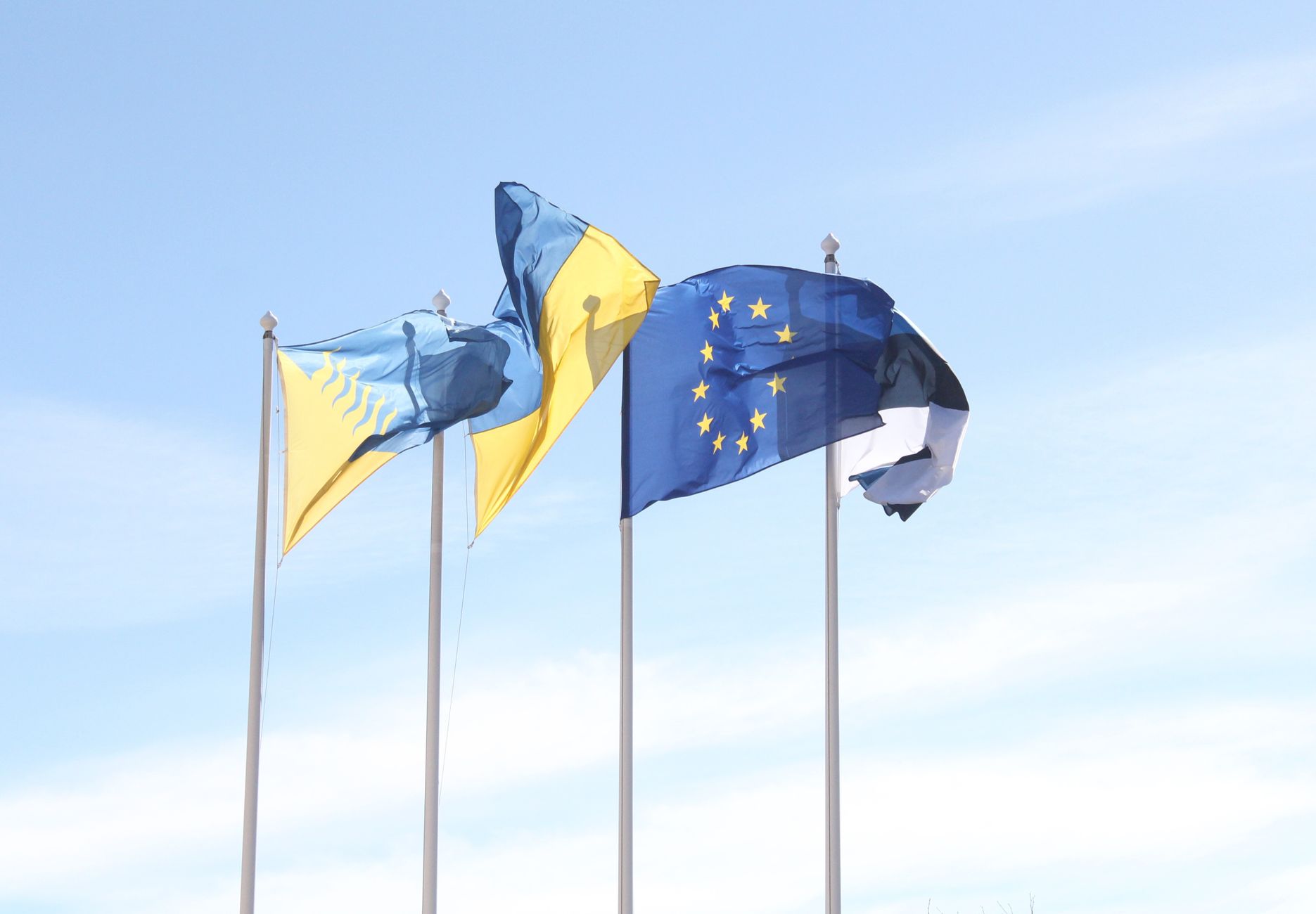
Secretary Rubio’s stop in Helsingborg put Sweden at the center of a wider transatlantic conversation about European security and U.S. priorities in the Nordic-Baltic space. The visit mattered beyond protocol because it highlighted how Nordic governments are still treated as strategic partners rather than peripheral observers. That dynamic is especially important as the region continues to navigate NATO commitments, defense coordination, and heightened attention to the Arctic and Baltic approaches.

Sweden opens IIHF World Championship play with a setback

Mattias Ekholm scored for Sweden in a 5-3 loss to Canada at the 2026 IIHF World Championship. The result was disappointing for Sweden, but it also reflected the intensity of the opening round in a tournament where Nordic teams are closely watched. Hockey remains one of the region’s most important public-facing sports stories, especially in Sweden and Finland.

SalMar’s strong start lifts Norway’s aquaculture outlook

SalMar said it had its best biological performance in a decade in the first quarter of 2026. The company’s improved outlook led it to raise harvest guidance, which makes the report significant for Norway’s seafood sector and export economy. For Nordic markets, this is one of the most important recent business developments because salmon farming remains a major pillar of Norway’s industrial profile.

🇪🇸

Spain & Portugal

Portugal shifts right, but stable government still looks difficult

Portugal’s election strengthened the center-right, yet the lack of an outright majority means the next government still has to navigate a highly fragmented parliament. The big story is not only the rightward shift, but the collapse of the old center-left versus center-right balance that had long structured Portuguese politics. That raises the risk of policy drift in housing, health care and defense even as voters are asking for a more effective state.

Spain’s fragmented politics remain the rule, not the exception

Spain’s current political climate still reflects the post-crisis shift away from two-party dominance and toward a multipolar system. Coalition management and regional bargaining remain central to national stability. The main economic question is whether growth can be turned into visible social relief.

Public trust and everyday pressures are driving the Iberian mood

In both countries, politics is being reshaped by social frustration rather than by ideology alone. Housing, health care and the cost of living are becoming the test of whether democratic institutions still work. That makes governance performance a cultural issue as much as an economic one.

🏛️

EU & Brussels

EU enlargement pushes Brussels toward institutional reform

The European Parliament is using enlargement to force a wider debate about the EU’s legal and institutional capacity, not just the accession calendars of candidate states. That keeps Brussels at the center of a discussion about rule of law, voting rules and budgetary adaptation as the Union prepares for a larger membership. The political signal is clear: enlargement is now being treated as a test of the EU’s own credibility and functionality, not only of the candidates’ reform progress.

Parliament presses rule-of-law conditions in enlargement debate

MEPs are reinforcing the idea that enlargement must stay merit-based and values-driven, even as geopolitical pressure for speed increases. That stance makes the Parliament a key checkpoint for candidate countries seeking entry into the Union. It also raises the bar for the Commission and the Council, which must show that any accession path is matched by credible reform commitments.

Brussels weighs how to keep the EU workable after enlargement

Officials in Brussels are confronting the practical problem of scaling EU decision-making for a larger Union. That includes questions about voting procedures, budget pressures and the administrative burden on institutions already stretched by multiple crises. Enlargement is therefore being discussed less as a distant horizon and more as an immediate governance issue.