🔴  Breaking News🇺🇸  USA Edition🇪🇺  Europe Edition🌏  Asia & Oceania🌍  Africa Edition
Sunday, May 31, 2026
🌙 Evening Brief
The Daily Brief

Your daily newspaper · Every night at midnight

Preferences

S&P 500756.50▲ 0.25%NASDAQ738.33▲ 0.37%DOW510.80▲ 0.74%CAC 4045.98▼ 0.04%DAX43.44▼ 0.12%FTSE 10046.94▼ 0.13%Nikkei92.98▲ 0.30%Apple312.08▼ 0.14%Amazon270.66▼ 1.22%Microsoft450.26▲ 5.45%Google380.36▼ 2.50%Tesla435.81▼ 1.42%Nvidia211.16▼ 1.44%Meta632.53▼ 0.43%Netflix86.04▼ 0.37%Coca-Cola79.03▼ 1.72%Nike46.24▼ 2.39%Disney101.85▼ 1.81%JPMorgan299.33▲ 0.88%LVMH110.55▼ 1.22%TotalEnergies87.34▲ 0.20%SAP181.81▲ 3.62%Gold417.14▲ 1.06%Oil129.11▼ 1.28%S&P 500756.50▲ 0.25%NASDAQ738.33▲ 0.37%DOW510.80▲ 0.74%CAC 4045.98▼ 0.04%DAX43.44▼ 0.12%FTSE 10046.94▼ 0.13%Nikkei92.98▲ 0.30%Apple312.08▼ 0.14%Amazon270.66▼ 1.22%Microsoft450.26▲ 5.45%Google380.36▼ 2.50%Tesla435.81▼ 1.42%Nvidia211.16▼ 1.44%Meta632.53▼ 0.43%Netflix86.04▼ 0.37%Coca-Cola79.03▼ 1.72%Nike46.24▼ 2.39%Disney101.85▼ 1.81%JPMorgan299.33▲ 0.88%LVMH110.55▼ 1.22%TotalEnergies87.34▲ 0.20%SAP181.81▲ 3.62%Gold417.14▲ 1.06%Oil129.11▼ 1.28%
🇪🇺 Europe Edition
ECONOMY

EU RACES TO STAY COMPETITIVE

Europe’s top story is the EU’s push to stay competitive in a world of intensifying global rivalry, with the European Commission framing technology, industrial capacity, and strategic autonomy as urgent priorities. The clearest institutional signal comes from the Commission president’s message that Europe is in a race for key technologies of the future and needs greater ambition. That makes the most important Europe-wide angle less a single breaking event than a broad policy battle over growth, resilience, and economic power. The story also carries geopolitical weight because Europe’s ability to compete economically is increasingly tied to its influence abroad.
Topic sections
🇬🇧

United Kingdom

UK politics and the economy remain trapped in Brexit’s long shadow

Recent economic assessments suggest Brexit has imposed a persistent drag on UK GDP, investment and productivity, with the losses widening over time rather than fading after the transition period. That matters politically because weak growth leaves less room to absorb higher taxes, spending pressure and regional inequality.

London’s resilience is real, but Brexit still weighs on the capital

London’s economy has held up better than most regions, yet projections still show lower GVA growth and a weaker job outlook than in a no-Brexit scenario. The city’s importance to finance and tax revenue means even modest losses there ripple through the wider UK economy.

Brexit still structures social and political identity in Britain

The strongest social legacy of Brexit is the creation of enduring political identities that cut across party lines and continue to affect voter behaviour. Those identities keep culture-war issues close to the centre of UK political conflict, even when Europe itself is not the top daily issue.

🇩🇪

Germany

Germany faces pressure to turn economic weight into real European leadership

Germany’s role in Europe is again being framed as decisive, with analysts arguing that the country must help build a more sovereign and resilient continent across technology, industry, security, and democracy. The challenge for Berlin is that leadership now requires coordination, not just size, because partners want German initiative without German unilateralism. That makes the Merz government’s European posture as important as its domestic reform agenda.

Berlin is being pushed to back deeper EU economic integration

Germany is being cast as the main enabler of Europe’s economic firepower, with the argument that the union needs stronger integration to sustain security and competitiveness. That places Berlin’s fiscal and industrial choices under unusual scrutiny. The result is a policy debate that links growth, resilience, and sovereignty into one agenda.

Germany’s security role is expanding, but acceptance depends on style

Berlin is being asked to do more on defense and strategic autonomy, not less, because Europe sees Germany’s weight as indispensable. Yet the political legitimacy of that role depends on how Germany leads. The most durable path is one that builds coalitions first and influence second.

🇫🇷

France

France under pressure from politics, budgets, and power

France’s central story is the balance between executive authority and political fragmentation. The government’s ability to act is still shaped by the strong presidency of the Fifth Republic, but that strength does not remove the constraints of parliament, public opinion, or fiscal reality. Economic policy, social tensions, and diplomatic signaling are now tightly linked, because each one affects the credibility of the others. Paris remains the place where those pressures become visible first, whether through ministerial messaging, protests, or investor reactions.

Governability remains the central test

France’s politics are defined by the Fifth Republic’s strong-presidential model. That model can project authority, but it also concentrates responsibility when the country is under strain. The result is that every political move is measured against both institutional power and public patience.

Economic credibility is as important as growth

France is treating the economy as a question of confidence as well as output. Economic diplomacy, investment attraction, and public finances now form a single political file. This is why business-facing announcements from Paris matter beyond the market itself. They signal whether the state still believes it can steer the economy rather than merely manage it.

🇮🇹

Italy

Italy’s real story is the tension between stability and strain

Italy’s political system is stable in form but frequently unstable in practice, because coalition management, regional disparities, and reform delays keep governments under pressure. The economy remains large and diverse, but low productivity, high public debt, and uneven development continue to limit growth. Italian culture still carries outsized global influence, yet the country’s social and political debates are increasingly shaped by aging, migration, and inequality.

Coalition discipline remains the central political test

Italy’s politics are shaped less by ideology than by coalition stability and the ability to keep different factions aligned. Any government agenda has to pass through a fragmented parliamentary environment. That makes reform promises important, but hard to sustain.

Growth and productivity remain Italy’s economic fault line

Italy’s economy is still powered by manufacturing, exports, and small and medium-sized firms. But weak productivity and regional imbalance continue to hold back faster growth. That makes every budget and industrial policy decision economically significant.

🇸🇪

Nordic

Sweden Takes Command of NATO’s Forward Land Forces in Finland

Sweden is moving deeper into NATO’s northern defense architecture, with Stockholm set to lead the alliance’s forward land forces in Finland, a sign that the region’s security integration is now accelerating beyond symbolism. The step matters because it ties Sweden’s military role more tightly to the defense of Finland and the wider Arctic-Baltic corridor at a moment when Russia remains the central strategic concern for Nordic capitals. It also reinforces a broader Scandinavian shift: defense cooperation is becoming the dominant political frame, crowding out older assumptions that neutrality or distance could insulate the region. For investors and policymakers, the practical significance is that Nordic defense planning is increasingly cross-border, technologically linked, and organized around rapid reinforcement rather than territorial autonomy.

Norway Reports Europe’s First Bird Flu Case in a Polar Bear

Norway’s confirmation of avian influenza in a polar bear in Svalbard is significant because it shows how Arctic ecosystems are absorbing disease pressures that are spreading across species and geographies. The case is notable as Europe’s first documented instance in a polar bear, and it underscores how warming Arctic conditions, scavenging behavior, and wildlife contact can amplify unusual infection pathways. For Norway, the finding has both scientific and political weight: it highlights the need for stronger Arctic surveillance while adding another reminder that environmental risk in the far north is no longer abstract.

Canada Weighs Swedish Saab Aircraft in Arctic Surveillance Buy

Canada’s interest in Saab’s Arctic surveillance aircraft adds a commercial edge to Sweden’s defense-industrial profile, and it comes at a time when demand for northern air and maritime monitoring is rising across allied countries. The proposed purchase is not yet finalized, but the negotiations themselves matter because they reflect confidence in Nordic defense technology and a growing market for sovereignty patrols in the High North. If concluded, the deal would strengthen Sweden’s position as a supplier of specialized military hardware just as the region’s security environment pushes governments toward faster procurement decisions.

🇪🇸

Spain & Portugal

Iberia faces the same post-crisis test: growth, trust and political pressure

Spain and Portugal are both still living with the long shadow of the Great Recession, which weakened trust in institutions and changed how voters judge mainstream parties. Comparative analysis of Southern Europe finds that economic performance and political polarization are central to whether trust recovers, and that Spain has struggled to restore confidence as fully as Portugal. That makes current debates over wages, public services, corruption, and the cost of living politically sensitive in both countries. The broader story today is that Iberian stability is no longer measured only by macroeconomic growth, but by whether growth is visible in households’ daily lives.

Portugal: stability tested by economic and social strains

Portugal’s institutions have held up better than many of its neighbors, but that resilience depends on continued delivery rather than historic goodwill. The country’s semi-presidential system has been stable since the post-1974 democratic transition, yet recent comparative work suggests that trust can erode quickly if economic conditions worsen. Housing affordability, public-sector capacity, and wages remain the issues most likely to shape the political mood. In that context, Portugal’s main story is continuity under pressure.

Spain: stronger output, weaker confidence

Spain’s economy has advanced far from the weak position it occupied at the time of EU accession, but the political aftereffects of the recession still shape public expectations. The key issue is not just whether the economy expands, but whether people see improvements in housing, jobs, and public services in the places where they live. Research suggests that trust remains fragile when polarization is high and corruption perceptions linger. Spain’s current challenge is to turn economic resilience into social legitimacy.

🏛️

EU & Brussels

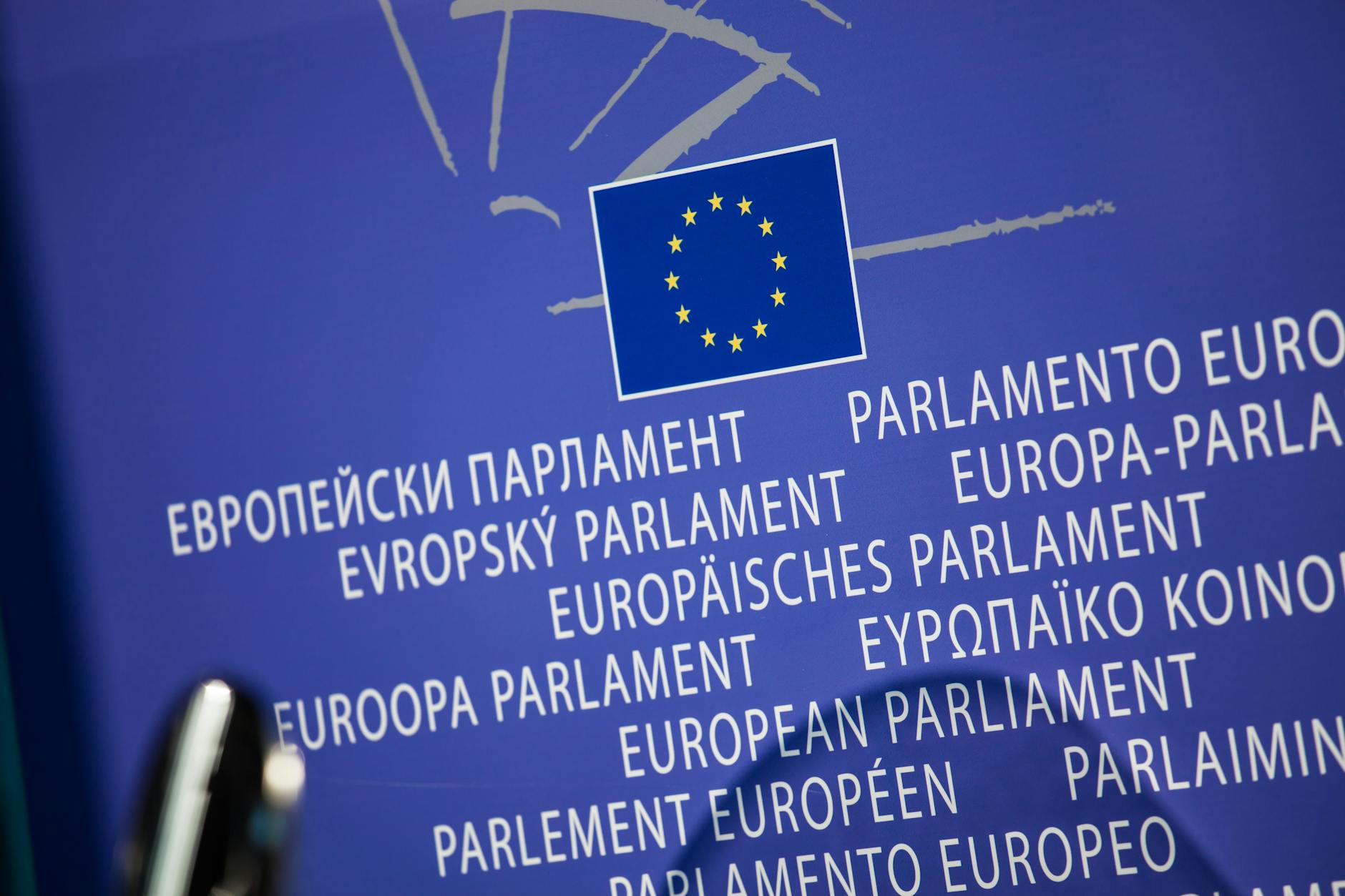
Parliament turns enlargement into leverage

The European Parliament can block an accession treaty and can also influence enlargement through budgetary powers, oversight, and plenary pressure. The result is a stronger parliamentary role in making enlargement conditional on reforms, especially on rule of law and democratic governance. Brussels is treating enlargement less as a technical process and more as a strategic choice tied to security and stability. That shift raises the stakes for both candidate countries and the EU institutions managing the file.

Brussels readies the institutions for a bigger Union

The Commission and Parliament are both under pressure to adapt the institutional set-up for enlargement while keeping conditionality credible. Observer participation, tighter scrutiny, and more structured cooperation with candidate-country institutions are all being discussed as ways to prepare for accession. The central concern in Brussels is whether the EU can enlarge without diluting its rule-of-law standards. That debate is now moving from theory into practical institutional planning.

MEPs push for a merit-based enlargement track

MEPs are using enlargement debates to insist that accession remains conditional on concrete reforms rather than political momentum alone. Parliament’s role over consent, oversight, and funding gives it several ways to apply pressure before any final vote on accession. That makes the institution a key arena for testing whether candidate countries are meeting democratic and legal standards. It also shows how Brussels is linking enlargement directly to the EU’s credibility on rule of law.