🔴  Breaking News🇺🇸  USA Edition🇪🇺  Europe Edition🌏  Asia & Oceania🌍  Africa Edition
Friday, July 24, 2026
🌙 Evening Brief
The Daily Brief

Your daily newspaper · Every night at midnight

Preferences

S&P 500741.51▲ 0.45%NASDAQ689.42▼ 0.37%DOW519.37▲ 0.60%CAC 4045.09▲ 0.90%DAX41.19▲ 1.48%FTSE 10047.28▲ 1.24%Nikkei91.62▲ 0.57%Apple333.23▲ 3.60%Amazon233.51▼ 0.06%Microsoft383.98▲ 0.63%Google319.50▲ 0.57%Tesla309.25▼ 3.27%Nvidia210.27▲ 0.72%Meta600.71▼ 0.89%Netflix70.10▲ 1.76%Coca-Cola81.97▲ 0.99%Nike41.82▲ 2.02%Disney95.50▲ 2.88%JPMorgan352.87▲ 0.85%LVMH103.15▼ 4.31%TotalEnergies86.17▼ 0.07%SAP158.86▲ 8.53%Gold373.19▲ 0.45%Oil134.61▼ 3.50%S&P 500741.51▲ 0.45%NASDAQ689.42▼ 0.37%DOW519.37▲ 0.60%CAC 4045.09▲ 0.90%DAX41.19▲ 1.48%FTSE 10047.28▲ 1.24%Nikkei91.62▲ 0.57%Apple333.23▲ 3.60%Amazon233.51▼ 0.06%Microsoft383.98▲ 0.63%Google319.50▲ 0.57%Tesla309.25▼ 3.27%Nvidia210.27▲ 0.72%Meta600.71▼ 0.89%Netflix70.10▲ 1.76%Coca-Cola81.97▲ 0.99%Nike41.82▲ 2.02%Disney95.50▲ 2.88%JPMorgan352.87▲ 0.85%LVMH103.15▼ 4.31%TotalEnergies86.17▼ 0.07%SAP158.86▲ 8.53%Gold373.19▲ 0.45%Oil134.61▼ 3.50%
🇪🇺 Europe Edition
POLITICS

EU HARDENS PRESSURE ON RUSSIA

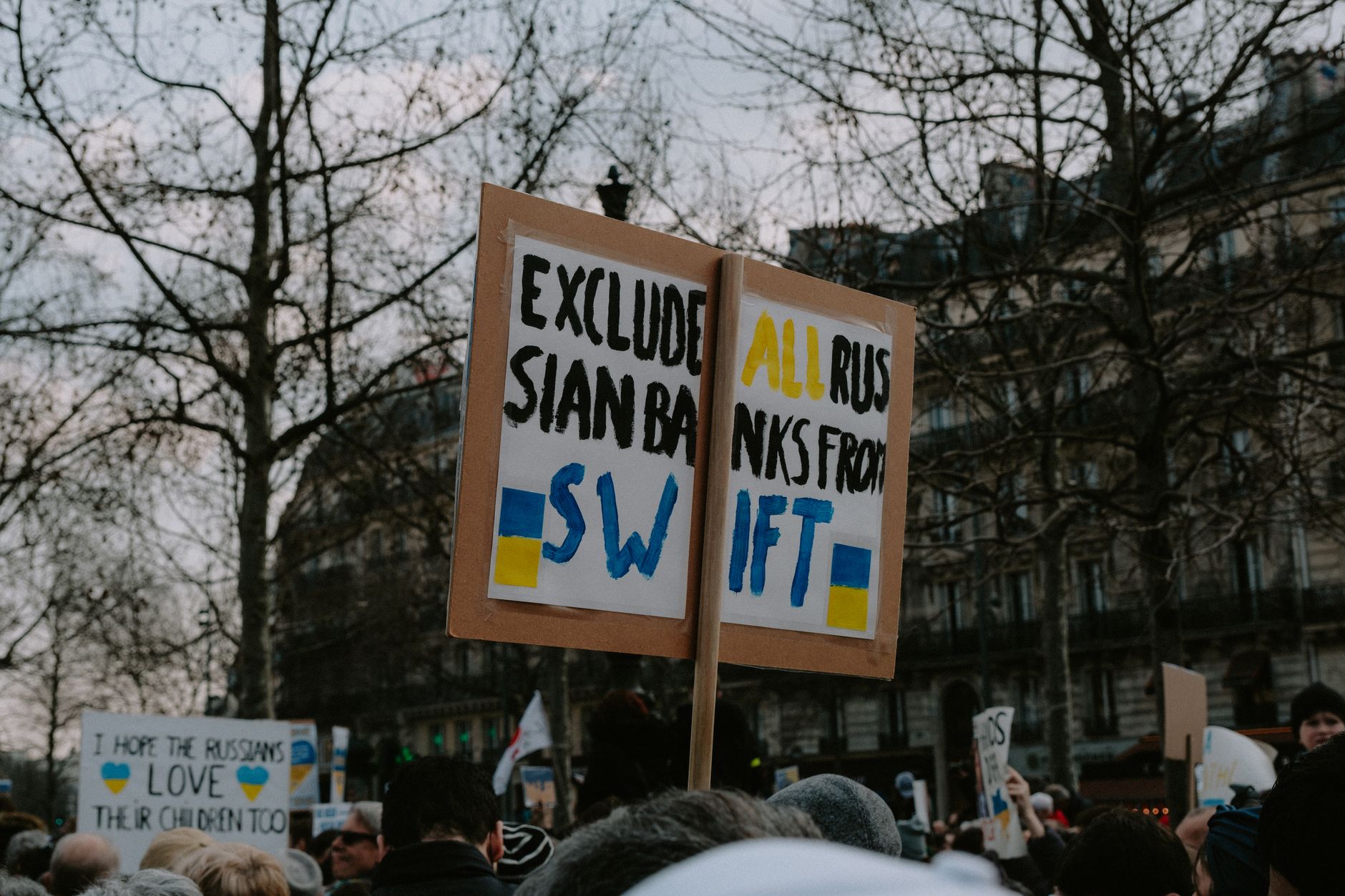
The European Union agreed a new sanctions package against Russia, tightening restrictions on banking while increasing pressure on the country’s oil and gas sector. The move comes as Europe continues to absorb the economic and security spillovers from the war in Ukraine and the broader energy shock. It is the clearest Europe-wide policy development in the current news flow because it directly involves EU institutions and has cross-border economic consequences. The ECB also held rates steady while watching how the lingering energy shock feeds into inflation, reinforcing the sense that Europe’s leaders are still focused on war-driven economic risks.

Topic sections
🇬🇧

United Kingdom

Starmer pushes a deeper EU reset as the government seeks growth and lower costs

Britain is leaning harder into European alignment just as ministers try to argue that Brexit-era frictions can be reduced without reopening the constitutional fight over membership. Keir Starmer’s government is preparing a new summit with EU leaders and is pushing closer economic and security cooperation after saying Brexit has damaged the economy, while also advancing a wider reset in trade and regulatory ties. The immediate political logic is clear: Labour wants to show voters that closer cooperation can ease living costs, cut red tape for business and strengthen resilience on issues from energy to security. The risk is equally clear, because every move toward Brussels will be read through the lens of sovereignty, leaving the government trying to sell pragmatic adjustment in a debate that still carries heavy symbolic weight.

UK-India trade deal gives ministers a post-Brexit growth story

Britain and India are set to sign a trade deal today, with reporting that it will unlock about £6 billion in investment for the UK economy. The agreement is politically useful for Labour because it lets ministers claim they are expanding Britain’s commercial reach beyond Europe while still pursuing a more interventionist growth strategy at home. In economic terms, the deal matters because it signals that the UK is still trying to use its independent trade policy after Brexit to attract capital and widen market access. In political terms, it helps Starmer answer the charge that closer EU ties mean a retreat from global trade ambitions.

Food and farming rules move closer to the EU as red tape becomes the target

The government is moving to align more closely with EU sanitary and phytosanitary rules, including food labelling, organic standards, pesticide regulation and other agri-food measures. Ministers say the change is intended to reduce border friction and lower costs for importers and exporters, which is a practical acknowledgment that Brexit’s regulatory split has remained expensive for businesses. The story matters beyond agriculture because it shows how the Brexit aftermath is now being managed through technical fixes rather than grand political arguments. It also underlines a broader pattern in London: policy is increasingly being shaped by the need to ease pressure on households and firms rather than by the older promise of maximum divergence.

🇩🇪

Germany

Berlin pushes deregulation to revive competitiveness

Germany’s government is set to approve a package of more than 10 measures aimed at cutting red tape and saving the economy about €600 million a year. Digital Minister Karsten Wildberger says the total annual relief from deregulation since November 2025 would rise to €10.4 billion if the package passes. The move underscores how central competitiveness has become to Berlin’s domestic politics and industrial policy. It also reflects a broader European debate about whether Germany can lead by simplifying rules and improving the operating environment for companies.

Germany’s competitiveness drive gets a fresh test

The new deregulatory package is intended to ease administrative burdens and improve conditions for firms across the economy. It follows earlier measures that the government says have already delivered significant annual relief since late 2025. The focus on cutting bureaucracy highlights the government’s recognition that growth problems cannot be solved by fiscal stimulus alone. It also shows how tightly linked politics and industrial policy have become in Berlin.

Germany seeks to lead Europe through reform, not rhetoric

The reform package is more than a domestic housekeeping exercise because it reinforces Germany’s role as the European economy’s benchmark. Berlin is trying to show that it can lead by example on competitiveness, especially as other governments watch how the eurozone’s biggest economy responds to stagnation risks. The political payoff would be strongest if the package is followed by visible improvements in business sentiment. For now, the story is that Germany is betting on administrative simplification as the fastest route to renewed economic authority.

🇫🇷

France

France tightens pressure on Russia at sea while growth stays weak

France’s navy seized a tanker in the Western Mediterranean that Macron said was tied to Russia’s shadow fleet, making sanctions enforcement the day’s most visible foreign-policy move. The action underscores France’s effort to combine maritime power and diplomacy as the Middle East and Ukraine continue to strain European security. Economically, the backdrop is less favorable, with officials already cutting the 2026 growth forecast and warning that fiscal flexibility is limited. That mix of hard security signaling and soft economic data captures the central tension in French policy right now.

Private sector contraction eases, but France still lacks momentum

July data suggest France is stabilizing rather than accelerating, with services and overall business activity improving only marginally. The better reading offers the government a small political reprieve after a mid-year downgrade to the growth outlook. But analysts will still read the survey as a warning that weak demand and high financing costs are not going away quickly. For policymakers, that leaves little room for complacency heading into the second half of the year.

Barrot lowers expectations on the Middle East as France keeps pressing diplomacy

France’s foreign minister signaled that a near-term breakthrough in the Middle East is unlikely, but said Paris will continue working with partners toward a durable settlement. The statement reflects a broader French diplomatic line that favors persistence over dramatic announcements. It also shows how France is trying to preserve relevance in several crises at once. With the domestic agenda constrained, foreign policy remains one of the clearest ways for Paris to project leadership.

🇮🇹

Italy

Italy balances reform, strikes, and economic tests

Parliament is pushing urgent justice and migration-asylum measures alongside a cinema bill, while a nationwide rail strike is disrupting travel and putting labor tensions in plain view. The manufacturing PMI release and Poste Italiane’s half-year update will be watched for clues about whether the economy is stabilizing or merely treading water. Together, these stories show a country trying to manage immediate operational problems while still confronting slow growth and structural weakness.

Parliament juggles justice, migration, and cinema

Today’s agenda in the Chamber and Senate links justice, migration-asylum, and cinema, which is a useful snapshot of the government’s priorities. The blend of hard-state and cultural legislation suggests an attempt to show competence across both security and identity policy. It also reflects the pressure to keep the legislative machine moving despite a heavy summer schedule.

Rail strike disrupts summer travel across Italy

Train passengers are facing a difficult day because of a national railway strike, with cancellations and delays expected despite minimum service guarantees. The timing is especially sensitive in July, when travel demand is high and the knock-on effects spread quickly through tourism and business movement. The story is not just about inconvenience: it highlights how transport labor conflict can quickly become a national issue.

🇸🇪

Nordic

Nordic security hardens as Sweden and Finland deepen air-defence push

Finland has announced a €108 million purchase of Saab’s RBS 70 NG short-range missile system, a move that strengthens its ground-based air defence and deepens procurement ties with Sweden. The decision fits a wider Nordic pattern in which governments are investing in deterrence, resilience and faster military adaptation. It also underscores how regional security cooperation is increasingly being built through concrete acquisitions rather than broad declarations.

Climate change reshapes the Nordic summer risk picture

A rapid attribution study found that the Nordic heatwave was far more likely because of human-made climate change and significantly hotter than it would have been otherwise. That conclusion matters because it turns an unusual weather event into evidence of a structural climate shift across the region. The Nordics are now confronting heat as a recurring hazard, not a rare exception.

Finland’s government holds on amid economic and policy strain

Prime Minister Petteri Orpo’s government has retained parliament’s confidence, giving it room to continue governing despite mounting pressures. Finland is also contending with a weaker labour market and continuing debate over migration and social policy, which keeps domestic politics volatile. The picture is of a Nordic government with parliamentary backing but limited room for complacency.

🇪🇸

Spain & Portugal

Spain’s budget setback exposes Sánchez’s weak majority

Spain’s lower house rejected the government’s 2027 spending framework on Thursday, handing Pedro Sánchez a fresh parliamentary setback and complicating the effort to pass a state budget before the end of the legislature. The vote highlights how difficult it is for the minority government to convert economic strength into stable political control. It also raises the stakes for negotiations with allies and opponents as the cabinet tries to preserve policy momentum.

Madrid and Lisbon push a new competitiveness agenda

Spain and Portugal have launched a Strategic Forum to boost competitiveness and progressively remove barriers to business activity on both sides of the border. The first phase includes measures on banking access, public procurement, energy links, and public credit cooperation. The goal is to make the Iberian economy more integrated and more resilient within the EU.

Iberian growth stays ahead of the eurozone

Spain’s economy is still projected to grow much faster than the eurozone in 2026, while Portugal is also expanding above the European average. That performance reflects stronger domestic demand, energy advantages, and a relatively resilient external position. The risk now is whether political strain and slower European demand eventually start to narrow that gap.

🏛️

EU & Brussels

Brussels is entering a late-summer institutional grind, with the European Parliament’s committee work and the Commission’s regulatory pipeline now carrying more weight than headline-grabbing summits. The center of gravity remains in Brussels because that is where most committee meetings, trilogue negotiations, and day-to-day scrutiny of the Commission are concentrated, even though the Parliament’s formal plenary life is split with Strasbourg. For markets and capitals alike, the key question is not whether the EU can still legislate, but whether it can keep pace on files that require coordinated action from Parliament, Council, and Commission without slipping into procedural delay. Enlargement remains the other major structural pressure point, because any accession path ultimately depends on political convergence, institutional capacity, and a treaty process that needs Parliament’s consent and unanimous Council approval.

Parliament’s Brussels machine keeps the EU agenda moving

The European Parliament remains the EU’s directly elected law-making body, with legislative, supervisory, and budgetary powers that make it central to every major file. In practice, that means Parliament can shape regulations, scrutinize the Commission, and approve enlargements, but only in tandem with the Council and on the basis of Commission proposals. Its dual geography matters: Strasbourg is the formal plenary seat, while Brussels hosts most committee and negotiation work. That institutional setup keeps Brussels at the center of EU political traffic even when the most visible vote-taking happens elsewhere.

Regulatory power still flows through the Commission-Parliament bargain

EU regulation continues to be driven by a three-institution process in which the Commission drafts, the Parliament represents citizens, and the Council represents governments. That architecture is designed to balance political control with technical rule-making, but it also means regulation can slow down when the institutions diverge on scope, timing, or legal detail. The Commission’s role as the only body able to propose new legislation gives Brussels a powerful agenda-setting function, yet Parliament can still reshape outcomes through amendment, scrutiny, and budget leverage. The result is a system that is durable, but often deliberately incremental.