Elon Musk’s universe is no longer a portfolio of companies. It is a system.
Elon Musk has assembled an industrial ecosystem unlike any in modern business: X, Tesla, SpaceX, xAI, Grok, Neuralink and Starlink are not merely separate ventures but mutually reinforcing parts of a single strategic architecture. xAI, founded in 2023, explicitly set out to compete with the leading artificial-intelligence labs, while X became both a distribution channel and a source of training data for Grok, its chatbot product; Musk’s control over the social platform, the AI stack and the satellite network gives him an unusually broad reach across communication, computation and connectivity.[1]
The result is an empire whose power lies not just in scale but in interdependence. Tesla is the industrial face, SpaceX the engineering core, Starlink the infrastructural layer, X the public square, Neuralink the speculative frontier and xAI the intelligence engine. Each company strengthens the others in ways that are commercially useful, technically distinctive and politically consequential.[1][2]
The genius of the Musk model is integration
Musk’s firms are often discussed as if they were separate bets placed by an unusually restless entrepreneur. In practice, they function more like components in a vertically integrated system. SpaceX’s launch dominance helps make Starlink viable; Starlink expands Musk’s influence into global communications; X provides a real-time social feed and a ready-made audience; xAI can train and deploy products through that audience; Tesla supplies a large installed base of hardware, data and brand prestige; Neuralink extends the same narrative toward the human body.[1][2]
This is not a conventional conglomerate, where unrelated businesses merely share capital and leadership. It is a feedback loop. A post on X can become fuel for Grok. Grok can add value to X. X can sell subscriptions. Subscriptions can subsidize AI development. The AI effort can become an argument for why the platform matters. Musk’s genius, if that word is not overused, has been to see that in the platform age control over distribution can be as valuable as control over production.[1]
That insight has consequences beyond Musk’s balance sheet. When a single executive helps shape the systems through which people talk, travel, transmit data, receive internet service, interact with vehicles and imagine machine intelligence, the boundary between private enterprise and public infrastructure becomes difficult to draw. Musk’s companies are private, but their effects are public.
X is the loudest room in the world
The transformation of Twitter into X was more than a rebrand. It was an attempt to reposition a digital town square into an “everything app,” a place where media, payments, identity, entertainment and AI could converge. Musk’s ownership of X gave him immediate influence over global conversation, but it also exposed the platform to recurring debates over moderation, power and speech. Those debates have only sharpened as the platform has become more closely tied to Musk’s broader business ambitions.[1][3]
X matters because it is one of the few services where politics, markets, culture and live news still collide in public. That makes it immensely valuable to xAI, which can use the platform not only as a channel for distribution but as a privileged source of up-to-the-minute language, behavior and trend data.[1] It also makes X politically sensitive: decisions about visibility, verification, recommendation systems and moderation now reverberate far beyond the platform itself.
Musk has long framed X as a defense of open discourse. Critics see something more ambiguous: a private choke point for speech wielded by a proprietor whose own posts can move markets, influence regulators and shape the agenda. Both descriptions can be true. X is simultaneously a freedom-of-expression project, a commercial product and a personal megaphone.
Tesla remains the financial anchor, even as the story shifts
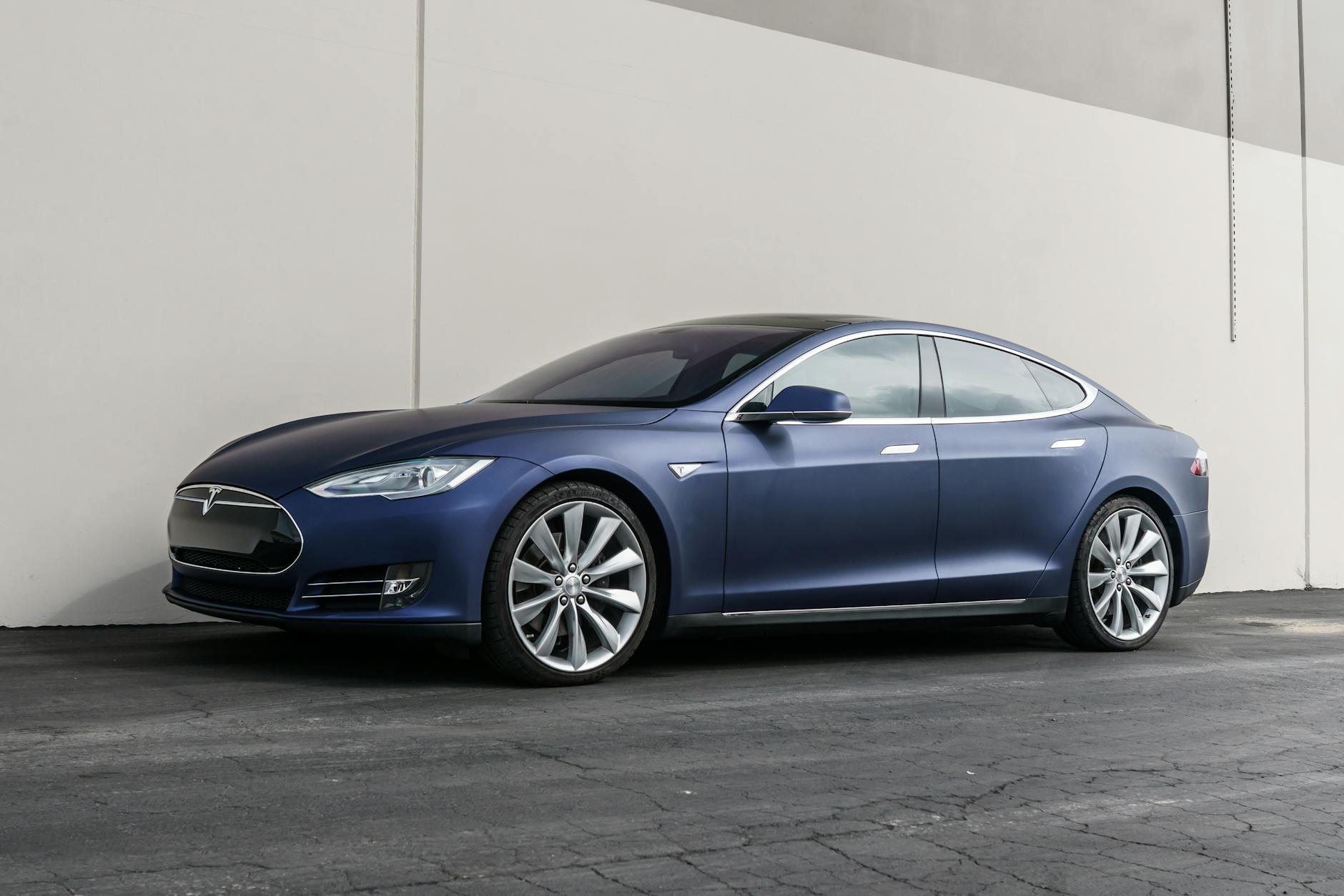
Among Musk’s companies, Tesla is still the one most familiar to ordinary investors and consumers, and for years it served as the public market’s shorthand for the Musk premium. The electric-vehicle maker made him a symbol of the energy transition, software-defined manufacturing and the promise of autonomy. Yet Tesla’s story has become more complicated as competition in EVs has intensified and the company’s narrative has shifted toward artificial intelligence, robotics and self-driving technology.
That shift is not incidental. Tesla’s value proposition increasingly depends on an AI future in which cars are not just products but data-generating platforms and eventual autonomous agents. In that sense, Tesla is less a car company than one node in Musk’s broader machine-learning ecosystem. The company’s relevance to the Musk universe is both financial and strategic: it provides capital, credibility and a test bed for autonomy, even as its core automotive identity is diluted by the empire’s expansion.
Investors have long wrestled with Tesla’s valuation because they are effectively asked to price two companies at once: one that sells vehicles and another that promises technological reinvention. That tension is now mirrored across Musk’s empire. Each company is easier to understand on its own than as part of a shared narrative of post-industrial control.
SpaceX is the engine room
If Tesla is the market-facing pillar, SpaceX is the engineering achievement that made Musk’s reputation hardest to dismiss. It transformed commercial spaceflight from a marginal industry into a strategic one, reduced launch costs, and built a reusable-rockets business model that governments and competitors have had to take seriously. SpaceX is also the foundation of Starlink, which has moved satellite internet from novelty to geopolitical asset.[1][3]
Starlink matters because connectivity is power. In remote regions, conflict zones, disaster areas and countries with weak terrestrial infrastructure, satellite internet can become a substitute for state-built networks. That makes Starlink commercially valuable but politically fraught. It gives Musk’s universe a piece of infrastructure that behaves almost like a utility, while remaining under private control and subject to the decisions of one man.[1]
SpaceX also supplies the narrative glue for the entire Musk project. It is the company that proves he can do hard things. That credibility then spills into Tesla, Neuralink and xAI, where the engineering culture is different but the mythology is the same: make the impossible look inevitable, then scale it before rivals can catch up.
xAI and Grok turn social data into strategic ammunition
xAI is the newest and perhaps the clearest expression of Musk’s integrated strategy. Founded in 2023, the company was positioned as a challenger to OpenAI, Google DeepMind and Anthropic, and it quickly became a formidable participant in the AI race.[1][2] Its flagship product, Grok, is not just a chatbot but a narrative device: an AI tied directly to X, designed to answer questions, generate text and respond in a voice that reflects Musk’s self-styled anti-establishment posture.[1][3]
Grok’s significance is not simply technical. It sits at the junction of data, distribution and ideology. X supplies conversational context; xAI supplies inference and model development; Grok supplies a product that can be monetized, improved and used to keep users inside the Musk environment.[1] In other words, xAI does not merely compete in AI. It helps transform X from a social network into a platform where machine intelligence is part of the interface.
That has obvious business logic. It also raises harder questions about control. If AI models are increasingly trained, deployed and refined inside systems that one billionaire can shape end to end, then the governance of AI is no longer only a question of labs and regulators. It is also a question of platform ownership, data access and private influence over what billions of people see and say.
Neuralink is the speculative edge of the same logic
Neuralink occupies a different category in the Musk universe: less mature, more experimental and far more speculative. Yet it belongs in the same framework because it extends the same ambition toward a new domain—the interface between humans and machines. If Tesla is about mobility, SpaceX about transport, Starlink about connectivity, X about discourse and xAI about cognition, Neuralink is about the body itself.
Its promise is enormous and its risks are obvious. A brain-computer interface could eventually help restore function to people with severe neurological impairments. It could also open a controversial frontier in surveillance, dependency and inequality. Musk has always favored technologies that begin as solutions to genuine constraints and end by redefining the scale of ambition. Neuralink is the purest version of that habit: a company whose practical value and science-fiction aura are inseparable.
The controversies are not collateral damage; they are part of the system
Every Musk enterprise attracts controversy, but the pattern is more than the usual turbulence of a high-profile founder. His companies are controversial because they sit at the intersection of public goods and private control. X is a speech platform. Starlink is communications infrastructure. Tesla is central to the transition away from fossil fuels. SpaceX has national-security importance. Neuralink touches the brain. xAI operates in a field where trust and safety are as important as performance.[1][3]
In each case, Musk’s style compounds the tension. He is not a low-profile operator who lets institutions absorb criticism. He is the brand, the strategist and often the loudest voice in the room. That can make the companies feel more dynamic, but it also fuses corporate governance with personal temperament. When he changes strategy, the market notices. When he posts, regulators notice. When he picks fights, entire product narratives can bend around the conflict.
There is another tension too: Musk’s companies benefit from the aura of mission, yet they are governed as private fiefs. This is not unique to him, but it is unusually concentrated in his hands. In a period when democracies are struggling to regulate digital platforms, AI systems and critical infrastructure, that concentration matters. The problem is not that Musk is powerful; it is that the systems he controls increasingly overlap with the systems societies depend on.
Musk has built a private version of the future
The Musk universe is compelling because it contains real achievements. Rockets land. Satellites orbit. Cars ship. Models answer questions. Brain interfaces advance. The entrepreneur’s critics sometimes understate the scale of what has been built. But admiration should not obscure structure. Musk has not simply founded many companies; he has created a private stack of technologies that touch communication, transportation, cognition and connectivity all at once.[1][3]
That is why the Elon Musk story now feels larger than business biography. It is a case study in how power accumulates in the age of platforms, AI and infrastructure. The classic industrialist built railways or steel mills. Musk is building the channels through which information moves, the vehicles that move people, the rockets that move goods, the satellites that move bits and the systems that may one day mediate thought itself.
Whether that future looks visionary or unnerving depends on one’s view of concentrated ambition. What is no longer in doubt is that the Musk universe is not a collection of side projects. It is an architecture of influence—and one of the defining private power structures of the century.