The world according to Musk
Elon Musk’s companies no longer look like separate businesses so much as organs in one sprawling body. X, Tesla, SpaceX, xAI, Neuralink, and Starlink each pursue different markets, but together they form a single theory of power: control the infrastructure of modern life, then use it to shape the future. Musk has spent the past decade building not just products, but leverage.
That leverage is industrial, financial, and cultural. Tesla made him a force in consumer technology and stock-market imagination. SpaceX gave him a near-monopoly on America’s most ambitious launch business and a role in the global satellite economy. X, the platform formerly known as Twitter, gave him a megaphone and a battleground. xAI, Neuralink, and Starlink extend the same logic into artificial intelligence, neurotechnology, and communications. Taken together, they form a private universe in which Musk is not merely a founder, but a kind of sovereign engineer.
That ambition has always been visible in Musk’s own language. When he launched xAI, he said its purpose was to “understand the universe” and to build a “good AI” that is curious and truth-seeking.[2] That line captures the scale of the project and the problem with it. Musk’s companies are often sold as mission-driven responses to civilizational challenges, but they are also vehicles for one man’s obsession with speed, scale, and control.
X: the platform as power center
The acquisition of Twitter, later renamed X, was Musk’s most conspicuous leap from builder to arbiter. He entered as a large shareholder, then as an owner, and eventually as the platform’s governing force, converting a public square into a privately managed experiment in speech, moderation, and influence.[1] The shift was not just corporate. It was ideological. Musk framed the purchase as a rescue mission for free expression, but the deeper effect was to place a global discourse engine inside his orbit.
X is unusual even by Silicon Valley standards because it is both product and persona. It remains a news distribution system, a political arena, a customer-service channel, and a theater for Musk’s own pronouncements. The platform’s value to Musk is not simply economic; it is strategic. It lets him test narratives, amplify allies, antagonize critics, and steer the conversation around his other businesses. In that sense, X is the hub of the Musk universe: where reputation, politics, and market sentiment collide in real time.
But X also illustrates the costs of Musk’s style. The platform’s turbulence has raised persistent questions about moderation, advertiser trust, and product stability. Musk’s defenders say he has made the service more open and more dynamic. His critics argue that he has turned a fragile civic infrastructure into a less predictable and more politicized machine. Both things can be true at once. X has become more openly Muskian, which is not the same as becoming better.
Tesla: the original empire and its contradictions
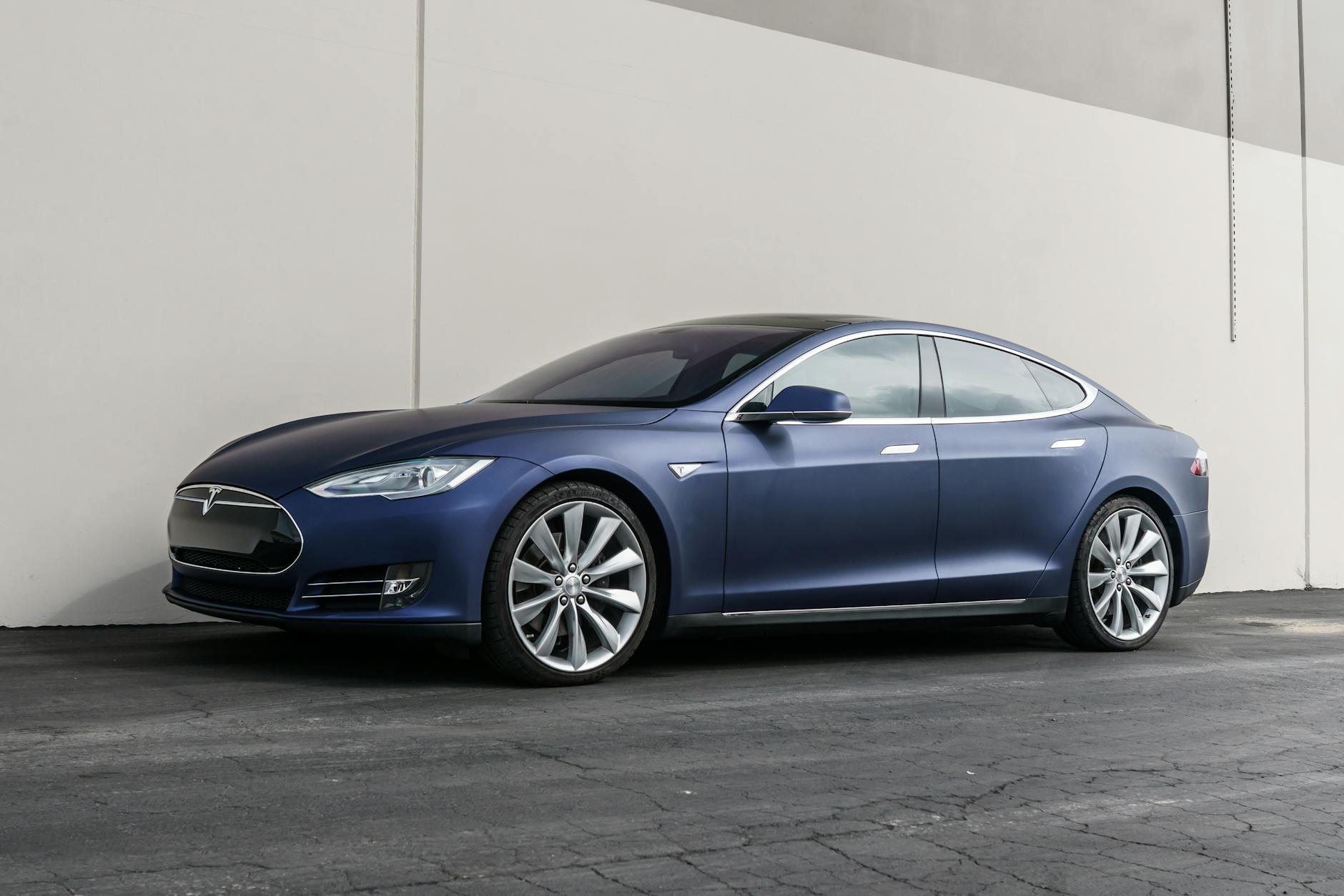
Tesla remains the financial and symbolic foundation of Musk’s brand. It made electric vehicles aspirational, proved that old car companies could be challenged, and transformed battery technology from niche engineering into mass-market industrial strategy. For years, Tesla was the cleanest expression of Musk’s talent: a company that turned impossible timing, bold promises, and capital-market theater into a working business.
Yet Tesla also reveals the limits of the Musk method. The company’s valuation has long depended on more than automobiles; it has been priced as an autonomy, robotics, and artificial-intelligence story. That is precisely the kind of speculative narrative Musk excels at creating. But it also means Tesla is perpetually suspended between present-day manufacturing and future-state mythology.
The tension has only sharpened as Musk’s attention has spread across his empire. Tesla has had to remain both an operating carmaker and a symbol of technological destiny, even as competition intensified and the electric-vehicle market normalized. Musk’s supporters see this as proof that he can still out-innovate rivals. His critics see a company increasingly entangled with the volatility of its founder. Either way, Tesla is no longer merely a car company. It is the most public ledger of Musk’s credibility.
SpaceX and Starlink: infrastructure for a private era
If Tesla is the foundation, SpaceX is the proof of concept that Musk can reshape entire industries. SpaceX did not simply lower launch costs; it changed expectations about what a private company could do in space. Its reusable rockets and aggressive development cadence made it indispensable to governments, satellite operators, and the broader space economy. It also turned Musk into a uniquely powerful private actor in an arena once dominated by states.
Starlink extends that reach. The satellite network has become a global communications utility, especially in regions where terrestrial infrastructure is weak, damaged, or politically constrained. It is one of the most consequential business assets Musk has built, precisely because it sits at the intersection of commerce, geopolitics, and defense. Starlink is not just another subscription service. It is a strategic layer of the internet.
That makes it immensely valuable—and unsettling. A communications network owned and controlled by one entrepreneur offers resilience and speed, but also concentration. It can be deployed quickly in crises, as a substitute for broken infrastructure, yet it also places extraordinary discretion in private hands. Starlink embodies the Musk paradox: a genuine public good wrapped inside a privately governed system.
“The overarching goal of xAI is to build a good AI with the overarching purpose of just trying to understand the universe,” Musk said when introducing the company.[2]
xAI and Grok: the race to define truth
xAI is Musk’s most direct response to the AI boom he helped publicize and then distrust. He has long warned about artificial intelligence while simultaneously betting that he can build it better than the rest. The company’s stated mission—to understand the universe—sounds grand, but in practice xAI is part of a fierce competition to build models that can reason, search, converse, and assist at scale.[2]
Grok, its flagship chatbot, is designed to feel less restrained and more irreverent than rival systems. That personality fits Musk’s brand: skeptical, combative, anti-establishment. It also gives xAI a marketing identity in a crowded field. But the deeper issue is that AI systems are becoming infrastructures of knowledge, and Musk wants one tied to his own platform and worldview. If X is the town square, Grok is the interpreter.
That creates both opportunity and risk. An AI model embedded in Musk’s ecosystem can draw from the platform’s stream of public discourse and feed back into it, tightening the loop between speech, recommendation, and interpretation. The upside is convenience and speed. The downside is epistemic power: the ability to shape what users see, how they ask questions, and which sources appear authoritative. Musk has often described himself as a champion of truth-seeking. In AI, that becomes a much harder claim to sustain, because the system that explains the world can also subtly frame it.
Neuralink: the most personal frontier
Neuralink is the most intimate of Musk’s projects and perhaps the most ambitious. Where SpaceX reaches outward and Starlink blankets the sky, Neuralink aims at the human nervous system itself. It is easy to understand why Musk is drawn to brain-machine interfaces: they promise not just enhancement, but integration. If the internet is outside us and AI is alongside us, Neuralink imagines technology inside us.
That ambition is both futuristic and fraught. The technical challenge is enormous, and the ethical stakes are obvious. Any device that intervenes directly in cognition, movement, or communication raises questions about consent, safety, long-term reliability, and unequal access. Neuralink is not simply another startup. It is a bid to redraw the boundary between human beings and the machines that increasingly mediate their lives.
Even by Musk standards, Neuralink carries a distinct moral charge. It is pitched as a medical and humanitarian project, especially for people with paralysis or neurological injury. Yet it also fits the larger pattern: Musk gravitates toward domains where the long-term upside is transformative and the governance challenges are enormous. He is often most comfortable where institutions are least prepared.
The controversy is not a side effect; it is part of the system
To describe Musk’s empire without controversy would be to describe only its advertising copy. The controversies are not accidental. They are built into the operating model. Musk’s companies are run with extreme ambition, compressed timelines, and a willingness to treat public conflict as a feature rather than a bug. That style can produce breakthroughs. It also produces disorder.
Some critics focus on labor issues, management volatility, product promises, and the broader question of whether one person should command so much infrastructural influence. Others focus on Musk’s political interventions, which have grown more central as X has become both a platform and a personal instrument. Still others worry that his companies normalize a private form of governance in sectors that matter to public life: transport, communications, intelligence, and even the brain.
The common thread is concentration. Musk’s genius is not only technical. It is organizational and narrative. He can concentrate capital, attention, and talent around a vision that appears larger than any one product. But concentration cuts both ways. The more the Musk universe expands, the more it depends on his own judgment, attention, and temperament. That makes it unusually dynamic—and unusually fragile.
The logic of the Musk era
Musk’s companies are often discussed as if they belong to different industries. In reality they are nodes in one larger system. X shapes attention. Tesla translates engineering into consumer identity. SpaceX and Starlink build physical and orbital infrastructure. xAI and Grok compete over the machine understanding of language. Neuralink reaches toward the human mind. Each venture reinforces the others by giving Musk more control over how information moves, how hardware is built, and how the future is imagined.
This is why Musk matters beyond the balance sheet. He has become one of the defining industrial figures of the 21st century not because he owns many companies, but because he has built a cross-sector architecture of influence. That architecture is unusually coherent for something so unruly. It links speech to transport, orbit to bandwidth, computation to cognition. It is the private-sector equivalent of a state project, except that it is driven by one person’s tastes, instincts, and insecurities.
The most striking thing about the Musk universe is not that it is chaotic. It is that the chaos has a direction. Every part points toward the same proposition: the future will be built by those willing to move faster than institutions can comfortably tolerate. That has made Musk both indispensable and exhausting. He is a builder of systems and a destabilizer of systems, a man who treats civilization as an engineering problem and public life as a proving ground. The question now is no longer whether he can launch, scale, or disrupt. It is what happens when one private universe becomes too large to ignore.