Elon Musk has built something rarer than a conglomerate. He has built a private universe.
At its center is a man who moves between industries that once lived in separate worlds: social media, electric vehicles, rockets, satellites, brain implants and artificial intelligence. X, Tesla, SpaceX, xAI, Grok, Neuralink and Starlink are not merely businesses in a portfolio. They are mutually reinforcing instruments in a single ambition: to shape how people communicate, travel, think, and eventually inhabit both Earth and whatever comes next.
That ambition has produced extraordinary value. It has also produced extraordinary dependence. The modern Elon Musk story is not just about innovation. It is about concentration — of capital, control, attention and risk.
The brand that became the infrastructure
Musk’s genius has long been to understand that in the digital age, infrastructure is not only physical. It is also social. X, the platform he bought as Twitter, gave him ownership of one of the world’s most consequential public squares. Tesla gave him a megaphone that doubled as a manufacturing machine. SpaceX gave him launch capability and a near-monopoly on prestige in American private spaceflight. Starlink gave him a satellite network with strategic importance in war, rural connectivity and geopolitics. xAI and Grok extend the logic into synthetic intelligence; Neuralink pushes it into the intimate frontier of the human nervous system.
What links these ventures is not a traditional industrial strategy but a narrative architecture. Musk does not simply sell products. He sells epochs. Tesla is not merely a car company; it is the industrialization of climate ambition. SpaceX is not merely a launch provider; it is the argument that civilization must become multiplanetary. Starlink is not merely broadband; it is the promise that connectivity will follow humanity anywhere. xAI, in Musk’s framing, is not just another lab; it is a corrective to what he regards as ideological or existential distortion in mainstream AI. Grok, the model he places at the front of that effort, is intentionally positioned as a more irreverent, less filtered alternative to its rivals.
This is why Musk’s companies matter beyond their balance sheets. They are not only commercial entities; they are propositions about the future.
Tesla: the original engine and the source of the myth
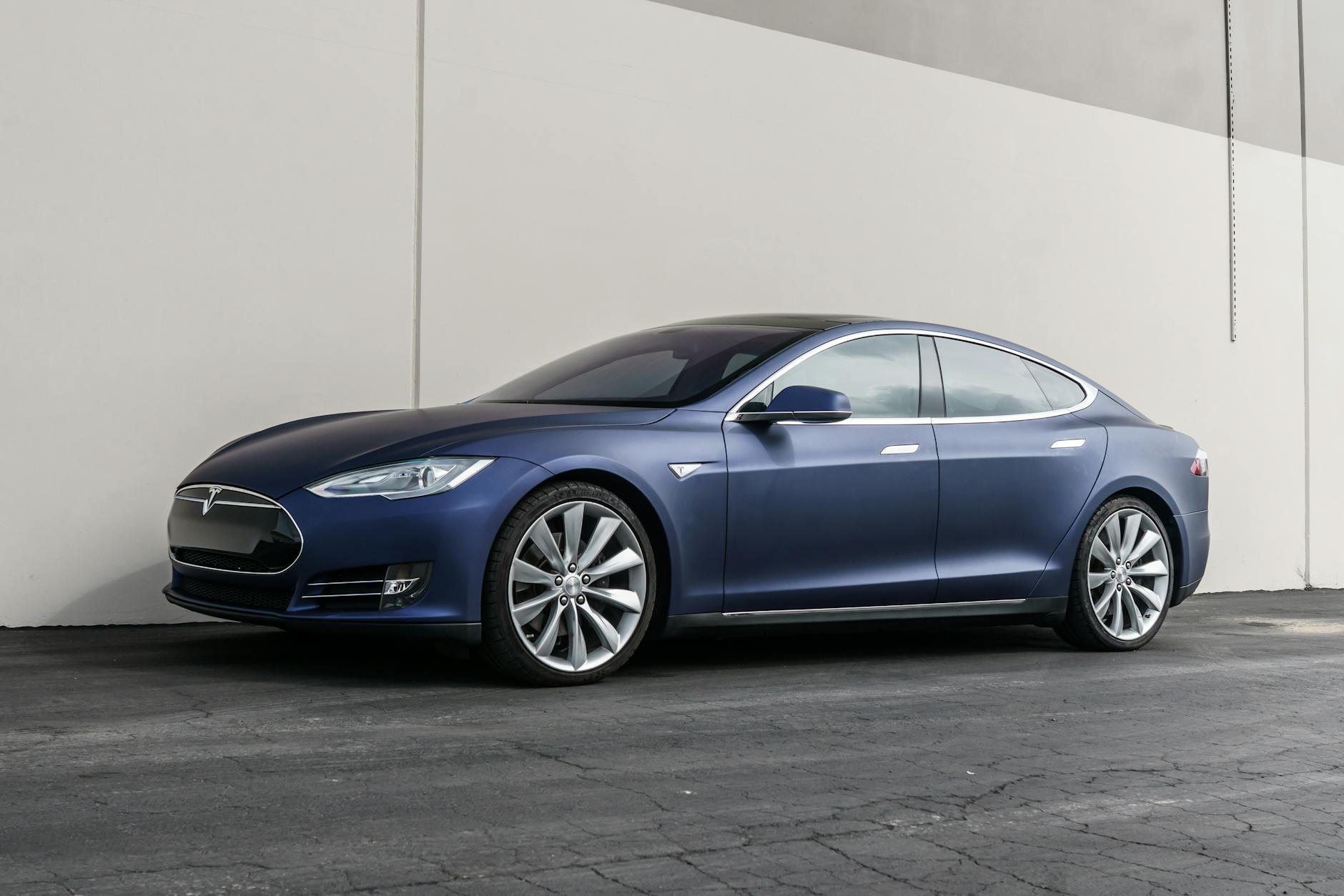
Tesla remains the foundation of Musk’s public identity even as the company’s symbolism has become more complicated. It is still the enterprise that turned him from a wealthy entrepreneur into a global icon. It helped mainstream electric vehicles, forced the auto industry to accelerate its transition, and demonstrated that software-first thinking could be applied to manufacturing at scale.
But Tesla also reveals the limits of the Musk model. The company sits at the awkward intersection of engineering rigor and personality cult. Its achievements are real: battery innovation, charging infrastructure, manufacturing scale and a persistent ability to dominate the EV conversation. Yet the brand is now inseparable from Musk’s political provocations, social media feuds and erratic public style. For some customers, that is part of the appeal. For others, it is a reason to look elsewhere.
That tension matters because Tesla is no longer just an aspirational tech company. It is a mature industrial giant facing competition on price, range, design and software. Its fate increasingly depends on execution rather than charisma. The question is whether Musk can still do the ordinary work of industrial leadership while continuing to behave like a prophet of technological disruption.
SpaceX and Starlink: the state within the state
If Tesla made Musk rich, SpaceX made him indispensable. The company transformed the economics of launch and gave the United States a private counterpart to some of the functions once reserved for sovereign agencies. Its reusable rockets changed expectations about cost and cadence. Its Starship program is an attempt to push that transformation further, toward fully reusable heavy lift and the eventual dream of Mars colonization.
Starlink, meanwhile, has become one of the most strategically important communications systems in the world. It provides internet access in remote regions and has become visible in conflict zones, where satellite connectivity can matter for both civilian resilience and military operations. That dual-use character is precisely what makes the system so powerful and so politically sensitive. It is commercial, but not merely commercial. It is civilian, but not merely civilian. It is private, but its consequences are public.
This is where Musk’s universe begins to resemble a parallel state. SpaceX launches government payloads, supports national security missions, and provides infrastructure that public institutions increasingly rely on. Starlink can be positioned as humanitarian technology and geopolitical leverage at the same time. The arrangement is efficient, but it also leaves democracies vulnerable to a concentration of decision-making in one executive’s hands.
That vulnerability is not hypothetical. A network that matters to defense, disaster response and international communications can never be fully apolitical if control remains so highly personalized. Musk’s critics often describe this as a governance problem. That is too mild. It is a constitutional problem in miniature.
xAI and Grok: the fight over machine intelligence
Musk’s entry into AI is partly an act of rivalry and partly an act of self-justification. He has cast xAI as a company designed to pursue truth-seeking intelligence, in contrast to AI systems he sees as overmanaged, overcautious or ideologically aligned. Grok is the public face of that project: a chatbot that borrows some of X’s irreverence and promises a less sanitized conversational style.
The appeal is obvious. In a market crowded with polished assistants and carefully bounded enterprise tools, Grok offers attitude. But attitude is not governance. The harder problem in AI is not whether a model sounds bold, funny or contrarian. It is whether the system is trustworthy, robust and controllable when its outputs are used at scale.
Musk’s AI strategy also shows the circularity of his universe. X supplies attention and data; xAI supplies models; Grok gives X a reason to matter beyond the decline of the old Twitter-era ad business; Musk’s broader platform gives all of it a constant publicity engine. In theory, that integration could create a formidable AI ecosystem. In practice, it fuses product development with persona management. When the founder is also the principal distributor of the product’s ideology, the distinction between engineering and branding collapses.
Neuralink: the most intimate bet
Neuralink is Musk’s most audacious and least mature venture. If Tesla is about transport, SpaceX about escape and Starlink about connectivity, Neuralink is about integration: the merger of brain and machine. It carries the most obvious medical promise, especially for people with severe neurological conditions, but it also sits on a steep slope toward ethical and regulatory controversy.
The company’s appeal lies in its radical optimism. A brain-computer interface suggests restoration, enhancement and perhaps eventual symbiosis with digital systems. But such a technology raises questions that are not merely scientific. Who gets access? Who sets the standards? What happens when a device moves from therapy to augmentation? How should regulators treat a technology that touches identity, cognition and agency?
Neuralink’s significance therefore exceeds its current technical status. It represents Musk at his most consequential and most alarming: willing to collapse the distance between science fiction and product road map, often faster than institutions can evaluate the implications.
X: the megaphone and the liability
Of all Musk’s holdings, X is the most revealing because it is the least contained. Tesla and SpaceX are constrained by factories, rockets and regulators. X is constrained mainly by law, advertisers and Musk himself. By buying Twitter and remaking it as X, he acquired not just a platform but an arena in which his own views, feuds and theories can move markets, shape news cycles and influence public discourse in real time.
That acquisition clarified the logic of the whole Musk empire. X is both the distribution channel and the culture engine. It is where Musk speaks directly to the public, bypassing traditional media. It is where he tests ideas, amplifies allies and antagonizes critics. It is also where the reputational cost of his behavior becomes most visible, because the platform he owns is the same one on which he performs.
The result is a peculiar kind of corporate synecdoche: when Musk posts, the market listens; when he bluffs, journalists chase; when he fights, the whole ecosystem vibrates. That gives him unmatched leverage over attention. It also makes him more exposed than most industrial leaders to the costs of impulsiveness.
The controversies are not incidental
In many business empires, controversy is a side effect. In Musk’s case, it is part of the operating system. The disputes are familiar: erratic messaging, clashes with regulators, confrontations with employees, culture-war interventions, aggressive speech on X and an almost theatrical resistance to institutional restraint. These are not separate from the business model. They are part of how the brand works.
The same personality that attracts capital and talent also repels advertisers, enrages rivals and unsettles boards. Musk’s supporters argue that this is the price of disruptive leadership. His detractors argue that it is evidence of a founder who confuses freedom with immunity. Both views contain truth. But the central fact is that his companies are increasingly organized around the assumption that his volatility is manageable. History suggests that assumption is dangerous.
“The problem with building a universe around one mind is not that the mind is brilliant. It is that no mind is stable enough to govern every frontier at once.”
That is the great paradox of Musk’s era. He has helped build companies that are technically formidable and strategically important, yet he has also personalized them to a degree that makes the whole structure brittle. Investors, employees, regulators and users are not just dealing with a chief executive. They are dealing with an architecture of interlocking dependencies created by one individual’s appetite for scale.
The future of the Musk system
The more Musk expands, the more his universe resembles a theory of power rather than a set of businesses. It is a theory built on vertical integration, direct communication, technological spectacle and a refusal to respect sector boundaries. The payoff is extraordinary optionality: electric mobility, orbital infrastructure, AI platforms, satellite networks and human-machine interfaces all potentially linked by a common brand and capital base.
The risk is equally large. When a founder controls the means of transport, communication, launch, artificial intelligence and eventually neural interface, the line between innovation and dominance becomes difficult to see. The usual checks — boards, regulators, editorial institutions, even consumer choice — operate more weakly when attention is concentrated and the founder is himself a media system.
That is why the Elon Musk story cannot be told as a simple tale of genius or chaos. It is both. He is one of the most consequential industrialists of the 21st century and one of the most destabilizing public figures in it. His companies have advanced the frontier in multiple fields; his behavior has made those same fields more volatile. He is building the future while repeatedly reminding everyone that the future, in his hands, may come with no manual and no off switch.