Elon Musk’s power comes less from any single company than from the way his companies orbit one another. Tesla sells the future as a consumer product, SpaceX turns launch into infrastructure, Starlink wraps the planet in a communications layer, X is his megaphone and his social network, xAI is his attempt to own the model layer of intelligence, Neuralink is his wager on the interface between minds and machines, and all of it is held together by Musk’s own mythmaking. He is not merely a chief executive; he is the operating system for a sprawling private state of industry, attention and ideology.
That is also why Musk’s universe is so hard to separate from Musk himself. According to Tesla, he co-founded and leads Tesla, SpaceX and Neuralink, while serving as the public face of the company that made him famous in mainstream business culture.[1] Wikipedia’s current profile, reflecting the state of his empire in 2026, describes him as CEO and largest shareholder of Tesla and SpaceX, owner of X, and founder of xAI, with xAI having become a subsidiary of SpaceX in 2026.[2] Whether that corporate arrangement endures or changes is almost beside the point. The essential fact is that Musk has created a cluster of ventures that reinforce one another technically, financially and narratively.
The cult of integration
Most industrial titans build empires through diversification. Musk’s method has been stranger: he builds through integration, then personalizes the integration until the brand itself becomes a political fact. Tesla’s cars depend on software, batteries, chips and a charging ecosystem. SpaceX’s business depends on launch cadence, satellite networks and government contracts. Starlink extends SpaceX from a rocket company into a global telecom platform. X supplies the daily theater. xAI competes in the same domain as the world’s largest technology firms, but with the benefit of a built-in distribution channel and an owner who treats product, publicity and provocation as one continuous act.
This structure gives Musk unusual leverage. It also creates unusual exposure. If a conventional executive stumbles, one company may suffer. If Musk stumbles, the shock wave can pass through markets, politics and public culture at once. That has been true for years, but it is more acute now because the boundaries between his businesses are thinner than ever. SpaceX does not merely launch rockets; it underwrites prestige that can spill into Starlink and xAI. X does not merely host discourse; it can amplify investor sentiment, recruit talent and shape the narrative around his other firms. Tesla is no longer simply an automaker but a proxy in the culture war over technology, climate and status.
Tesla: the original engine of the myth
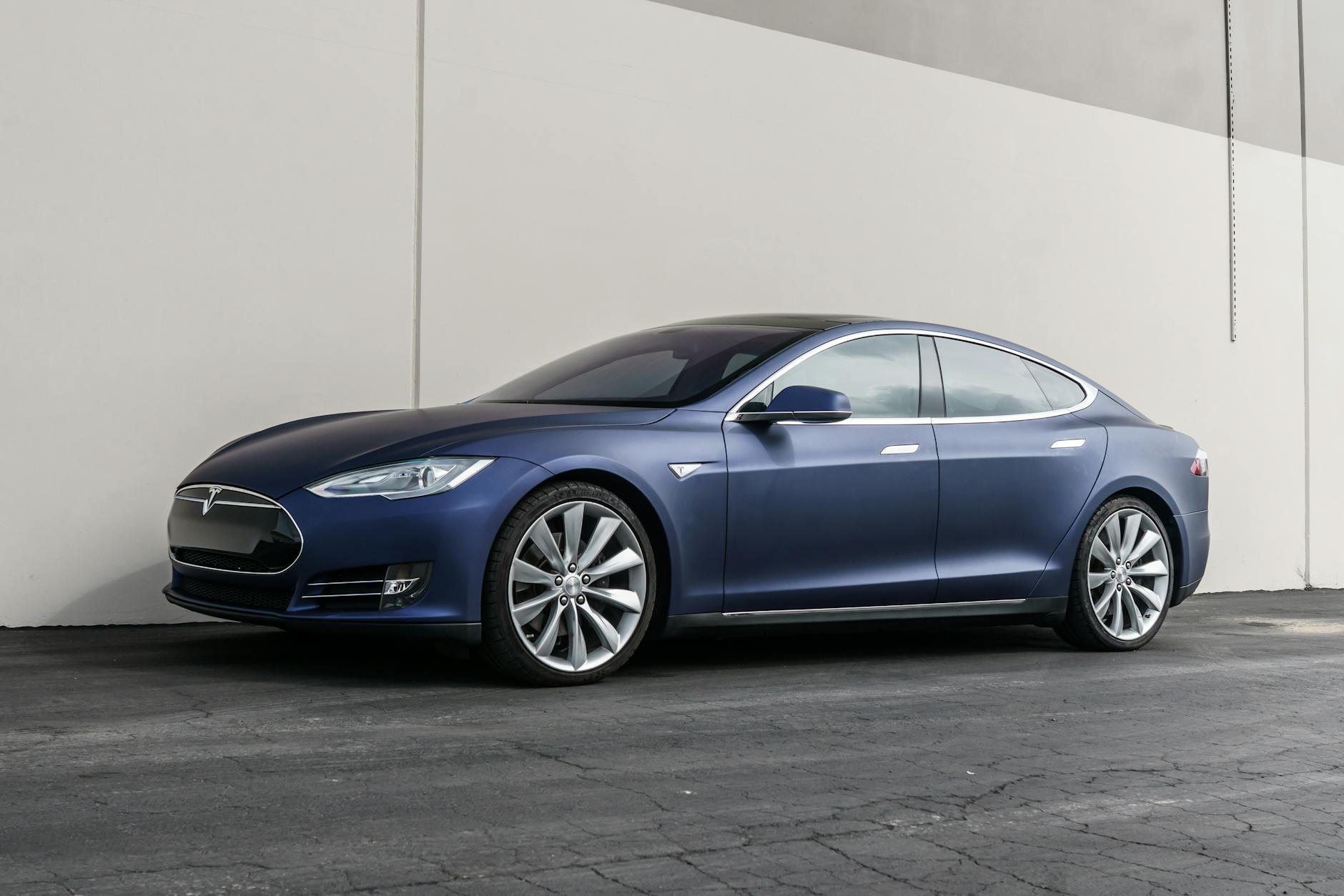
Tesla remains the foundation of Musk’s fortune and therefore the financial bedrock of the universe. It is the company that transformed him from a Silicon Valley outlier into a household name, and it is the one most vulnerable to the contradiction at the heart of Musk’s style: he sells discipline, but he practices improvisation. Tesla’s success came from engineering ambition, industrial scale and relentless branding. Yet it also depended on an almost theatrical tolerance for risk, from manufacturing chaos to the recurring gap between promise and delivery.
The company’s significance in 2026 is bigger than cars. Tesla taught investors to accept Musk’s grand time horizons. It normalized the idea that a product company could behave like a platform, a research lab and a movement all at once. It also created the template for his other businesses: a charismatic founder, a technical mission stated in civilizational terms, and a public presence that can override conventional corporate governance. That model has made Musk rich, but it has also made him unusually hard to manage. Boards can supervise operations. They cannot easily supervise mythology.
SpaceX and Starlink: infrastructure as power
If Tesla is Musk’s legacy in consumer capitalism, SpaceX is his claim on history. Founded in 2002, the company reshaped the economics of launch through reusable rockets and turned a billionaire’s private venture into an essential supplier for the public and private sectors.[2] It has also given Musk a platform that no car company could ever match: a strategic position in the physical infrastructure of modern life. SpaceX sends satellites aloft, ferries cargo and crew, and increasingly touches defense, communications and national policy.
Starlink is the clearest expression of that reach. What began as a satellite internet service is now a geopolitical instrument, extending broadband to remote regions, supporting mobility in conflict zones and making SpaceX a player in the contest over connectivity. In business terms, Starlink is elegant: a network business with recurring revenue potential. In political terms, it is unnerving: a global communications system controlled by a private entrepreneur whose public statements can ricochet unpredictably across diplomacy and war. This is the paradox of Musk’s empire. The more useful it becomes, the more exposed the world is to his temperament.
There is a reason governments keep dealing with him despite the discomfort. Musk is often faster than the institutions that regulate, buy from or criticize him. SpaceX has become indispensable because it delivers what slower systems struggle to provide: cheaper launch, operational repetition and technical audacity. Starlink is similarly attractive because it works where terrestrial systems fail. But indispensability can become leverage, and leverage invites suspicion. A company that can be both utility and pressure point is a company the state cannot fully relax around.
X: the megaphone that became a liability
The purchase of Twitter in 2022 and its rebranding as X in 2023 transformed Musk from a powerful business figure into a direct participant in the architecture of speech.[2] That move was not just a corporate acquisition; it was a cultural wager. Musk argued, implicitly and sometimes explicitly, that he could make the platform a freer, better version of itself. Instead, X became something more revealing: a platform tailored to Musk’s instincts, tastes and instincts for confrontation.
X matters because it concentrates attention. For Musk, attention is not a byproduct but a resource. It recruits users, shapes headlines, influences employees and affects markets. But it also magnifies inconsistency. A founder who thrives on volatility can make a social platform volatile in ways advertisers, regulators and journalists do not admire. The result is a contradiction at the center of the Musk universe: the man who seeks to dominate the flow of information has made his own platform one of the least predictable places on the internet.
That unpredictability is commercially costly, but it is also strategic. X remains Musk’s communications weapon, his public diary and his most immediate feedback machine. It lets him test narratives in real time, build alliances, taunt opponents and frame every controversy as part of a larger struggle. In another era, an industrial magnate bought newspapers. Musk bought the feed itself.
xAI and Grok: the race to own intelligence
Musk’s push into artificial intelligence is the most important signal of what he thinks the next industrial order will be. After helping found OpenAI and later leaving, he built xAI as a rival attempt to shape frontier AI on his own terms.[2] The company’s flagship chatbot, Grok, is designed not merely as a tool but as a personality: irreverent, fast and wired to the real-time chatter of X. That linkage is no accident. Musk wants AI not only to reason but to converse in the idiom of the internet he owns.
The strategic logic is clear. If the future belongs to models, data and distribution, Musk wants a stake in all three. xAI gives him a laboratory for frontier development. X supplies user interaction. Tesla and SpaceX provide a universe of industrial use cases, from robotics to autonomy to data interpretation. The ambition is vast, and in a narrower sense it is coherent: build the intelligence layer, then plug it into the physical and social layers already under your influence.
Yet AI is a field in which scale and speed do not guarantee trust. Musk’s name is now associated with both cutting-edge ambition and public skepticism about claims that run ahead of evidence. That tension matters because AI’s central problem is not just capability; it is legitimacy. A model can be impressive and still be doubted. An AI company led by Musk may move quickly, but it must also persuade institutions that it can be responsible. That is a harder sell when the founder is famous for treating restraint as a weakness.
Neuralink: the body as the final frontier
If Starlink wraps the planet and xAI interprets it, Neuralink aims to enter the human body itself. Musk’s neurotechnology company, which he co-founded in 2016, represents the most intimate expression of his worldview: the belief that technological progress should not stop at tools, infrastructure or interfaces, but should reach directly into cognition.[1][2] It is the most speculative of his ventures and, in some ways, the most revealing.
Neuralink is powerful as an idea because it speaks to a familiar Muskian theme: the weakness of bottlenecks. If rockets are limited by reusability, cars by batteries, networks by coverage and AI by compute, then the brain is limited by the interface between thought and machine. Neuralink offers a way around that limit. In practice, of course, the scientific, ethical and regulatory barriers are formidable. The company lives at the intersection of medicine, engineering and human experimentation, where the difference between breakthrough and overreach is often measured in years, not press releases.
Neuralink also sharpens the moral question that hovers over the whole empire. Musk often frames his work in civilizational terms: multiply consciousness, reach Mars, preserve humanity, expand the frontier. But once the frontier enters the body, the language of destiny meets the language of consent, risk and harm. The argument for Neuralink is not that it is obviously dangerous; it is that it dramatizes the fact that Musk’s imagination is now bigger than any one regulator, discipline or company culture.
Controversies as a business model
To speak of Musk’s controversies as distractions is to misunderstand the system. They are not merely interruptions; they are part of the operating logic. His public feuds, combative posts, sudden policy pronouncements and open disdain for institutional etiquette have become central to how his universe functions. They create loyalty among followers who admire defiance, and exhaustion among critics who see recklessness. They also ensure that Musk is always in the news, which is a competitive advantage in industries where narrative can shape capital allocation.
But controversy has costs that are now too large to ignore. It complicates regulation, unsettles employees and makes corporate governance harder. It can also blur the distinction between the entrepreneur and the enterprise, so that every remark becomes a proxy battle over product quality, workplace culture or financial credibility. Musk’s empire is unusually resistant to ordinary reputational damage because it is so diversified, but that same diversification means its leader’s behavior can contaminate the whole brand family.
There is another danger: ideological overextension. Musk wants to be taken seriously as an industrial builder, a political actor, a defender of free speech, a strategist of AI and a guardian of civilization. That is too many identities for one figure to inhabit without friction. The more he enlarges the scope of his mission, the more every failure becomes symbolic. The world does not merely ask whether Tesla can sell cars or SpaceX can launch rockets. It asks whether Musk’s way of thinking about power is itself sustainable.
“The future belongs to those who can connect engineering, computation and control of attention.”
That sentence is not a Musk quotation so much as a fair description of his empire. He has built a machine for connecting domains that used to be separate: vehicles, launch systems, satellites, social media, AI and neural interfaces. This is what makes him historically unusual. It is also what makes him unsettling. The old industrial titan sold products. Musk sells architectures of dependence.
His defenders say that is what transformative entrepreneurs do. They create systems, not just widgets. His critics say he is a showman who confuses velocity with wisdom. Both accounts contain truth. Musk is not a fraud, and he is not a pure visionary. He is something more consequential and more dangerous: a builder whose gifts are large enough to matter and whose impulses are erratic enough to worry anyone who depends on his systems.
That dependence is the real story of the Musk universe. Tesla drivers rely on software updates, SpaceX customers rely on launch schedules, Starlink users rely on orbital coverage, X users rely on a platform he owns, xAI users rely on a model he wants to shape, and Neuralink’s future patients may one day rely on devices whose risks are still being discovered. The empire is not just a portfolio. It is a web of promises. And in 2026, the question is no longer whether Musk can keep building. It is whether the rest of the world can keep living inside what he builds.