An empire built on interdependence
Elon Musk does not run a set of companies so much as a self-referential universe. Tesla, SpaceX, X, xAI, Neuralink, and Starlink are often described as separate ventures, but the more revealing way to see them is as interlocking instruments of one project: to concentrate technological power, public attention, and narrative control in a single brand of ambition. Musk’s genius has never been merely engineering. It has been systems thinking fused with spectacle, and then wrapped in a personality cult that turns product launches into cultural events.
The remarkable thing about the Musk universe is not that it exists across so many sectors, but that each sector depends on the others for legitimacy. SpaceX gives Musk the aura of civilization-scale engineering. Tesla provides wealth, scale, and proof that his ideas can be commercialized. X gives him a megaphone and a laboratory for influence. xAI attempts to convert that influence into a direct stake in the defining technology of the decade. Starlink extends the empire into infrastructure. Neuralink pushes it toward the human body itself. The portfolio is diverse, but the logic is singular: control the platforms on which modern life increasingly depends.
Tesla: the original machine and the changing story
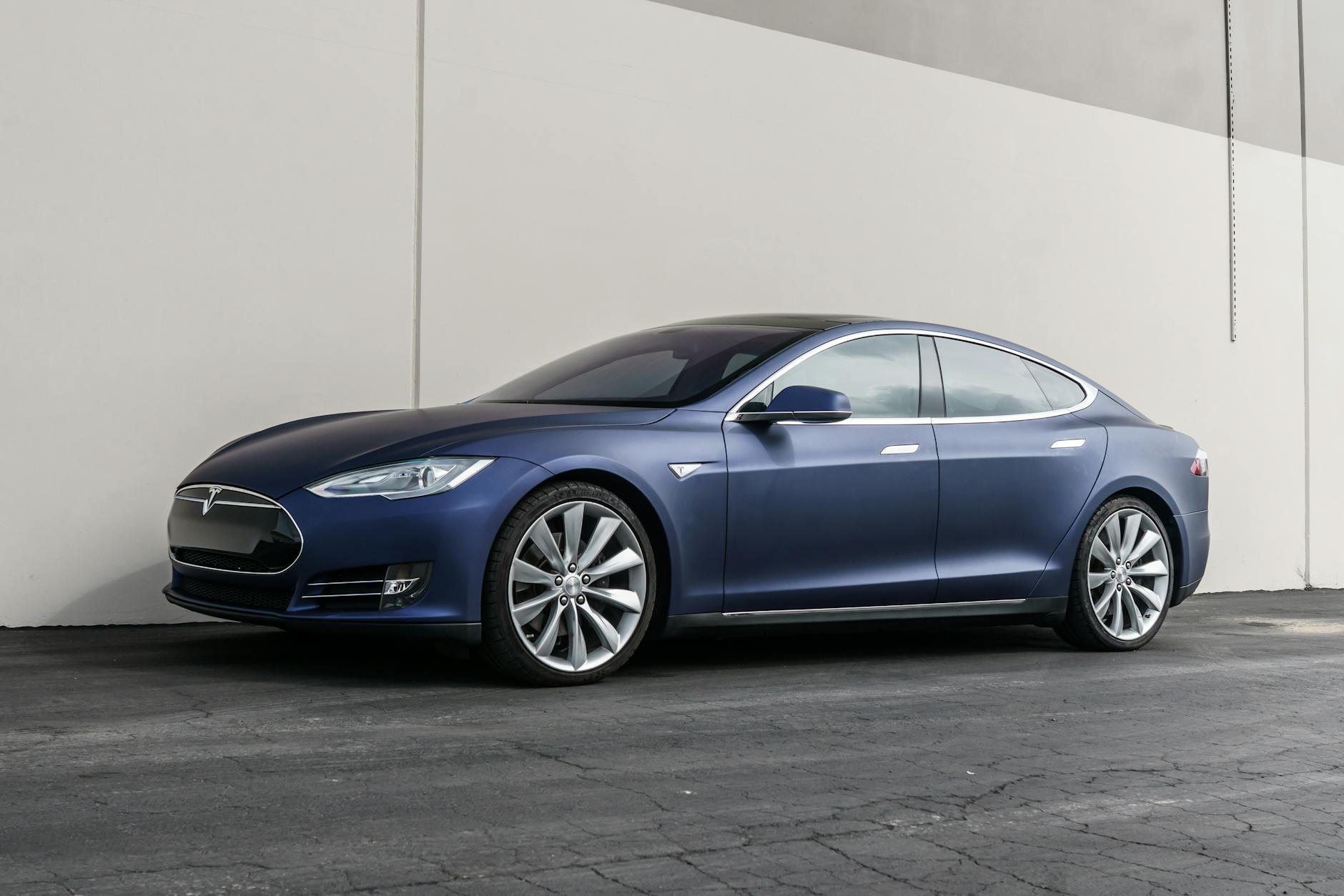
Tesla remains the foundation of Musk’s fortune and public identity, but it is no longer the uncomplicated symbol of clean-tech progress that it once was. The company helped make electric vehicles mainstream, and it rewired the automobile industry’s assumptions about software, batteries, and charging infrastructure. Yet Tesla also became a referendum on Musk himself. For years, the company’s valuation rested not only on vehicle sales but on the expectation that it would become a software-and-robotics platform, perhaps even a beneficiary of autonomy that would transform mobility economics. That promise remains partially unrealized, and each delay has widened the gap between Musk’s rhetorical horizon and the company’s operational realities.
Tesla’s significance now is as much political as industrial. It sits at the intersection of climate policy, labor conflict, industrial strategy, and consumer culture. The brand once benefited from Musk’s iconoclasm; now it often suffers from it. Buyers who once saw Tesla as futuristic increasingly encounter a company whose leader is engulfed in partisan conflict, governance scrutiny, and reputation risk. Tesla is still the proof that Musk can build at scale. It is also the company most exposed to the costs of his style.
SpaceX: the least chaotic part of the chaos
If Tesla made Musk rich, SpaceX made him indispensable. SpaceX has become the world’s dominant private launch company and a central contractor in the space economy. Its achievements are concrete, measurable, and hard to dismiss: reusable rockets, routine cargo and crew missions, and a satellite network that has become critical infrastructure far beyond the space sector. In another era, this would be enough to make Musk the heroic figure of industrial history. In this one, SpaceX also illustrates the paradox of his empire: the company succeeds partly because it is disciplined in ways Musk’s other ventures are not.
That discipline matters because the stakes are high. SpaceX’s Starship program is intended to be the backbone of future deep-space ambitions, and its engineering ambitions remain audacious even by Musk standards. But SpaceX is also now a geopolitical actor, not just a contractor. Its launches support government missions, and Starlink’s reach makes it a participant in communications resilience, wartime connectivity, and the architecture of national power. The company’s independence is therefore both an asset and a liability. It reduces reliance on legacy incumbents, yet it also places too much strategic infrastructure under the direction of one highly unpredictable man.
X: the town square becomes a throne room
No acquisition better captures Musk’s worldview than his purchase of Twitter, later renamed X. He treated the platform as both a business and an ideological battlefield, arguing that it could become a “town square” for speech. In practice, the takeover revealed a different ambition: not simply to liberalize discourse, but to own the discourse machine itself. If Tesla and SpaceX are about moving atoms, X is about moving attention. That is arguably the most valuable resource in modern capitalism, and Musk now controls one of the world’s most recognizable distribution channels for it.
The transformation of Twitter into X has been a study in brand destruction and strategic reassertion. Musk slashed staff, changed moderation policies, and altered the platform’s identity so thoroughly that even its name became a statement of impermanence. Supporters call this radical efficiency. Critics call it a demolition of institutional trust. Both are partly right. X remains influential precisely because it is unstable: journalists, politicians, founders, traders, and agitators continue to use it as if it were public infrastructure, while Musk retains the power to shift rules, priorities, and visibility with little warning.
That asymmetry matters. X gives Musk an always-on instrument for setting narratives, attacking opponents, promoting his companies, and testing social reaction in real time. It is not just a media business. It is a strategic asset in the Musk system, one that makes every other asset more visible and more controversial.
xAI and Grok: the search for a proprietary mind
Musk’s AI push through xAI is the clearest expression of his desire to compete at the frontier of general-purpose intelligence while using his own platforms as the training ground. The premise is simple: if AI will shape the distribution of power in the 21st century, then Musk wants not merely a product but an institution that can contend with the best in the field while drawing on the data, traffic, and cultural reach of X. Grok, the company’s chatbot, is therefore more than a consumer feature. It is an attempt to fuse a social network with a model stack, creating a loop in which user behavior, public conversation, and AI output reinforce one another.
That model has obvious appeal and obvious dangers. The appeal lies in integration. A platform with access to live discourse can, in theory, build faster-replicating products and more responsive models than closed systems operating in isolation. The danger is that a platform already accused of amplifying polarization becomes an AI engine trained to metabolize that same turbulence. Musk presents xAI as a pursuit of truth and understanding. But the commercial logic of the company is less philosophical than infrastructural: if AI becomes the dominant interface to information, Musk wants one that is native to his ecosystem.
Grok also reflects Musk’s instinct for identity differentiation. Where other AI systems tend toward caution, Grok is marketed as irreverent, opinionated, and less constrained. That may win attention. It also raises questions about reliability, governance, and the boundary between humor and misinformation. In Musk’s universe, the line between product design and persona is often deliberately blurred. Grok is another example.
Starlink: the network that makes the empire planetary
Starlink is perhaps the most underestimated part of Musk’s portfolio because it looks, at first glance, like a utility. But utilities can be more powerful than consumer brands. Starlink offers internet access from orbit, making it essential in remote regions, disaster zones, maritime contexts, and conflict areas where terrestrial infrastructure is weak or compromised. It is both a business and a strategic layer, one that extends Musk’s reach into the physical conditions of connectivity itself.
This matters because connectivity is no longer neutral. Whoever controls a communications network can influence availability, resilience, and, in crisis, operational continuity. Starlink’s role in Ukraine brought that reality into sharp relief and showed that Musk’s companies can become entangled in military and diplomatic questions whether he wants that or not. The company’s technical success has thus produced an uncomfortable truth for governments: critical infrastructure may increasingly depend on a private executive who treats discretion as optional and public statements as operating instructions.
Starlink also reveals the scale of Musk’s ambition. He is not merely building products. He is attempting to occupy layers of the stack: transport, launch, communications, social distribution, AI, and perhaps eventually the interface between brain and machine. That is a form of vertical integration that no traditional conglomerate has attempted at this speed or this level of narrative intensity.
Neuralink: the empire enters the body
Neuralink is the most futuristic and, in some ways, the most ethically fraught of Musk’s companies because it aims at the intimacy of the human nervous system. The promise is extraordinary: a brain-computer interface that could restore function, unlock new forms of communication, or eventually merge human cognition with machine systems. The marketing value of that promise is obvious. The scientific and regulatory burden is equally obvious.
Neuralink also fits Musk’s broader pattern. Each venture begins as a boundary-crossing claim: that something previously confined to science fiction can be engineered into reality. The company’s existence helps keep Musk at the center of conversations about the future, even when the technical milestones are incremental rather than revolutionary. But because Neuralink concerns medical devices and human subjects, the ethical stakes are sharper than in consumer tech. The usual Musk pattern—move fast, provoke first, explain later—sits uneasily beside the responsibilities of clinical science.
In that sense, Neuralink is a test not only of engineering but of institutional seriousness. If Musk’s companies are often accused of treating regulation as an obstacle to be outmaneuvered, Neuralink is the one where that instinct could have the highest cost.
The controversy is not incidental; it is structural
To describe Musk’s controversies as distractions is to misunderstand how his empire works. Controversy is not merely a side effect. It is a mechanism. Musk’s public persona generates attention, attention generates cultural relevance, and cultural relevance helps sustain investor belief, user engagement, political leverage, and employee recruitment. He has turned volatility into a form of capital. The same dynamic that makes him difficult to govern also makes him difficult to ignore.
That model has obvious limits. When a founder becomes too central, every product becomes a referendum on him. Tesla’s brand absorbs his politics. X’s trust problems reflect his governance style. xAI inherits his desire to dominate a strategic frontier. SpaceX and Starlink become entangled in geopolitical questions because he cannot fully separate the private from the public. The more the empire expands, the more it depends on the credibility of a single individual whose credibility is perpetually in motion.
There is also a deeper irony. Musk likes to cast himself as a builder of civilization’s future, a man working on the infrastructure of survival and expansion. Yet much of the empire’s power derives from the very systems of instability he claims to transcend: attention markets, market-moving statements, meme culture, and the concentration of digital power in private hands. His companies promise escape from the limits of older institutions, but they also reproduce a familiar one: rule by founder.
“The future” in Musk’s universe is not a distant horizon. It is a branding strategy, a financing mechanism, and a governing philosophy.
That may be the defining fact of the Elon Musk era. He is not simply the most famous entrepreneur of his generation. He is the architect of a private ecosystem that spans transportation, launch, communications, social media, AI, and neurotechnology, each company strengthening the myth that the next frontier is always one more acquisition, one more launch, one more model, one more product reveal away. The cumulative effect is astonishing. It is also unstable.
The Musk universe endures because it contains genuine breakthroughs. Rockets land, satellites connect, cars sell, and models speak. But it also endures because modern institutions increasingly struggle to match the pace, scale, and drama of private founders who operate across multiple frontiers at once. Musk has exploited that gap better than anyone. The question now is whether the universe he built can remain coherent when its central force is the same one that keeps destabilizing it.