Elon Musk is no longer best understood as a chief executive. He is better understood as the architect of a private universe: a stack of companies, platforms and narratives that orbit one another and, increasingly, orbit him. X, Tesla, SpaceX, xAI, Grok, Neuralink and Starlink are often described as separate ventures. In practice they now form a single political, industrial and cultural system—one that has redefined transport, communications, online speech and the public meaning of technological ambition.
The scale of that system is extraordinary. SpaceX routinely carries NASA astronauts and has become the backbone of American launch capability; Starlink has turned a private satellite network into an instrument of global connectivity and geopolitical leverage; Tesla remains the most consequential electric-car company in the world; xAI is Musk’s bid to own the next era of machine intelligence; Neuralink seeks to extend that logic into the brain; and X, the platform formerly known as Twitter, serves as the loudest microphone in the network, both an arena for Musk’s worldview and a distribution system for it.
What makes the Musk universe distinctive is not merely its breadth. It is the way each business feeds the others. X amplifies Musk’s messages, his products and his enemies. Tesla gives the empire consumer scale and cash-generating legitimacy. SpaceX supplies heroic engineering prestige. Starlink provides the infrastructure layer. xAI promises cognitive sovereignty. Neuralink offers the ultimate frontier narrative. Each company is not just a company but a chapter in a single myth: that one driven individual can accelerate civilization by collapsing the distance between vision, hardware and public attention.
The empire of interdependence
Musk’s corporate world has always been unusual, but it has become more integrated over time. Tesla helped make him famous as a maker, then SpaceX made him seem almost mythic as a builder of rockets. X converted him into a media proprietor. Starlink extended his reach into the sky, xAI into the software stack, and Neuralink into the body itself. These are not random bets. They create an ecosystem in which transportation, communications, computation and consciousness can all be narrated as adjacent problems awaiting the same kind of solution: forceful engineering, radical risk-taking and minimal deference to institutionally cautious norms.
That ecosystem also confers strategic advantages. SpaceX and Starlink, for example, sit at the center of critical infrastructure with civilian and military implications. Tesla keeps Musk anchored in the largest consumer market he has ever mastered. X gives him direct access to global discourse without relying on journalists or gatekeepers he often despises. xAI and Grok allow him to compete in the defining technological race of the decade while framing that race as a moral struggle over truth rather than a commercial contest over compute and talent.
Yet the same interdependence creates vulnerability. The more Musk’s businesses are understood as one system, the more a setback in one part can stain the others. Advertising weakness at X affects his broader reputation. Autopilot and safety controversies at Tesla spill into debates about his judgment elsewhere. Satellite diplomacy around Starlink can become a political issue for SpaceX. The whole structure depends on one central asset: Musk’s ability to persuade investors, employees, governments and users that his risk appetite is a feature rather than a defect.
X and the politics of the microphone
No part of Musk’s empire better reveals his instincts than X. His acquisition of Twitter transformed a mature social platform into a test case for his beliefs about speech, moderation and power. He cast the purchase as a rescue mission for open discourse, but the real outcome has been messier: a smaller, more volatile platform whose tone is strongly shaped by Musk himself, even as he insists that he is merely reducing censorship and increasing transparency.
X matters because it is the only major asset in the Musk universe that is simultaneously a business, a media company and a personal instrument. It is where he announces product plans, taunts critics, promotes his own companies and stages cultural fights. It is also where the contradictions in his worldview are most visible. Musk presents himself as a champion of free expression, yet he relies on a privately controlled platform that he can tilt, algorithmically and rhetorically, toward his own priorities. He calls for less orthodoxy, but the platform often reflects a different orthodoxy: anti-establishment, anti-mainstream and deeply personalized.
That has consequences beyond the app itself. Musk’s use of X has changed how corporations, regulators and journalists interact with him. It has also blurred the line between public argument and private corporate interest. When the owner of a communications platform is also the owner of critical infrastructure, cars, rockets and an AI company, his posts are no longer just posts. They are signals from the center of a networked industrial state.
Tesla’s original sin: product and personality fused
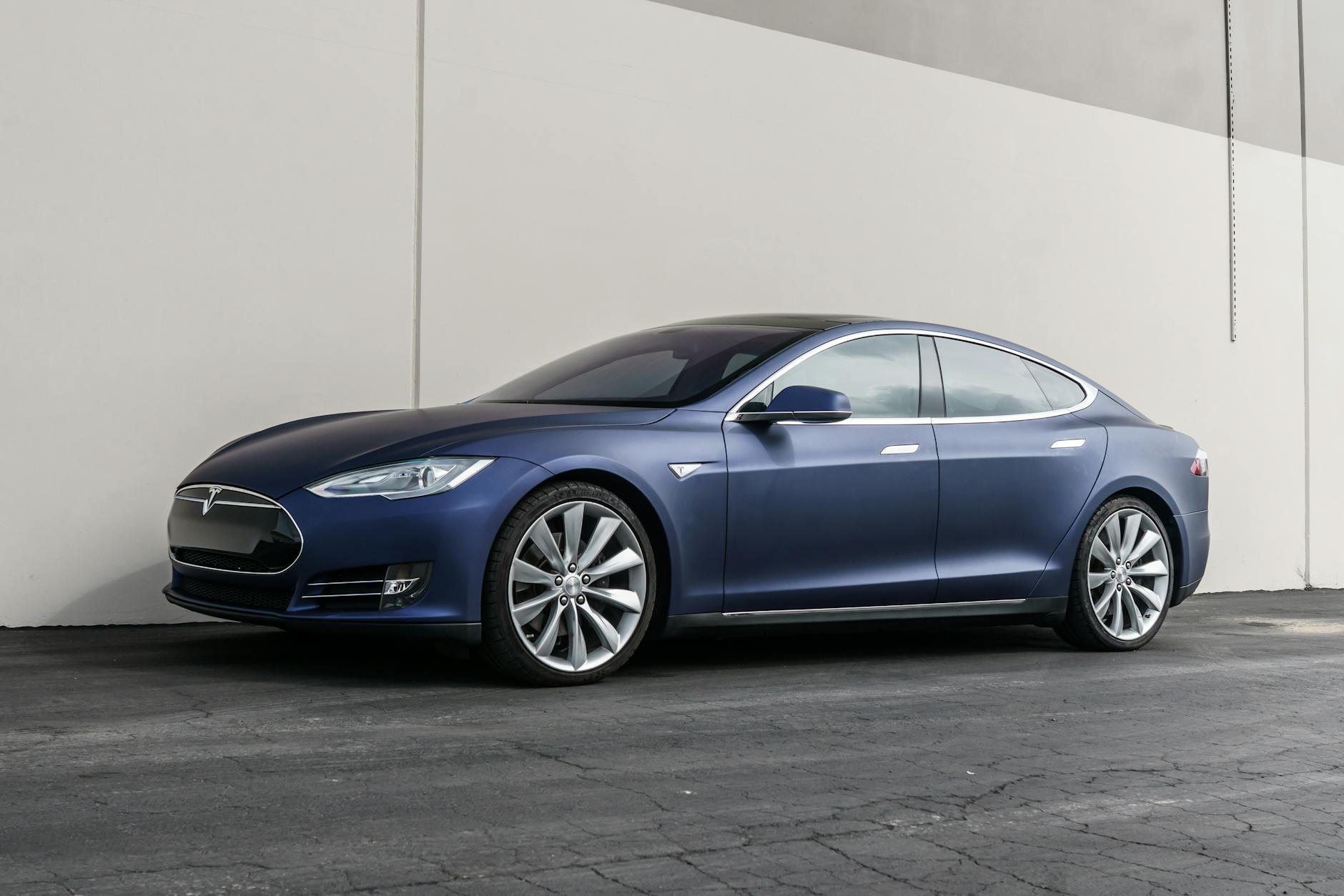
Tesla remains the company that made Musk a household name, and it remains the clearest example of his talent for combining ambition with narrative. The company helped pull electric vehicles from niche curiosity to mass-market inevitability. It also taught investors to see Musk not as a manager among managers but as a singular force of disruption whose personal aura could substitute, at least for a time, for conventional corporate discipline.
That bargain has become harder to sustain. Tesla faces far more competition than it did in its ascendant years. Its product cycle is less visually dramatic than the launch of a new rocket, and its valuation has long depended on expectations that extend well beyond car sales. The company’s identity remains tied to Musk’s ability to sell the future, but the future now needs to show up in quarterly numbers, not only in keynote presentations.
The deeper issue is that Tesla’s success created the template for the rest of the Musk universe. It demonstrated that a founder with enough charisma, technical credibility and tolerance for chaos could command enormous capital while keeping control. That lesson made SpaceX possible, then X, then xAI. Tesla is the company that turned Musk from a billionaire entrepreneur into a category unto himself: the founder as sovereign actor.
SpaceX, Starlink and the privatization of infrastructure
If Tesla is the consumer-facing face of Musk’s empire, SpaceX is its institutional core. No private company has done more to change the economics of launch or the strategic geography of space. SpaceX’s reusable rockets altered an industry that had long treated expensive launch as a fixed law of nature. The company’s operational sophistication also made it indispensable to NASA and to the broader U.S. space establishment.
Starlink takes that logic further. A satellite network originally associated with remote broadband is now part of the infrastructure of war, diplomacy and disaster resilience. It can connect villages, ships, journalists and military units. That versatility is also what makes it politically sensitive. When a private company controls connectivity that matters in conflict zones and disaster zones, it is no longer merely a telecom venture. It becomes a foreign-policy actor with corporate incentives, public obligations and a founder whose opinions are never far away.
This is where Musk’s universe becomes most consequential. SpaceX and Starlink demonstrate that private capital can now build systems once thought to require states. But they also reveal a risk: when infrastructure is privatized at this scale, the line between service provider and sovereign becomes blurred. The genius of SpaceX is that it can do what governments struggle to do. The danger is that the world may come to depend on one man’s tolerance for risk, leverage and improvisation.
xAI, Grok and the war for cognitive relevance
Musk entered the AI race with a familiar posture: grievance wrapped in mission. He has argued that mainstream AI development is too closed, too politically compliant or too detached from first principles. xAI and its chatbot Grok are his answer to what he portrays as a more conformist artificial intelligence industry. The pitch is classic Musk: build a product that is faster, freer and less afraid to offend.
But AI is not just another software category. It is the core battleground for future productivity, search, automation, media and software itself. Musk’s involvement matters because he understands distribution, attention and system design better than most AI founders. He also has an enormous platform through X to seed adoption and shape narratives. If xAI succeeds, it will not simply be because its models are competitive; it will be because Musk can integrate them into a broader user ecosystem that already includes social media, consumer hardware and infrastructure.
Grok, meanwhile, functions as both product and persona. It is meant to be witty, irreverent and less constrained than competing assistants. That design choice mirrors Musk’s own brand: brilliant, confrontational and allergic to polite consensus. But the larger question is whether the appetite for contrarianism can compete with the market demand for reliability. AI users often want utility before ideology. If Grok is to matter, it will have to do more than sound like Musk. It will have to outperform.
Neuralink and the final frontier of control
Neuralink is the most unsettling element in the Musk constellation because it moves the company-from-platform model inward, toward the human nervous system itself. Its promise is enormous: restoring function, enabling communication, perhaps one day creating new interfaces between brain and machine. But it also raises the oldest anxieties in technology into their most intimate form. What happens when the logic of optimization reaches the brain?
Musk has often described his ventures in civilizational terms. Neuralink is the purest expression of that ambition because it suggests not just a better device or a faster transport system, but a revised relationship between mind and machine. In Musk’s telling, this is about helping humanity keep pace with AI. In a broader sense, it is about whether the boundaries of the self are now another engineering problem.
“The line between human and machine is becoming less important than the line between capability and helplessness.”
That line may be the philosophy at the center of the Musk universe. Each company claims to reduce helplessness: Tesla against fossil dependence, SpaceX against planetary fragility, Starlink against isolation, X against gatekeeping, xAI against intellectual stagnation, Neuralink against bodily limitation. The cumulative effect is a theory of power: technology as liberation from dependence on institutions, geography and even biology.
The controversy is not a sideshow
To describe Musk’s controversies as distractions is to misunderstand the model. The controversies are part of the model. They sustain the attention economy that finances, legitimizes and mythologizes his work. Every public feud, policy reversal, labor dispute or reckless post on X reinforces the sense that Musk is simultaneously indispensable and ungovernable.
That duality has real costs. It complicates governance at Tesla, where investors must distinguish between product execution and founder spectacle. It creates regulatory friction around X, where content moderation and platform accountability remain contested. It raises concerns about reliability at Starlink and SpaceX, whose public importance grows as their founder’s volatility does. It also colors perceptions of xAI and Neuralink, where the line between innovation and grandiosity is exceptionally thin.
And yet the controversies do not diminish Musk’s influence in any simple way. They are part of why he remains the defining industrial figure of the age. He has built an empire that thrives on asymmetry: between risk and reward, between private authority and public consequence, between engineering rigor and ideological improvisation. His critics often assume that one scandal or another will finally unmake him. The more plausible truth is less tidy. Musk’s universe is durable because it is not a single business; it is a system of mutually reinforcing ambitions that makes one man appear larger than any one company.
What that means for the rest of us is increasingly clear. Musk is not merely building products. He is helping define the terms on which the next era of capitalism, communications and computation will be organized. The question is no longer whether his companies matter. It is whether any system so dependent on one person’s appetite for disruption can remain stable once the myth of the founder stops being a story and starts being a liability.