The Deal That Redefines Ambition
In the annals of corporate history, few mergers have carried the weight of spectacle and strategy as SpaceX's acquisition of xAI, announced in the final days of April 2026. Valued at $250 billion, the transaction catapults the combined entity to a staggering $1.25 trillion valuation, eclipsing every prior M&A in scale and audacity. This is not merely a union of two Elon Musk ventures; it is the birth of a vertically integrated behemoth poised to dominate the convergence of artificial intelligence, space exploration, and global connectivity.
April 2026 has unfolded as the most explosive month in AI's short but ferocious history. Three frontier models—OpenAI's GPT-5.4, Anthropic's Claude Mythos 5, and Google DeepMind's Gemini 3.1 Pro—have shattered benchmarks, achieving or surpassing human expert performance across 44 professional occupations. Venture capital flooded the sector with $297 billion in the first quarter alone, including OpenAI's record $122 billion raise, Anthropic's $30 billion, and xAI's $20 billion before the deal. Yet amid this deluge, the SpaceX-xAI merger stands as the gravitational center, pulling together threads of technological, economic, and geopolitical transformation.
"This is no longer a technology story. It is an economic, geopolitical, and societal inflection point."
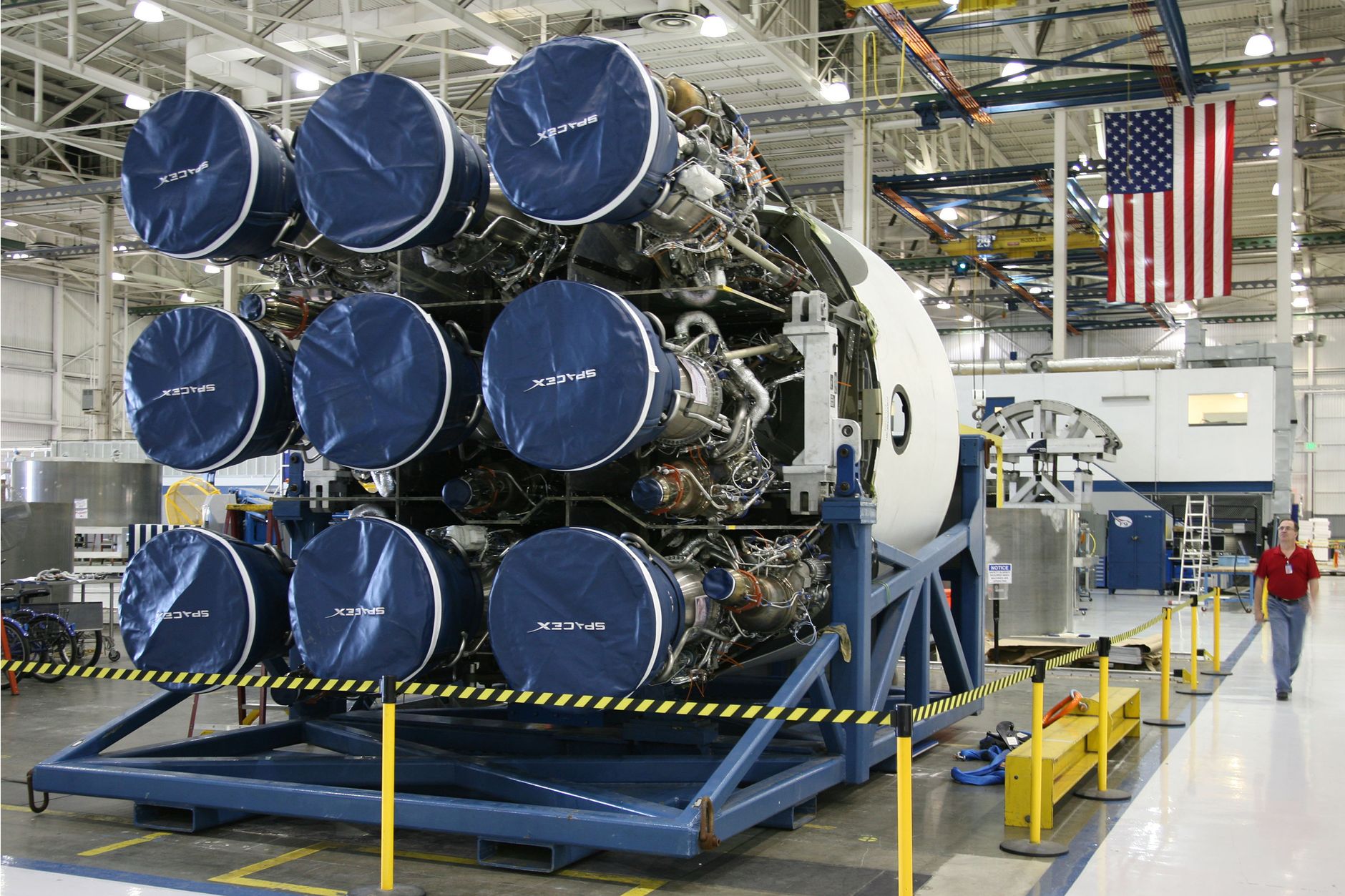
Those words, echoed across industry analyses, capture the moment's gravity. SpaceX, already the world's most valuable private company with its reusable rockets and Starship program, now absorbs xAI's Grok models and agentic systems. The synergy is immediate and profound: AI-optimized mission planning for Mars colonization, autonomous satellite swarms via Starlink, and physical AI agents embodied in robots traversing extraterrestrial terrains. A potential $50 billion IPO looms for mid-2026, signaling confidence in this fusion's profitability.
April's Frenzy: Models, Money, and Momentum
To grasp the merger's context, one must survey April's broader AI landscape—a perfect storm of releases, funding, and paradigm shifts. The month marked the densest window of frontier model launches ever. OpenAI's GPT-5.4 excels in long-context reasoning and creative synthesis, while Anthropic's Claude Mythos 5 prioritizes safety-aligned agency. Google DeepMind's Gemini 3.1 Pro, previewed earlier but fully benchmarked this month, leads in abstract reasoning (77.1% on ARC-AGI-2) and scientific prowess (94.3% on GPQA Diamond), bolstered by a 1-million-token context window and native multimodal capabilities.
These models do not merely chat; they act. The pivot to agentic AI—systems that plan, execute, and adapt without constant human oversight—has accelerated. By January 2026, 4 in 10 organizations had agents in production; now, 79% report adoption, with 40% of enterprise apps projected to embed them by year-end. Enterprises like SAP are integrating GenAI into business suites, while startups like Antioch raise millions for "Cursor for physical AI," simulating robot training to slash real-world costs.
Funding underscores the gold rush. Q1 2026's $297 billion global haul saw AI startups claim 81%, dwarfing all of 2024's venture totals in four deals alone. OpenAI's infrastructure bet, Anthropic's safety focus, xAI's space integration, and Waymo's autonomous vehicles highlight diversification amid hype. NVIDIA's State of AI report reveals maturing adoption: AI drives revenue growth, cost cuts, and productivity boosts across industries, from EdTech (Gizmo's $22 million for personalized learning) to translation (DeepL's voice AI for Zoom and Teams).
Yet unevenness persists. Forrester's Top 10 Emerging Technologies for 2026 flags AI's leap into the physical world—robots, vehicles, ambient experiences—delivering consumer impact. Only 5% of firms achieve substantial gains, but leaders reap fourfold shareholder returns. Harvard Business School urges "change fitness," balancing trade-offs in scaling. HapoSoft's playbook warns: AI is now operational core, not side tool, demanding workflow overhauls.
The Strategic Calculus of SpaceX-xAI
Elon Musk's empire-building has long blurred lines between his companies. SpaceX's Starlink constellation, now exceeding 10,000 satellites, craves AI for traffic management, anomaly detection, and orbital optimization. xAI's contributions—Grok's real-time reasoning and agentic frameworks—provide the brains. Post-merger, envision swarms of AI-piloted Starships docking autonomously, or Mars habitats managed by embodied agents learning from simulations.
This vertical integration mirrors oil barons of yore: control compute (via xAI's clusters), data (Starlink's petabytes), and delivery (rockets). It counters Big Tech's cloud dominance; Amazon, Microsoft, and Google face energy squeezes as data centers guzzle power equivalent to small nations. Market anxiety, per Tech Narrative Weekly, ties AI to capital, supply chains, and risks like war—intensifying splits in sentiment.
Geopolitically, the merger amplifies tensions. The U.S.-China AI race intensifies; while America leads in models, China's state-backed efforts close gaps in hardware. SpaceX-xAI could weaponize Starlink for military comms, echoing Ukraine deployments. Regulators scrutinize: antitrust hawks decry monopoly risks in space and AI, where network effects compound dominance.
Physical AI and the Real-World Reckoning
Beyond code, April spotlights AI's physical incarnation. Forrester notes robots and vehicles transforming work and consumption. Waymo's $16 billion underscores autonomous driving's maturity; agentic systems now handle end-to-end logistics. In AgTech, mass adoption promises yield boosts amid climate woes.
NVIDIA's report quantifies enterprise wins: AI agents automate 30-50% of routine tasks, freeing humans for strategy. OpenAI's Agents SDK enhances safety, vital as autonomy scales. Yet pitfalls loom—security threats proliferate, from breaches to adversarial attacks. DeepL's voice translation, while revolutionary, raises privacy flags in global calls.
The merger accelerates this "physical AI wave." xAI's simulations, fused with SpaceX's telemetry, could train robots for lunar mining or asteroid prospecting. PwC studies highlight agentic sprawl in business, but warn of over-reliance eroding human skills.
Risks in the Rearview: Energy, Ethics, Inequality
No inflection escapes shadows. Q1's capital flood masks bubbles; returns lag for most, per HBS. Energy demands strain grids—data centers projected to consume 8% of U.S. power by 2030. Agentic AI amplifies errors at scale; a hallucinating Mars rover could doom missions.
Ethically, superhuman models across 44 occupations threaten jobs. The first AI-authored paper passing peer review this month signals academia's shift, but biases persist. Monopoly fears peak with SpaceX-xAI: a single firm controlling space access and AI smarts risks abuse.
Societally, divides widen. Leaders capture gains; laggards falter. HapoSoft notes strategy trumps access—yet small firms struggle against giants.
The Inflection Point Ahead
April 2026 cements AI's escape from hype into reality. SpaceX-xAI embodies this: a $1.25 trillion engine thrusting humanity starward, powered by agents that think and act. Benchmarks crossed, agents deployed, funding unleashed—the trajectory bends toward autonomy.
But trajectories curve. Markets grow anxious, as narratives converge on constraints. Will regulators clip wings? Can energy keep pace? Does integration yield breakthroughs or bottlenecks?
Musk's vision—multi-planetary species via AI—gains form. Yet history teaches: empires rise on innovation, falter on hubris. As Gemini reasons abstractly and Claude plans safely, the question lingers: who plans for us?
This merger is no endpoint, but launchpad. By mid-2026's IPO, we may see fleets of AI-driven Starships or Earthbound agents reshaping economies. April's data-backed surge marks not hype, but history: AI, wed to space, redefines possible.