The man who turned companies into a worldview
Elon Musk no longer operates like a conventional industrialist. He has built a network of companies that functions less as a portfolio than as a single, self-reinforcing universe: X as the attention engine, Tesla as the manufacturing base, SpaceX as the frontier laboratory, Starlink as the connective tissue, xAI and Grok as the cognition layer, and Neuralink as the most intimate wager of all, a bid to bring computation directly into the human body. Musk’s empire is not merely large. It is strangely coherent, held together by a worldview that treats transportation, communication, intelligence, and even consciousness as different expressions of the same engineering problem. [1][4][7]
That coherence is part of his genius. It is also the source of his vulnerabilities. Musk has become a rare figure in modern business: a founder whose personal mythology is inseparable from the institutions he controls. In a more ordinary age, his companies would be judged separately, each by its balance sheet, product quality, and regulatory posture. Under Musk, they increasingly read as chapters in one grand narrative about civilization’s future, a narrative he tells with the confidence of a prophet and the instincts of a showman. [1][4][7]
X: from public square to private instrument
When Musk acquired Twitter in 2022 and rebranded it as X in 2023, he did not merely buy a social network. He bought one of the internet’s central attention markets and began remaking it in his own image. The platform’s significance was always larger than its user base suggested: it functioned as a real-time layer for journalists, politicians, investors, activists, and the tech elite. Musk’s changes turned that layer into a more explicitly personal instrument, less a civic utility than a volatile expression of one owner’s judgment, grievances, and theories about speech, verification, and power. [1][7]
The strategic value of X lies in its role as an amplifier for Musk’s other ventures. It gives him direct reach into public discourse, a stage for product launches, and a channel through which he can frame controversy as candor. It also creates a feedback loop: Musk’s online persona drives attention to his companies, while those companies reinforce his claim to be one of the defining actors of the age. In a media environment increasingly organized around personality rather than institution, that loop is a formidable asset. It is also a concentration of influence that would once have looked implausible in a democracy wary of monopolies of attention. [1][7]
“The platform is no longer just where conversation happens; it is increasingly where Musk’s worldview is staged, defended, and monetized.”
Tesla: the industrial core of the myth
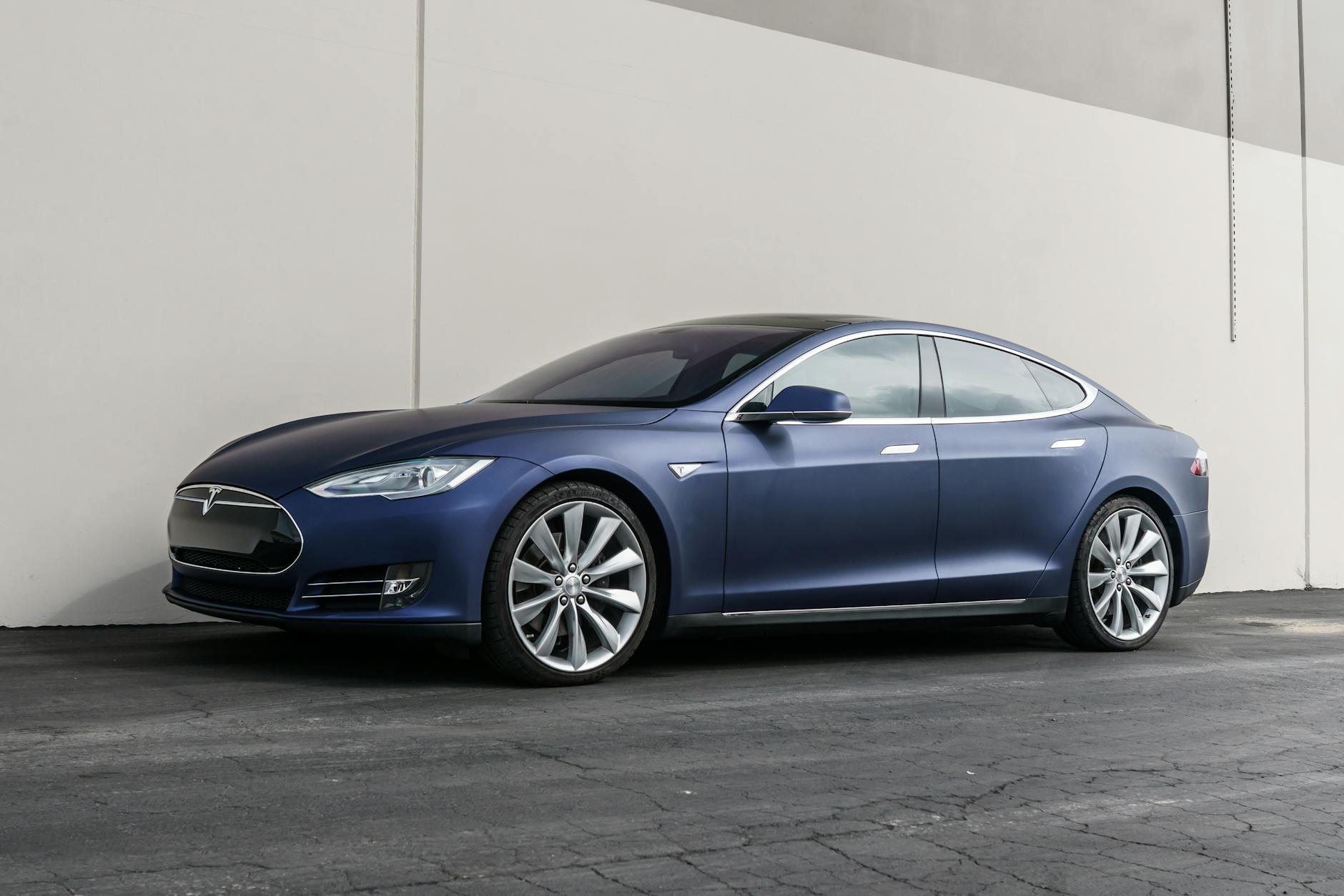
Tesla remains the foundational proof of Musk’s method. He joined as an early investor in 2004 and became CEO and product architect in 2008, helping turn a niche electric-vehicle maker into one of the world’s most consequential car companies. Tesla’s importance is not only commercial. It demonstrated that electric vehicles could become a mass-market industrial reality, not an environmental boutique. The company gave Musk the aura of a builder who could drag an established industry into a new era by force of will and software discipline. [1][4][7]
Yet Tesla also reveals the limits of his style. Musk thrives in markets where technical risk, narrative risk, and regulatory ambiguity overlap. That has helped him move quickly. It has also made the company’s public identity unusually dependent on his personal presence. Tesla is a mature industrial business, but it is still marketed as a revolution in progress, which leaves it vulnerable to the volatility that follows from Musk’s tendency to treat corporate governance as an extension of his own voice. The company’s achievements are real. So are the questions about whether a carmaker can remain a high-growth cultural brand indefinitely once competitors catch up on technology and pricing discipline. [1][4][7]
SpaceX and Starlink: infrastructure for a post-national age
If Tesla is Musk’s industrial proof, SpaceX is his civilizational claim. Founded in 2002, it transformed reusable rockets from a speculative idea into a commercial advantage and helped recast spaceflight as a domain not only for national agencies but also for private capital. SpaceX has become a foundational player in launch, orbital logistics, and defense-adjacent infrastructure. Its ambition is not incremental. It is colonial in the original sense: the company imagines a future in which human activity moves beyond Earth as a matter of routine engineering rather than heroic exception. [1][3][4]
Starlink extends that ambition into the global internet. By building a satellite network that can reach remote regions and conflict zones, Musk has created one of the most strategically consequential communications systems in the private sector. Starlink is not just a product; it is geopolitical infrastructure. It can enable commerce in places where fiber cannot go, but it also raises difficult questions about dependency, control, and the private ownership of connective tissue that once would have been considered quasi-public. The more indispensable Starlink becomes, the more Musk resembles a utility provider for a fragmented planet. [3][4]
This is where the romance of space begins to merge with the cold realities of power. A rocket company may look like a frontier enterprise, but a global satellite network behaves more like an international public service, except that it is owned, operated, and politically interpreted through the preferences of one man. That is a novel arrangement, and not an obviously stable one. [1][3][4]
xAI and Grok: the race to manufacture an epistemology
Musk’s move into AI with xAI was not a surprise; it was an escalation. He had long warned about the risks of artificial intelligence and later grew disenchanted with the direction of OpenAI, which he helped found in 2015 before leaving. xAI emerged as his answer: an attempt to create AI aligned with his preferred conception of truth, inquiry, and civilization. Reports in 2026 indicate that xAI has since been folded into SpaceX, underscoring Musk’s impulse to consolidate his enterprises into a tighter strategic architecture. [1][7][8]
Grok, xAI’s chatbot, is the most public face of that ambition. The name itself signals the company’s posture: not merely to answer questions, but to understand. Musk has repeatedly framed xAI as a project to comprehend the universe, a phrase that is grandiose enough to sound rhetorical and specific enough to sound like an engineering roadmap. In practice, the competition is less metaphysical and more brutal. xAI is competing in a market where model quality, distribution, compute access, and data advantage matter at least as much as philosophy. Musk’s advantage is distribution through X and the ability to integrate products across his companies. His risk is that “truth-seeking” can become a branding device unless users believe the outputs are consistently better, safer, or more useful than those of rivals. [1][7][8][9]
“Musk’s AI pitch is not that machines will merely think, but that they will help explain reality itself.”
That idea has philosophical allure. It also exposes a familiar Musk pattern: a technical venture is packaged as a solution to civilization’s deepest uncertainty. The ambition draws capital, talent, and attention. Whether it also yields durable governance or trustworthy systems is a separate question. [7][8][9]
Neuralink: the frontier moves inside the skull
Neuralink is Musk’s most intimate and unsettling venture. Co-founded in 2016, it is a neurotechnology company that imagines direct connections between brains and computers. If Tesla industrializes motion and SpaceX industrializes escape, Neuralink seeks to industrialize thought itself. The promise is profound: restoring function for people with paralysis, enabling new forms of communication, and eventually making the interface between mind and machine less clumsy and more continuous. [1][4]
But Neuralink also forces a difficult cultural reckoning. Its promise depends on the same logic that animates Musk’s broader empire: that a complicated human condition can be solved by better hardware, faster iteration, and enough capital. That may be true in narrow clinical contexts. It becomes more speculative, and more ethically fraught, when extended toward enhancement rather than repair. A technology that reads neural signals can help the disabled. It can also, in principle, create new asymmetries of power over attention, agency, and privacy. Neuralink is not just a medical company. It is a test case for how much of the self society is willing to place on the map of engineering. [1][4]
The controversy is not an exception. It is the operating system.
Musk’s controversies are too numerous to treat as incidental. They are part of how his empire functions. He attracts followers through audacity, then converts conflict into visibility, and visibility into leverage. That pattern has made him unusually resilient: a conventional chief executive might be damaged by the combination of regulatory disputes, labor criticism, product scrutiny, and political polarization; Musk often appears to gain strength from the collision itself. In the age of algorithmic attention, outrage is not merely a reputational cost. It is a distribution channel. [1][3][7]
At the same time, the scale of his control raises structural questions. He is a private individual who influences transport, communications, defense-adjacent infrastructure, AI discourse, and the public square. Those domains are normally separated precisely because democracies distrust concentrated power. Musk’s defenders see integration, speed, and ambition. His critics see a form of private sovereignty: a single personality moving across sectors that were once insulated from one another for good reason. Both descriptions are accurate. The tension between them is the defining fact of Musk’s era. [1][3][4][7]
There is also a deeper cultural issue. Musk’s companies invite people to imagine that the future will be won by a small number of spectacular technological leaps. Rockets will lower the cost of reaching orbit. Satellites will eliminate dead zones. Neural implants will restore lost abilities. AI will clarify the universe. Electric vehicles will replace combustion. Each claim contains truth. But together they create a worldview in which politics, institutions, and public deliberation look secondary to the will of exceptional builders. That is a seductive idea for markets and a dangerous one for societies that must govern disagreement, not transcend it. [1][4][7][9]
An empire built on convergence
The power of the Musk universe lies in convergence. His companies are not isolated bets but mutually reinforcing systems. X supplies attention, xAI supplies intelligence, Tesla supplies industrial credibility, SpaceX supplies frontier prestige, Starlink supplies infrastructure, and Neuralink supplies the ultimate promise of human-machine fusion. In that sense, Musk has assembled not just an empire but a theory of modernity: that the same small circle of engineers, capital allocators, and founder-personalities can solve the problems of communication, mobility, energy, orbit, cognition, and perhaps even consciousness. [1][4][7][8]
That theory has already changed the business landscape. It has also made Musk one of the few people on earth whose personal preferences can reverberate across markets, governments, and public discourse almost simultaneously. The deeper question is not whether he is a visionary or a provocateur. He is both. The more important question is whether a civilization can remain comfortable when so much of its technical imagination is concentrated in one man’s hands. On present evidence, that is precisely the arrangement Musk has made, and precisely the one he intends to deepen. [1][3][4][7][8]