The architecture of a private empire
Elon Musk’s business world is less a portfolio than an ecosystem. Tesla, SpaceX, X, xAI, Neuralink and Starlink do not merely coexist under his control; they reinforce one another in ways that make the whole enterprise larger, stranger and more politically combustible than any single company. Musk is the largest shareholder and chief executive of Tesla and SpaceX, acquired Twitter in 2022 and rebranded it as X in 2023, founded xAI in 2023, co-founded Neuralink in 2016 and has long treated Starlink as the connective tissue between his terrestrial and extraterrestrial ambitions.[1][3][14]
That structure matters because Musk’s companies do not occupy separate markets so much as adjacent layers of the same worldview. Tesla is about energy, mobility and automation. SpaceX is about transport beyond Earth. Starlink turns orbital infrastructure into a communications business. X is the public square. xAI is the machine intelligence intended to interpret that square. Neuralink is the attempt to bridge mind and machine. Together, they amount to an unusually personal theory of industrial civilization: build the tools, control the channels, automate the labor, stretch the frontier, and perhaps someday carry consciousness off the planet.[4][12]
The scale of the ambition has made Musk the rare executive whose corporate strategy doubles as metaphysics. He has said his philosophy is one of curiosity, aimed at expanding the scope and scale of consciousness on Earth and beyond it.[12] He has also argued that the universe may be simulatable if the right inputs are available, a claim that fits his habit of treating reality as engineering problem rather than mystery.[2] The result is a corporate universe in which the language of survival, civilization and destiny frequently replaces the language of markets and profits.
Tesla: the original machine and the original contradiction
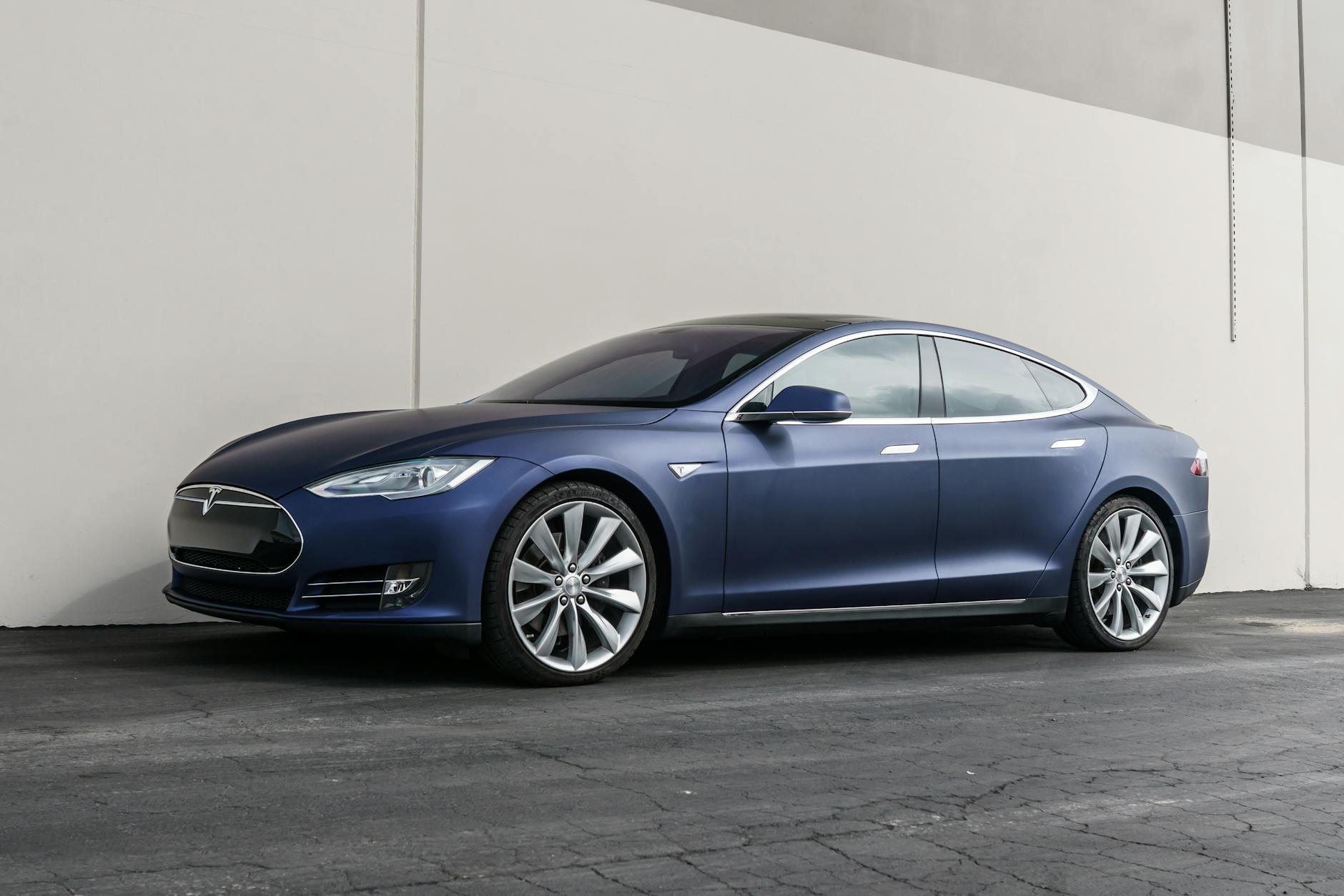
Tesla remains the foundation of Musk’s legend. As co-founder and leader, he has overseen the company’s rise from a niche electric-car maker to a defining force in the global EV transition, with a broader business in battery products and solar energy.[3] For a long time, Tesla offered the cleanest narrative in the Musk canon: a product company that made an environmental virtue look inevitable, a Silicon Valley ethos in the service of manufacturing.
But Tesla also reveals the central contradiction of Musk’s empire. It is at once a serious industrial company and a personality vessel. Investors do not merely buy Tesla because they believe in electric vehicles; many buy it because they believe Musk can bend supply chains, markets and public attention to his will. That makes Tesla resilient in a very specific and brittle way. It can endure operational setbacks, but not necessarily the erosion of confidence in the man at the center.
Over time, Tesla’s identity has also expanded beyond cars. Musk has presented it as a platform for autonomy, robotics and an eventual abundance economy, where software and machines reduce scarcity.[9] This is the grandest version of the Tesla story: not a carmaker, but the industrial base of a post-scarcity future. Whether or not that future arrives, the promise itself has become part of Tesla’s market value.
SpaceX, Starlink and the privatization of orbit
If Tesla made Musk a titan of the road, SpaceX made him a power in the sky. Founded in 2002, the company revolutionized reusable rockets and commercial spaceflight, cutting launch costs and redefining what private industry could do in orbit.[1] SpaceX is now one of the central engineering institutions in modern aerospace, and its achievements have become inseparable from Musk’s larger claim that humanity must become a multiplanetary species.[1][12]
Starlink extends that logic into a business with political implications. The satellite constellation has turned low-Earth orbit into infrastructure for internet access, especially in places where terrestrial networks are weak, damaged or censored.[7][9] But Starlink is also a reminder that Musk’s companies often sit at the junction of public utility and private leverage. A communications system that can function in war zones, disaster zones and remote regions is not simply a consumer product. It is a strategic asset, and in some contexts a geopolitical one.
That dual role gives SpaceX and Starlink an unusual kind of power. They are both heroic and entangling: heroic in the scale of technical accomplishment, entangling in the degree to which states, militaries and whole economies can become dependent on a system controlled by one executive. Musk’s supporters see this as industrial efficiency. His critics see privatized infrastructure wrapped in a messianic narrative. Both descriptions are true.
X: the public square as a private experiment
The acquisition of Twitter, later rebranded as X, was Musk’s most visible act of corporate disruption and perhaps his most revealing. He bought the platform in 2022 and then recast it as something between a town square, an attention engine and a laboratory for speech, identity and algorithmic influence.[1][14] If Tesla and SpaceX are about building physical systems, X is about seizing the nervous system of the public sphere.
Musk has framed X as a more open alternative to legacy media, and he has used it to amplify his own views, test products, challenge institutions and define controversies in real time.[13] The platform now sits at the center of a broader argument about whether speech becomes freer or more chaotic when a single owner loosens moderation and elevates paid visibility. Musk insists he is restoring truth and user agency. Critics argue he is turning the platform into a personalized megaphone with unstable rules.
What is clear is that X is no longer just a company. It is an instrument of Musk’s brand, a distribution channel for his other businesses and a source of raw material for xAI. That combination makes the platform unusually valuable to him and unusually difficult to evaluate on normal business terms. Its worth is partly financial, partly political, and partly infrastructural: X helps Musk speak, sell, train and govern his own universe.
xAI and Grok: intelligence as an existential project
Musk founded xAI in 2023 with the stated aim of understanding the true nature of the universe and building artificial intelligence that could help humanity do the same.[14][15] That is a strikingly grand mandate even by Silicon Valley standards. The company’s flagship system, Grok, is meant to stand at the intersection of conversational AI and Musk’s larger intellectual style: impatient, iconoclastic and adversarial toward convention.
The logic is straightforward enough. If X is where the world talks, xAI can learn from that conversation. If Tesla and SpaceX are physical embodiments of engineering ambition, xAI is the cognitive layer that may eventually coordinate it. Musk has cast AGI not as a consumer product but as a civilization-scale instrument, one capable of helping humans understand dark matter, gravity and other mysteries of the cosmos.[15] In that framing, AI is not a tool among many; it is the interpreter of everything else.
That ambition also explains why xAI is so closely tied to X. The social network supplies attention, data and a live feed of human behavior. xAI supplies the computational intelligence to process it. The result is a tight loop between speech, model training and product design. It is also a loop with obvious dangers. A company built around the world’s most volatile online discourse is unlikely to be serene, neutral or free of bias. If xAI is meant to make sense of the universe, it is starting with the loudest room on Earth.
Neuralink and the frontier inside the skull
Neuralink occupies a different but related frontier: the human mind itself. Co-founded by Musk in 2016, the company seeks to develop neurotechnology that connects brains to machines.[1][3] In the Musk cosmology, this is the logical next step after software and satellites. If AI can outthink us and space can outlast us, then the final bottleneck is the interface between biology and technology.
Neuralink is often discussed as a medical company, and in the best case it may become one. But within Musk’s broader universe, it serves a symbolic purpose as well. It imagines a future in which the human organism is no longer the endpoint of evolution but its user interface. That is a deeply Muskian idea: not merely augment the body, but negotiate with it.
The company also intensifies the ethical stakes of the whole empire. When the same figure is building brain implants, social media platforms and AI systems, the boundary between enhancement and surveillance becomes less distinct. Neuralink’s promise is intimate and therapeutic; its implications are cultural and political. It suggests a world in which cognition itself may become a product layer.
The controversies are not bugs; they are features
Musk’s defenders often describe the controversies around him as distractions from the work. That is too convenient. In many cases, the controversies are part of the mechanism. Musk’s companies have been repeatedly described as operating with extreme intensity, abrupt shifts and a culture that can feel like perpetual emergency.[4] He has built a reputation for grand claims, compressed timelines and a tolerance for chaos that would destroy more conventional firms.
That style has advantages. It attracts talent, commands attention and can push organizations through obstacles that more bureaucratic companies would accept as permanent. But it also creates a public pattern of overpromising, underexplaining and forcing outsiders to interpret strategy through spectacle. The effect is to blur the line between innovation and improvisation.
There is also a political dimension. Musk has used his platform and wealth to influence public debate on technology, speech, regulation and government. He led the Department of Government Efficiency in the Trump administration for four months before stepping down in May 2025, an episode that underscored how far his business empire now reaches into politics.[14] His companies rely heavily on public contracts, subsidies and regulatory permission even as he cultivates an image of defiance toward the state.[9] That contradiction is not incidental. It is one of the ways the empire works.
Another contradiction lies in the claim to truth. Musk presents himself as a champion of reality, engineering and unvarnished analysis. Yet his platforms have been accused of amplifying misinformation and deepfakes, and his public statements often move faster than verification.[9] In his universe, truth is not a settled category; it is a contest between speed, scale and narrative control.
The empire as a single wager
The most useful way to understand Musk is not as a man who runs many companies but as a man making one enormous wager. The wager is that civilization can be redesigned through integrated systems: vehicles, rockets, satellites, neural interfaces, social media and AI all feeding the same long-term objective.[4][9][12] The prize is not merely profit. It is relevance to the future of the species.
That is why the Musk universe can look simultaneously fantastical and practical. Tesla makes cars. SpaceX launches rockets. Starlink transmits data. X hosts argument. xAI trains models. Neuralink experiments with cognition. Each piece can be explained in business terms, but the larger picture is civilizational. Musk is trying to build an infrastructure stack for life after scarcity, after Earth and perhaps after human limits.
The appeal of that vision is obvious. So is its danger. A single individual now sits at the intersection of transportation, communications, social media, aerospace and artificial intelligence, all while presenting himself as both entrepreneur and oracle.[1][13][14] That concentration of influence would be extraordinary in any era. In the age of AI, satellites and algorithmic media, it is potentially historic.
What remains unresolved is whether Musk is assembling the tools of a better civilization or the apparatus of a more concentrated one. The answer may be both. That is what makes his universe so powerful, and so hard to escape.