The Soft Power Revolution: How Asia's Cultural Industries Are Reshaping Global Entertainment
For decades, the cultural conversation flowed in one direction: from Hollywood to the world, from New York to everywhere else. But something has shifted. Walk through any major city today and the evidence surrounds you. Korean dramas dominate Netflix's global charts. Japanese anime conventions pack stadiums across Europe and North America. Tokyo street fashion trends cascade across TikTok before traditional fashion houses can respond. The old hierarchy of cultural production—Western as default, Asian as niche—has inverted so quietly that many in the West have hardly noticed.
This is not merely a story of market expansion or demographic trends. What is unfolding across Asia represents a fundamental reorganization of global creative industries, one that challenges fundamental assumptions about what stories matter, who gets to tell them, and where cultural authority now resides. The numbers tell part of the story, but the deeper narrative concerns how entire worldviews and aesthetic sensibilities are being transmitted across borders, reshaping not just what people watch, but how they understand themselves and their place in the world.
The Anime Tsunami
Start with anime. The medium that Western critics once dismissed as niche entertainment aimed at adolescents has become impossible to ignore. Statistics reveal that 44 percent of Americans aged 18 to 24 now watch anime regularly. The industry is projected to generate 69.8 billion dollars globally by 2032. This is not boutique success—this is mainstream infiltration.
The accessibility provided by streaming platforms like Netflix, Crunchyroll, and Funimation has transformed anime from a subcultural pursuit into normalized entertainment. Social media has accelerated this trend dramatically. On TikTok alone, anime content generates hundreds of millions of views, with young viewers not just consuming anime but creating their own responses to it, sampling its aesthetics, adopting its visual language.
What makes anime's global dominance particularly significant is how deliberately it differs from Western entertainment conventions. Anime storytelling often refuses the marketplace compromises that dominate American television production. The medium embraces thematic complexity, moral ambiguity, and visual boldness that mainstream Western entertainment frequently avoids. Shows like Death Note explore philosophical questions about justice through protagonists whose moral frameworks are decidedly warped. Narrative structures that would never survive a Hollywood story meeting thrive in anime. This gap between what anime offers and what Western audiences have been conditioned to expect has become anime's greatest asset.
The cultural transmission flows in multiple directions. Anime has become a gateway drug for deeper engagement with Japanese culture. Young viewers encounter Japanese language, Japanese food, Japanese aesthetics embedded within narratives they already love. On social media, the hashtag #animefood has accumulated over five hundred million views, with users documenting their attempts to recreate ramen, onigiri, and cold soba noodles they discovered through animated series. Food, language, art, philosophy—all travel through the anime vector.
Manga's Silent Revolution
Beneath anime's more visible global explosion, manga has executed a quieter but equally profound transformation. Japanese comics have become the dominant aesthetic and narrative reference point across Asian creative industries. In Hong Kong, filmmakers have directly adapted manga into live-action cinema, creating hybrid forms that blend Japanese narrative sensibilities with local production values. Taiwan's television drama industry has been fundamentally shaped by manga influence, particularly through adaptations of detective serials and supernatural narratives.
What distinguishes manga's influence from anime's is its structural reach. Manga doesn't just provide content—it provides a template. Asian comic artists across the continent work under what can only be described as Japanese creative hegemony. Drawing styles, panel composition, narrative pacing, perspective techniques, and plot structures have been standardized according to Japanese manga conventions. This represents not mere stylistic preference but the establishment of Japan as the technical and aesthetic authority in visual storytelling across the region.
The irony worth noting: while Southeast Asian nations rarely produce commercial animation, they remain deeply influenced by manga aesthetics through comic production. The creative bandwidth in these industries has been shaped by Japanese formal innovations in ways both explicit and subliminal.
The Korean Wave and the Diversification of Asian Soft Power
Yet anime and manga, for all their reach, tell only part of Asia's cultural story. The Korean entertainment industry has constructed a parallel empire, one organized around different media and different cultural products. K-dramas have become the aspirational template for television production globally. K-pop has infiltrated Western charts with an intensity that would have been unimaginable a decade ago. Korean cinema continues producing films of international prestige.
What distinguishes the Korean model from the Japanese is its deliberate, coordinated approach to cultural export. While anime emerged somewhat organically from studio production and found global audiences through decentralized distribution, K-entertainment represents something closer to state-coordinated soft power strategy. The Korean government recognized early that cultural industries could be engines of economic and diplomatic influence. This recognition translated into policy support, funding mechanisms, and infrastructure investment.
The strategy has proven devastatingly effective. K-dramas now compete directly with Western prestige television on streaming platforms. K-pop artists perform at American award shows as equals to established Western acts, not as novelties or cultural curiosities. Korean fashion, Korean beauty standards, Korean technology interfaces—all have become reference points for global youth culture.
The Asian Aesthetic Becomes Universal
What emerges from examining anime, manga, K-entertainment, and their various mutations is the establishment of a distinctly Asian visual and narrative vocabulary as the default language of global youth culture. This represents a decisive break from the post-World War II era in which American cultural forms were essentially treated as culturally neutral, universal rather than particular.
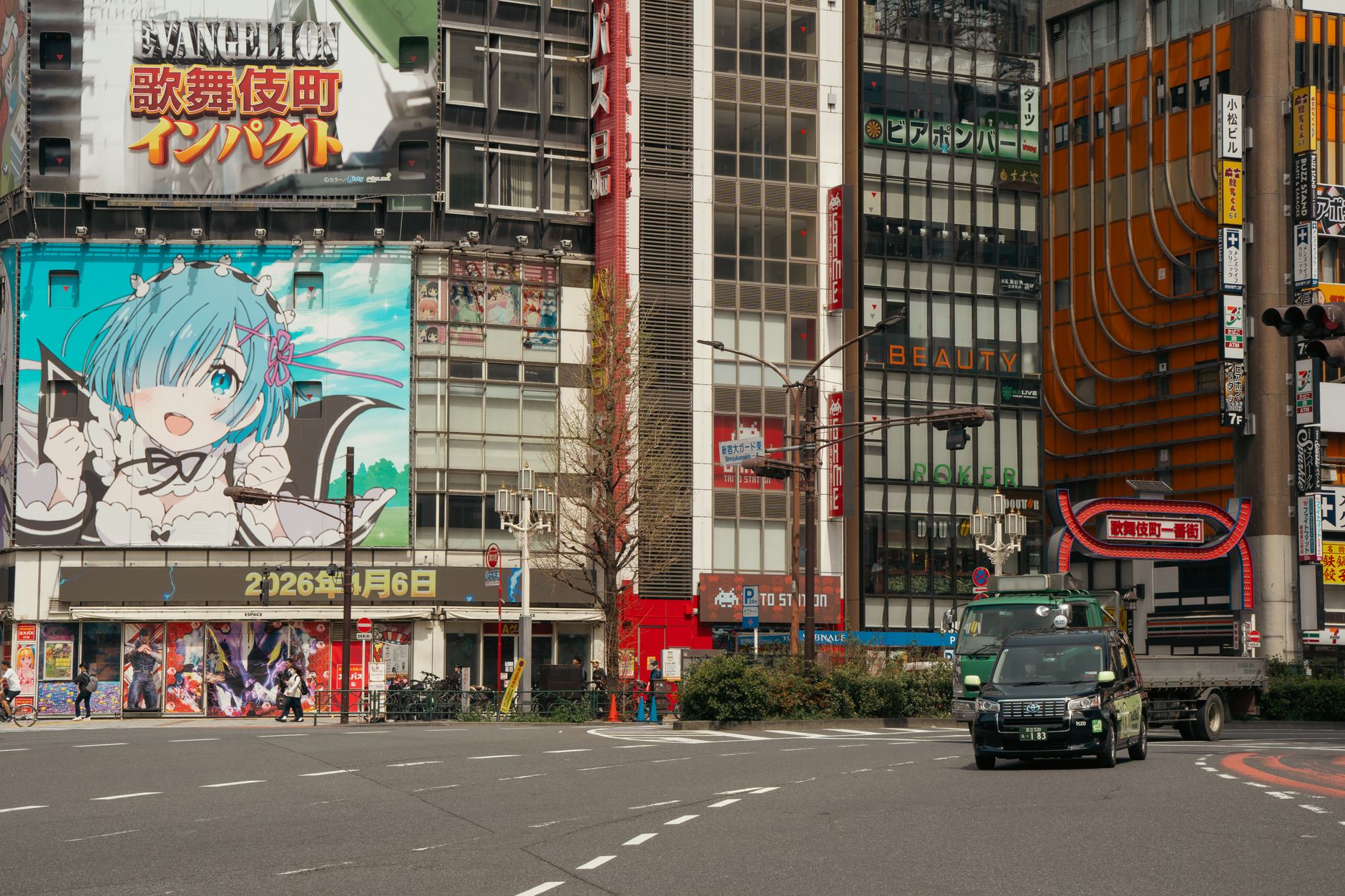
Tokyo street culture, with its layered aesthetics of technological sophistication combined with intimate, human-scale design, has become aspirational globally. The visual language of Tokyo—neon signs, narrow alleyways, the collision of ancient temples and contemporary technology—appears in music videos, fashion photography, and architectural references worldwide. This is more than aesthetic appreciation; it represents the globalization of a specific cultural sensibility about how humans should live in urban space.
Technology culture in Asia, particularly in Japan and South Korea, operates as another vector for cultural influence. The design philosophy embedded in consumer electronics from these regions—minimalism combined with unexpected features, interfaces that assume user sophistication—has educated global consumers about what good design feels like. When consumers worldwide now expect intuitive digital interfaces and elegant physical form factors, they are inheriting assumptions developed in Tokyo and Seoul design studios.
The Content Industry's Reorganization
The anime industry is projected to reach nearly 70 billion dollars within six years. The merchandising market alone will hit 2.07 billion dollars by 2030. These are not growth rates that traditional media industries in the West can match. Streaming platforms, recognizing where audience attention flows, have reorganized their investment priorities accordingly. Content commissioned by Netflix increasingly reflects Asian creative sensibilities because that is where engaged audiences congregate.
This has created a feedback loop. As Asian content gains platform visibility, it attracts larger audiences, which justifies larger investments, which enables more sophisticated production, which creates better content, which attracts even larger audiences. Meanwhile, Western traditional media struggles to understand why its established formulas no longer command automatic attention.
The Deeper Cultural Shift
Numbers and market analysis, however, miss the cultural significance embedded in this reorganization. When a young American discovers anime, watches a K-drama series, follows a Korean music group, and adopts these cultural references as fundamental to their identity, something deeper is occurring than market consumption. They are adopting an interpretive framework for understanding narrative, beauty, identity, and community that comes from Asia, not the West.
This has implications for how future generations will understand concepts like masculinity, femininity, success, failure, justice, and belonging. The values embedded in these narratives—which often differ significantly from post-war American assumptions—will shape how billions of people think about fundamental aspects of human experience.
Chinese animation studios, recognizing the power of anime's global success, have developed Donghua as a distinctly Chinese alternative. Recent film adaptations of properties like Slam Dunk have shattered box office records in China, with presales reaching 14.46 million dollars. This represents not mere competition but a recognition that animation and anime-adjacent content represent the future of entertainment production.
Conclusion: The Center Moves East
The story of contemporary Asian entertainment is ultimately a story about where cultural authority now resides. For a century, that authority flowed from Hollywood, from American television networks, from Western record labels. The infrastructure, the capital, the distribution networks, the critical apparatus—all centered on the West.
That arrangement has fundamentally changed. The creative energy, the audience engagement, the economic growth, and the cultural innovation increasingly flow from Asia. Young people worldwide now look east for signals about what matters, what is beautiful, what is worth creating. This represents not merely a market shift but a reorganization of global cultural hierarchy—one that will shape how humans understand themselves and their world for decades to come.