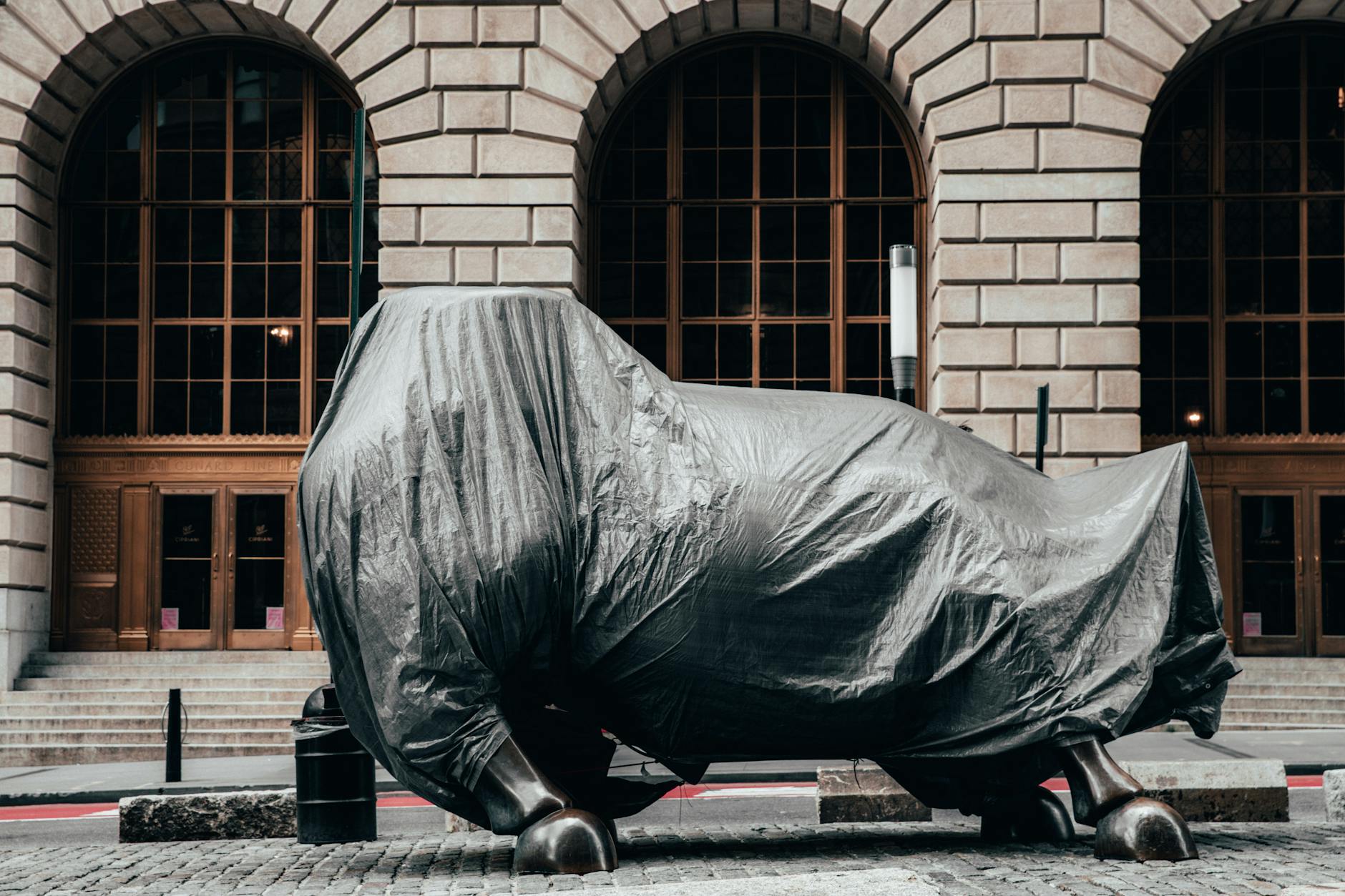
The Record-Breaking Rally
As the sun rose over Manhattan on May 6, 2026, Wall Street etched another chapter in its relentless ascent. The S&P 500 closed at a fresh all-time high, propelled by a cocktail of technological exuberance, geopolitical relief, and policy tailwinds from the Trump administration. Tech giants and AI innovators led the charge, with semiconductors and software stocks posting double-digit gains in a session that saw the Nasdaq Composite surge 2.3%. This wasn't mere momentum; it was a resounding affirmation of America's economic primacy, even as global headwinds loomed.
At the heart of the rally was a confluence of events that markets had craved. President Donald Trump's announcement of a pause in 'Project Freedom'—a provocative U.S. naval initiative in the Strait of Hormuz—sparked hopes of a U.S.-Iran ceasefire. Oil prices tumbled 4%, easing inflation fears and boosting consumer stocks from retailers to airlines. Simultaneously, South Korea's Samsung Electronics joined the exclusive $1 trillion market-cap club, underscoring Asia's tech symbiosis with U.S. markets. AMD shares leaped 12% on an upbeat forecast, while Anthropic's launch of AI agents tailored for financial firms ignited a frenzy in fintech.
KBW CEO Tom Michaud, appearing on Fox Business's Mornings with Maria, captured the zeitgeist:
"U.S. markets are going to keep leading the world."His optimism stemmed from robust bank earnings, improving credit quality, and a regulatory thaw on crypto. Michaud's Keefe, Bruyette & Woods, a boutique investment bank, reported quarterly profits up 15%, beating estimates on higher trading volumes and advisory fees from a pickup in M&A activity.
AI as the New Economic Engine
Artificial intelligence has morphed from buzzword to balance-sheet bedrock. White House National Economic Council Director Kevin Hassett, in a separate Mornings with Maria segment, predicted a "major economic surge fueled by AI, tax cuts." He touted consumer spending, business investment, and falling energy costs as harbingers of 4% GDP growth this year. Hassett's forecast aligns with BlackRock's Rick Rieder, who on Bloomberg foresaw continued divergence between equities and bonds, with stocks benefiting from AI productivity gains.
Anthropic's AI agents—autonomous tools for portfolio management, risk assessment, and compliance—represent the cutting edge. Early adopters like Goldman Sachs and JPMorgan are integrating them, potentially slashing operational costs by 30%. Illumina CEO Jacob Thaysen, speaking on Bloomberg's The Close, highlighted genomics' intersection with AI, projecting a boom in personalized medicine that could add trillions to biotech valuations. Moderna CEO Stéphane Bancel echoed this, discussing mRNA advancements accelerated by machine learning.
Yet, this AI euphoria isn't without risks. Valuations are stretched: the S&P 500's forward P/E ratio hovers at 22, well above historical norms. Critics like TIAA Wealth Management's Niladri Mukherjee warn of a "tech bubble 2.0," pointing to overconcentration in the Magnificent Seven, which account for 35% of the index. Mukherjee, on Bloomberg, advised diversification into value stocks and emerging markets, but his caution fell on deaf ears amid the rally.
Trump's Crypto Revolution Accelerates
President Trump's crypto agenda is no longer fringe—it's mainstream momentum. World Liberty Financial co-founder Zach Witkoff, son of Trump's Middle East envoy Steve Witkoff, joined Fox Business to herald Senate legislation that could cement U.S. leadership in digital finance. Stablecoin volumes have surged 40% year-to-date, with Tether and USDC dominating remittances and DeFi lending. Trump's vow to make America the "global digital finance leader" includes tax incentives for blockchain firms and a federal stablecoin framework.
This push dovetails with broader deregulation. Energy Secretary Wright, in a Fox appearance, discussed harnessing AI for grid modernization and crypto mining's role in energy markets. Chevron CFO Eimear Bonner, on Bloomberg, noted oil majors pivoting to data centers, powering AI with flared natural gas. The synergy is palpable: crypto's energy hunger meets Trump's fossil-fuel renaissance.
M&A activity is rebounding too. Compass CEO Robert Reffkin announced a $2.5 billion acquisition of a proptech rival, betting on AI-driven real estate analytics. BNP Paribas' Greg Boutle flagged uptick in cross-border deals, with U.S. firms targeting European assets amid a weak euro. Layoffs, mercifully, are scarce; instead, hiring is brisk in tech and finance, with unemployment at 3.8%.
Bank Earnings and Credit Resilience
Bank earnings underscored the rally's foundations. Major lenders like JPMorgan and Bank of America exceeded expectations, with net interest margins expanding on steady Fed rates. Credit quality remains pristine—delinquencies at multi-year lows—bolstered by wage growth and household balance sheets swollen from pandemic savings. Michaud emphasized this resilience, noting regional banks' recovery from 2023's regional crises.
The Federal Reserve, conspicuously absent from headlines, looms large. After holding rates steady in March, markets price a 60% chance of a June cut, per CME FedWatch. Fed Chair Jerome Powell's testimony this week reiterated data-dependence, but falling oil and cooling rents tilt toward easing. Hassett praised the Fed's "nimble" stance, crediting tax cuts for fiscal momentum that obviates aggressive hikes.
Geopolitics: The Iran Wild Card
No analysis of this rally is complete without Iran's shadow. Trump's Hormuz pause, coupled with Tehran's foreign minister's Beijing trip, signals diplomatic thaw. Systems Planning & Analysis' Kirsten Fontenrose, on Bloomberg, dissected a potential ceasefire framework, including sanctions relief for nuclear curbs. Markets reacted viscerally: energy stocks plunged, while airlines like Delta soared 5%.
The dollar steadied as traders parsed U.S. leverage. South Korea's reopening and Australia's market open amplified the positivity, with Samsung's milestone lifting Asian chipmakers. Simpler Trading's Danielle Shay called it a "perfect storm" for risk assets, urging traders to ride the wave.
Corporate Spotlight: Winners and Watchers
Corporate news was a highlight reel. AMD's forecast crushed consensus, driven by AI chip demand from hyperscalers. Harbinger Sports Partners' Rashaun Williams discussed sports betting M&A, while Lancôme's Vania Lacascade eyed luxury's AI personalization. Even entertainment flexed muscle: Kevin Hart's Gran Coramino tequila venture eyes IPO amid consumer rebound.
Layoffs? Minimal. Tech giants like Google and Meta announced targeted cuts in non-core units, but net hiring persists. M&A pipelines bulge: Reuters reports $500 billion in deals queued, from pharma to renewables.
The Perils of Perpetual Optimism
For all its luster, this bull run invites scrutiny. Equity-bond divergence, per Rieder, signals cracks—10-year Treasuries yield 4.2%, pressuring margins. Geopolitical bets on Iran are fragile; a breakdown could spike oil to $100. Crypto's surge risks regulation whiplash if scandals erupt.
Moreover, earnings season reveals disparities. While tech shines, cyclicals lag; industrials face China slowdown. BNP's Boutle warns of European recession spillover. The S&P's breadth narrows, with 70% of gains from top 50 stocks.
Hassett's surge prophecy hinges on execution: tax cuts need Congress, AI productivity unproven at scale. Yet, consumer fortitude—spending up 3.5%—provides ballast. As Michaud asserts, America's edge endures.
Outlook: Leadership Amid Uncertainty
Wall Street's trajectory points upward, but prudence tempers euphoria. The S&P eyes 6,000 by year-end, per consensus, fueled by EPS growth and buybacks. Trump's agenda—crypto, taxes, deregulation—could supercharge it, positioning U.S. markets as global lodestar.
In Tokyo and Sydney, traders echoed Bloomberg's Asia Trade: America leads. From AI agents to stablecoins, innovation cascades. Risks abound—valuations, geopolitics, Fed pivots—but resilience prevails. As of May 6, 2026, Wall Street isn't just winning; it's redefining victory.
(Word count: 1,728)