The universe as a business model
Elon Musk’s career used to look like a sequence of daring bets. PayPal made him rich. Tesla made him famous. SpaceX made him seem improbable. X, xAI, Neuralink, and Starlink have since turned that arc into something stranger: a private cosmology in which each company appears to justify the others. To read Musk as a mere entrepreneur is to miss the scale of the project. He is not only building firms; he is building a worldview in which the future is a hostile environment that can be conquered only by engineering more ambitious systems than the ones that created the problem.
That worldview has a seductive elegance. Humanity is fragile, communication is broken, intelligence is bottlenecked, energy is constrained, and Earth is vulnerable. Therefore: electrify transport, make rockets reusable, beam internet from orbit, build AI to understand the world, and implant machines into the brain. Taken together, the ventures form an argument. The argument says that civilization should not merely adapt to the 21st century; it should become planetary, then interplanetary, then perhaps post-biological.
But the same structure that gives Musk’s empire coherence also gives it brittleness. Each enterprise depends on the mythic authority of the others. Tesla’s valuation has long been sustained partly by the promise that it is not just a carmaker but a robotics, battery, and autonomy platform. SpaceX is a launch company that also functions as a national infrastructure provider. X is a social network, a political stage, a payments dream, and a distribution layer for Musk’s own media power. xAI is both a competitor to OpenAI and an instrument for reasserting his claim to be one of the key architects of machine intelligence. Neuralink is a moonshot against neurological limits. Starlink is a utility in the sky. Each business is a node in the same grand campaign: to own the pipes through which modern life increasingly flows.
X: the broken town square as a control room
No company reveals Musk’s contradictions more clearly than X. Twitter, before Musk bought it, was a chaotic but indispensable public square: a venue for journalists, politicians, activists, celebrities, and markets. Musk purchased it as though buying both a company and an argument. He said he wanted to protect free speech, defeat bots, and turn the platform into an “everything app.” In practice, X became something more revealing: a laboratory for concentrated attention, where the owner’s voice is both moderator and participant, and where platform governance is inseparable from personal ideology.
The site’s transformation matters because it shows Musk’s central instinct. He does not simply use products; he reorganizes them around his own theory of leverage. X is less a neutral communications platform than a machine for distilling influence. It can amplify a product launch, alter a political narrative, punish a critic, or create the sense that Musk himself is the weather system in which technology markets move. That is useful if one is trying to build a new social operating system. It is also a recipe for alienation. Advertisers, users, and institutions have learned that the platform’s rules are no longer stable in the old corporate sense; they are contingent on a single owner’s impulses, grievances, and strategic obsessions.
The result is a paradox. Musk repeatedly presents X as a place of liberated expression, but the platform’s evolution has made it feel less open in one sense and more oligarchic in another. The old Twitter was messy because it reflected the plurality of public life. X is messy because it reflects the volatility of a proprietor who sees himself as both product architect and political actor. In that sense, the site is the purest Musk company: an engine of reach whose main source of value is not trust but drama.
Tesla and the politics of perpetual belief
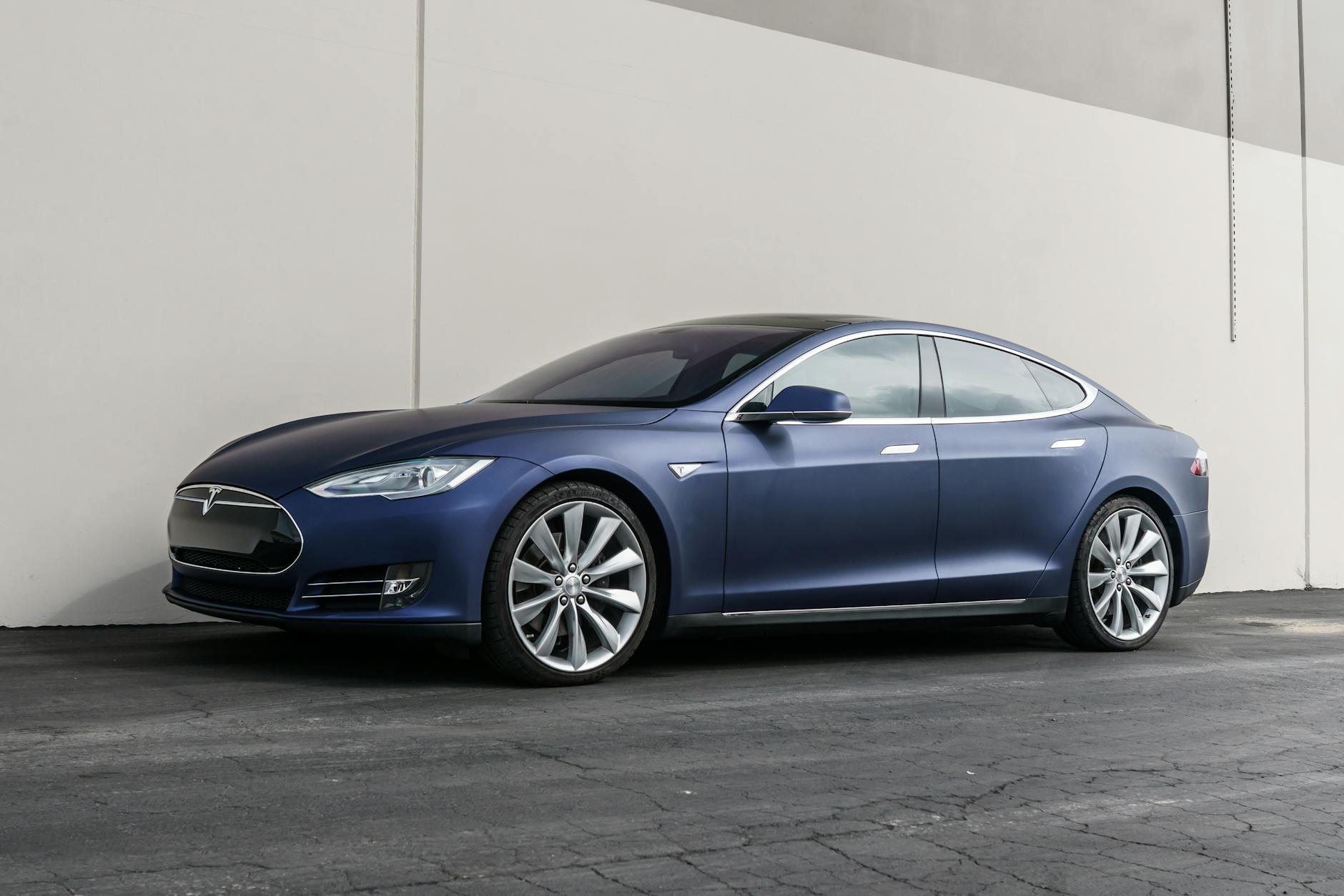
Tesla remains Musk’s most important industrial achievement and perhaps his most consequential illusion. It proved that electric cars could be desirable, fast, and commercially scalable. It also made Musk a master of the modern cult of execution, where vision, charisma, and capital can temporarily outrun conventional measures of organizational discipline. But Tesla’s public identity has become harder to separate from Musk’s broader mythology. The company is no longer just about vehicles. It is about autonomy, AI, robotics, energy storage, and the promise that today’s sedan is tomorrow’s anthropomorphic machine.
That promise has kept believers invested through production delays, regulatory scrutiny, quality-control questions, and the periodic gap between Musk’s forecasts and reality. Tesla’s investors often behave less like shareholders than like participants in a civilizational bet. They are funding not merely a car company but the idea that Musk’s confidence can compress time. This is a powerful business model when markets are forgiving and capital is cheap. It is less forgiving when consumers care about competition, margins, or the reliability of software that drives on public roads.
Tesla also exposes a deeper truth about Musk’s empire: the line between engineering and storytelling is unusually thin. He has always sold futures before they fully exist. That can be a force for progress, but it can also produce a governance problem. When a company is organized around the expected arrival of miraculous systems, the present can become underappreciated. Manufacturing complexity, labor relations, safety, and product maturity are not glamorous. They are, however, how real companies survive.
SpaceX and the reindustrialization of ambition
If Tesla made Musk the patron saint of electrified aspiration, SpaceX made him look historically serious. Reusable rockets are not a branding exercise. They are an engineering revolution that has lowered the cost of access to space and forced governments and incumbents to adjust. SpaceX’s operational discipline, rapid iteration, and willingness to explode hardware in public have made it one of the most formidable industrial organizations on Earth. It is also the clearest proof that Musk can, at times, turn obsession into genuine system-level change.
Yet SpaceX is more than a launch provider. It is becoming infrastructure for the century ahead. With Starship, Musk imagines a transport architecture so cheap and flexible that it could make lunar logistics, Mars colonization, and massive satellite deployment plausible. The Starlink constellation, meanwhile, has already become a strategic utility, providing internet access in remote areas and conflict zones while binding SpaceX to geopolitics in ways a normal tech company would struggle to manage. SpaceX is no longer just competing in aerospace. It is embedded in communications, defense, disaster response, and diplomacy.
That is where admiration becomes concern. A company so vital to national and international infrastructure raises obvious questions about concentration of power. What happens when essential connectivity is contingent on the judgment of one man? What happens when orbital networks become instruments in geopolitical disputes? SpaceX’s success is real. So is the unease it generates. In another era, such infrastructure might have been treated as a public utility or a heavily regulated strategic asset. In Musk’s era, it is also a private platform governed by entrepreneurial instinct.
xAI, Grok, and the revenge of the founder
Musk’s turn into artificial intelligence has a personal as well as strategic logic. He helped found OpenAI and then became one of the most prominent critics of the direction the industry took. xAI is partly a rival lab, partly a rebuttal, and partly an attempt to reclaim intellectual standing in the field that now shapes the rest of technology. Grok, the company’s flagship chatbot, is designed to feel less sanitized and more irreverent than its competitors, a product consistent with Musk’s taste for combativeness and anti-establishment theater.
But AI is not just another sector Musk can enter with customary bravado. It is the sector that may determine whether his other businesses remain central or become obsolete. Autonomous driving depends on it. Robotics depends on it. Search, ads, work software, coding, and media all depend on it. If xAI succeeds, Musk can claim a seat at the table where the next operating system of civilization is being designed. If it fails, the empire risks looking like a collection of great industrial assets connected by an increasingly theatrical doctrine.
Musk has presented xAI as a mission to understand the universe. That phrasing is revealing. It is not enough to make a useful chatbot; the enterprise must be cosmological. The scale of the ambition is inspiring, but it can also obscure a basic test of accountability. Does the product reduce friction, improve judgment, or create value for users? Or does it merely sound as though it belongs to a future too grand to be measured? The AI boom is full of grandiosity. Musk’s distinctive move is to make grandiosity look like a requirement of civilization.
“The future of AI is not just about generating text or images. It is about whether the systems that increasingly mediate human life can be trusted to reflect reality rather than manipulate it.”
Neuralink and the dream of escaping the body
Neuralink occupies a different register: part medicine, part science fiction, part metaphysical statement. Brain-computer interfaces promise to help people with paralysis, neurological disease, and communication impairments. That alone would make the field worthy of attention and support. Musk’s version goes further, suggesting that the only long-term answer to AI’s rise is to merge with it. The body, in this view, is both limitation and bottleneck. The brain must be upgraded.
This is perhaps Musk’s most intimate ideology. It assumes that human constraint is the original enemy. Rockets beat gravity. EVs beat fossil fuel. Satellites beat geography. AI beats cognitive labor. Neural interfaces beat the slowness of thought. The entire empire is built on a suspicion that nature’s default settings are inadequate for the scale of the future. There is a techno-religious intensity to this belief. Salvation arrives not through repentance or restraint but through acceleration and integration.
Neuralink’s promise is real enough to attract serious interest, but the company also shows how easily wonder can outrun ethics. Brain technology raises profound questions about consent, privacy, coercion, enhancement, and inequality. If such systems work, who gets them first? Who owns the data? What does autonomy mean when the interface between mind and machine becomes commercial? Musk’s vision is bold because it confronts human limitation. It is troubling because it treats limitation as something that should be engineered away before society has fully debated what might be lost.
Starlink and the geopolitics of dependence
Starlink may prove to be the most consequential of all Musk’s creations, precisely because it is the least theatrical. It is not a consumer spectacle like Cybertruck, nor a philosophical provocation like Neuralink, nor a cultural battlefield like X. It is infrastructure. As countries and militaries, remote communities, ships, and mobile users come to rely on it, Starlink becomes an instrument of statecraft whether Musk wants that role or not.
That makes the company both valuable and vulnerable. Value, because dependable communications are foundational to modern life. Vulnerability, because infrastructure invites regulation, rivalry, and political backlash. Starlink’s spread has already raised questions about sovereignty, wartime leverage, service conditions, and whether private companies should be able to shape the informational terrain of conflict. The more indispensable the network becomes, the more difficult it is to imagine it remaining merely a business.
Here again, Musk’s universe reveals its logic. He does not just build products; he builds dependencies. The customer is not merely buying a service but entering a system. In the best case, that system is more efficient, more resilient, and more innovative than public alternatives. In the worst case, it becomes a privatized layer of civilization controlled by a man whose mood can set the terms of access.
The charisma of scale, the peril of singularity
The most remarkable thing about Musk is not that he started many companies, but that he has made them feel like one. His gift is to connect transport, energy, information, orbit, cognition, and artificial intelligence into a single narrative of expansion. That narrative resonates because it answers a deep contemporary anxiety: that the institutions built in the industrial age are too slow for the problems of the digital age. Musk offers speed, scope, and a heroic refusal to accept limits.
And yet his empire also illustrates a classic danger of modern capitalism: when one person becomes the focal point for too many systems, his genius can become a form of systemic risk. The companies may be diversified on paper, but the personality is not. Musk’s strength is that he can compress ambition into action. His weakness is that he often treats governance, moderation, and institutional patience as obstacles rather than disciplines. Those habits may be tolerable in a startup. They are more alarming when the products touch speech, transportation, military logistics, neurological interfaces, and the possibility of machine intelligence surpassing human understanding.
Elon Musk’s universe is therefore both real and unstable. It is real because it has changed how cars are built, rockets are launched, satellites are deployed, and public conversation is conducted. It is unstable because it rests on a single theory of progress: that civilization can be saved by making more powerful tools faster than society can regulate them. That theory is not obviously false. It is also not obviously enough.
In the end, Musk’s greatest achievement may be that he has forced the world to argue with his future before it arrives. His empire is a bet that the universe is legible to engineering, and that the right companies, run with enough force of will, can make the improbable seem inevitable. The question for the rest of us is whether that future will feel like liberation, or like living inside one man’s very expensive explanation for reality.