The universe that orbiting around one man
There are companies, and then there is the Musk system: a loose, overlapping empire of enterprises that increasingly behave less like separate firms than like organs in one muscular, improvisational body. Tesla makes him the richest industrialist in the world. SpaceX gives him rockets, launch dominance and a quasi-sovereign position in the satellite age. X, the platform once called Twitter, gives him a microphone, a political weapon and a daily reminder that running a public square is not the same as posting on it. xAI, Neuralink and Starlink extend the same logic into artificial intelligence, neurotechnology and global communications. Each is a distinct business. Together they form something stranger: a private ecosystem for building, testing, amplifying and financing a civilizational bet.
For more than a decade, Musk’s genius has been obvious enough to tempt superlatives and idiosyncrasy in equal measure. He has repeatedly entered industries others considered mature or impossible and changed their trajectory. Electric cars went from niche status symbols to the center of an industrial policy race. Reusable rockets moved from skepticism to routine. Satellite internet, once an aerospace curiosity, became a global commercial and strategic asset. Yet the same man who can bend entire sectors to his will also leaves behind an atmosphere of chronic instability: executive purges, impulsive messaging, legal fights, advertiser revolts and product promises that often arrive as teases, then delays, then another tease.
This is what makes Musk difficult to categorize. He is neither merely a founder nor simply a showman. He is a systems builder who treats institutions as prototypes. He does not just run businesses; he stages experiments in scale, speed and power. The reward is immense. The cost is that every unit of the empire now helps expose the others to reputational, regulatory and financial risk.
X: the platform as amplifier and liability
Of all Musk’s holdings, X is the clearest expression of his temperament. It is the least stable, the most openly political and arguably the most revealing. Twitter, before Musk bought it, was already a stressed institution: indispensable to journalists, politicians and elites, yet commercially fragile and culturally combative. Musk did not merely inherit that contradiction. He intensified it. The rebrand to X was more than cosmetic; it was a declaration that the platform would no longer pretend to be a cautious public utility for elite discourse. It would become a broad, unpredictable “everything app,” or at least a stage for one man’s theory of digital civilization.
That theory has produced a platform at once more permissive and more chaotic. Musk has framed his changes as a restoration of free expression and a correction to what he sees as ideological over-moderation. But the commercial realities are less philosophical. Advertisers do not buy into metaphysics; they buy into adjacency. They want reach without contamination. X has repeatedly tested that bargain. Content moderation shifts, verification changes and Musk’s own posts have made the site feel less like a stable media environment than a permanent stress test of brand tolerance.
Yet even in dysfunction, X retains power. It remains the real-time nervous system of politics, markets and media. Musk knows this better than anyone. He uses X not as a company in the traditional sense but as a broadcasting layer for the rest of the empire: product launches, policy salvos, engineering updates, ideological provocations. In the modern attention economy, ownership of the distribution layer is a form of leverage. X gives Musk not just an audience but an instrument. It lets him shape the atmosphere around his other companies, whether by inflaming fans, baiting critics or moving markets with a single post.
“The platform is no longer just a social network. It is Musk’s loudest instrument of influence—and his most visible balance-sheet headache.”
Tesla: still the engine, but no longer the whole story
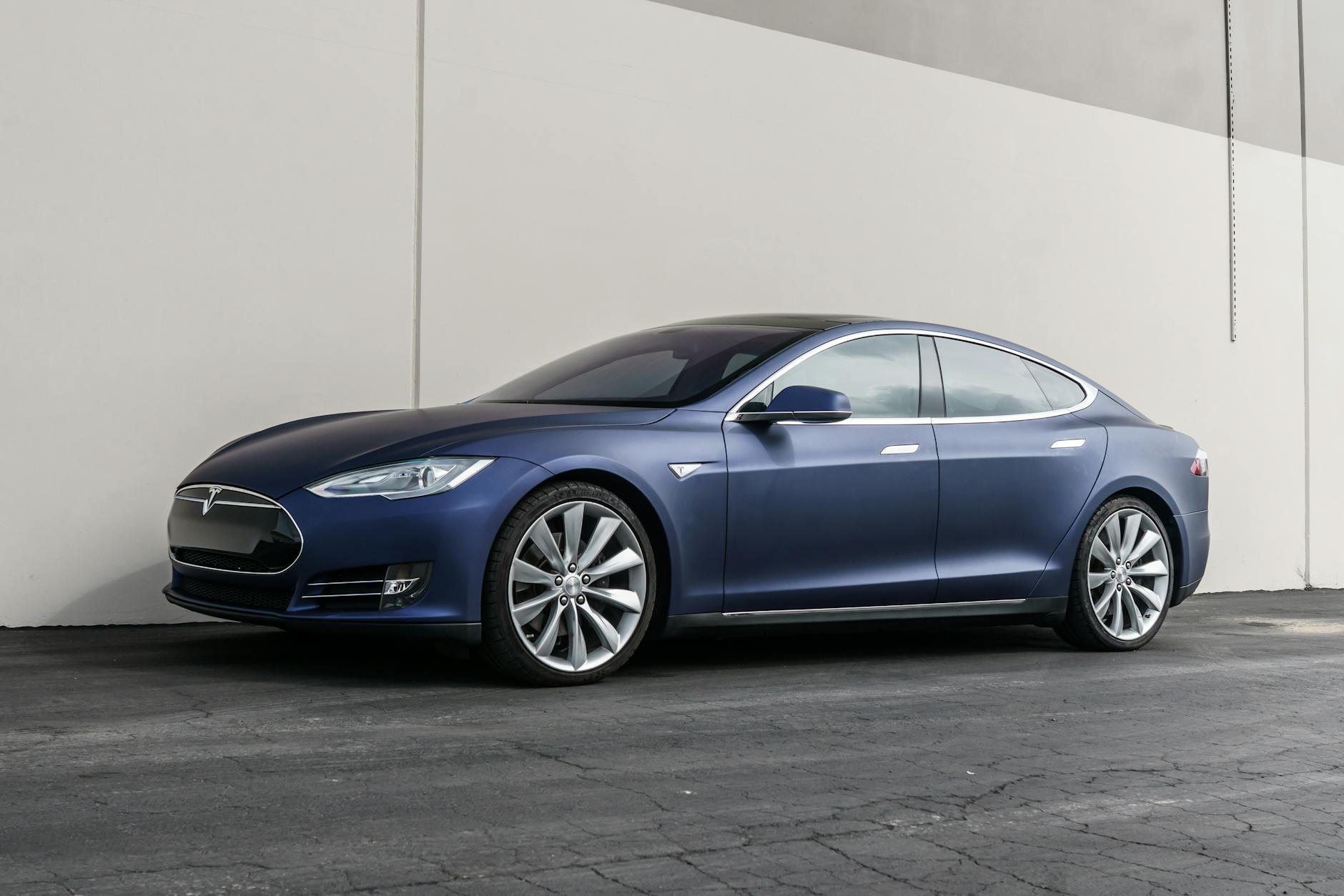
Tesla remains the financial and symbolic core of the Musk universe. It is the company that proved he was not merely a provocateur with money, but a builder capable of mass production, software integration and narrative control at industrial scale. It also established the Musk formula: audacious promises, relentless timelines, high-risk execution and a cult of speed. Tesla turned the electric vehicle from a compliance product into a status object and then into the default future that legacy automakers had to chase.
But Tesla is also where the limits of the Musk model have become more apparent. The company’s valuation increasingly reflects not only car sales but expectations about autonomy, robotics and AI. That is a difficult financial structure to maintain when the core auto business faces intense competition, pricing pressure and a more skeptical capital market. Tesla is no longer the only company making credible electric vehicles. It is still the most important brand in the category, but brand is not the same as invulnerability.
Musk’s political interventions have complicated the company’s global appeal. Some buyers remain loyal because they view Tesla as a technology company first and a carmaker second. Others have become uneasy with the CEO’s public persona, his ideological shifts and his willingness to make the company a proxy battlefield. The deeper issue is not just reputational. It is managerial. Tesla’s future depends on disciplined industrial execution: factories, supply chains, margins, software reliability and a relentless, unglamorous grind. Musk thrives on transcendence; Tesla still depends on logistics.
SpaceX and Starlink: the private state in orbit
If Tesla made Musk rich, SpaceX made him strategically important. The company has reshaped the economics of launch, then used that advantage to build Starlink, a satellite network that now functions as one of the world’s most consequential communications assets. The combination is extraordinary. SpaceX is not merely a rocket company; it is an infrastructure company for the space age, and Starlink has made it a provider of connectivity in places where governments are weak, war has torn apart networks or geography makes conventional telecom expensive.
Here lies one of the most striking features of the Musk universe: SpaceX and Starlink give a private corporation a quasi-public role. They are commercial ventures, yes, but they also occupy strategic space usually reserved for states. They can support military communications, civilian resilience, disaster response and geopolitical leverage. In wartime, a satellite network is not just a product. It is a sovereign capability.
That creates enormous power, and therefore enormous ambiguity. A private executive now exercises influence over communications infrastructure that affects soldiers, governments and civilians. This is not the same as owning a utility. It is more like owning a utility that can move in and out of geopolitical alignment depending on technical, commercial and personal judgments. The world has always relied on private contractors in defense and communications. What is new is the scale, autonomy and symbolic centrality of one entrepreneur’s network.
SpaceX’s engineering competence is the reason governments continue to trust it. But its concentration of power is also why they will increasingly seek alternatives. The company’s brilliance makes it indispensable. Its owner’s unpredictability makes that indispensability unsettling.
xAI and Grok: the chatbot as ideology
Musk’s move into AI was inevitable, and therefore revealing. He had already helped finance the modern AI boom through early involvement with OpenAI before becoming one of its loudest critics. He argues that advanced AI must be less ideologically curated and more faithful to reality, a position that doubles as philosophy and marketing. xAI was founded to embody that view, while Grok—the chatbot at its center—was pitched as witty, irreverent and less constrained than its competitors.
But AI is not merely another app category. It is a new control layer for knowledge, work and interface. To build a competitive model, a firm needs capital, chips, data, engineers and distribution. Musk can marshal all four across his universe. X supplies a conversational environment. Tesla provides technical prestige and, potentially, real-world data. SpaceX and Starlink offer prestige and resources. And his personal brand attracts talent and investment with unusual force. In theory, the whole empire can be made to reinforce the AI ambition.
Yet AI also exposes Musk’s recurring problem: he confuses anti-establishment posture with product differentiation. Grok can be more irreverent than competitors, but irreverence is not a moat. It may even be a liability if users want reliability more than attitude. The larger strategic question is whether xAI will become a serious AI laboratory or a platform for Musk’s metaphysical preferences. In the current market, the difference matters. AI investors are funding infrastructure, not just ideology. The winners will likely be those who combine model quality with distribution and trust. Musk has the first and third in abundance inside his universe, but trust is more difficult when the same owner is also selling narratives by the hour.
Neuralink: the promise of intimacy, the burden of ethics
Neuralink is the most intimate and ethically charged of Musk’s enterprises. If Tesla addresses mobility, SpaceX addresses gravity and xAI addresses cognition, Neuralink addresses the boundary between brain and machine. That is not just an engineering frontier; it is a moral one. The company’s promise is seductive: help people with paralysis communicate, restore lost function and someday create direct interfaces between neural activity and software. The potential humanitarian value is real, and it is one reason serious researchers and regulators continue to engage.
But Neuralink also embodies Musk’s favorite operating method: begin with a clinical justification and then extrapolate toward civilizational transformation. The leap from medical device to mass interface is enormous. Even if the early use cases are profound, the social and ethical consequences of brain-computer interfaces would be unlike anything consumer technology has yet produced. Questions of consent, security, privacy and identity would all become acute. Who owns the data generated by thought? What happens if the interface is hacked, coerced or commercially optimized in ways users do not understand?
For now, Neuralink is still in the stage where hope outruns scale. That is normal in biotechnology. But in Musk’s universe, even a narrow clinical tool is also a narrative object, part of the larger claim that human limits are negotiable. He is a merchant of thresholds. Neuralink may become one of his most important businesses—or a reminder that not every frontier is ready for his tempo.
The common method: speed, spectacle and cross-subsidy
The most underestimated fact about Musk is not that he runs many companies. It is that they increasingly operate as a portfolio of mutually supporting stories. SpaceX confers technical legitimacy on XAI. X provides distribution and an arena for reputation management. Tesla supplies wealth, cachet and manufacturing credibility. Starlink broadens the strategic relevance of the group. Neuralink offers a frontier narrative so audacious it can make the rest of the empire feel conservative by comparison. The whole arrangement resembles an industrial ecosystem built around a single founder’s appetite for risk and confrontation.
That structure has strengths. It allows rapid experimentation, bold capital allocation and unusual cross-pollination of talent and ambition. It also enables a dangerous kind of opacity. Because the companies are not all publicly comparable, and because much of the empire’s value rests on future promises, outsiders can struggle to separate genuine technological progress from overlapping hype. Musk’s investors and admirers often argue that the results justify the noise. Critics reply that the noise is increasingly part of the business model.
Both can be true. Musk has proved that a visionary entrepreneur can still reshape hard industries in the 21st century. He has also proved that no one, however brilliant, should be allowed to operate permanently beyond the discipline of normal corporate accountability. The empire depends on one man’s energy, and therefore on his mood. It is exhilarating when the energy is focused. It is destabilizing when it is not.
The controversy is not incidental. It is structural.
For Musk, controversy is not a bug to be removed from the system. It is a source of motion. It rallies supporters, disorients rivals and keeps attention glued to the empire. But controversy also exacts a cost that compounds over time. It hardens regulators, alarms advertisers, alienates employees and narrows the universe of institutions willing to cooperate without conditions. When the chief executive of a company is also its principal source of volatility, every product line inherits the volatility.
That is why Musk’s empire now resembles a paradoxical combination of state capacity and startup culture. It can launch satellites, move markets and influence elections, yet it remains vulnerable to caprice. It can inspire engineers and exhaust managers. It can make believers feel they are participating in the future while making skeptics wonder whether the future can be built this way at all.
Musk’s universe is not a single company; it is a theory of power. Its premise is that one exceptionally driven individual can outpace institutions by moving faster than they can regulate, criticize or imitate him. For a long time, that premise worked. The question in 2026 is whether scale has begun to invert the advantage. The larger the empire grows, the less any one founder can control its consequences. Musk still commands extraordinary leverage over the technologies that may shape the century. But leverage is not the same as mastery. The universe he built now has its own gravity, and gravity, unlike ambition, is not negotiable.