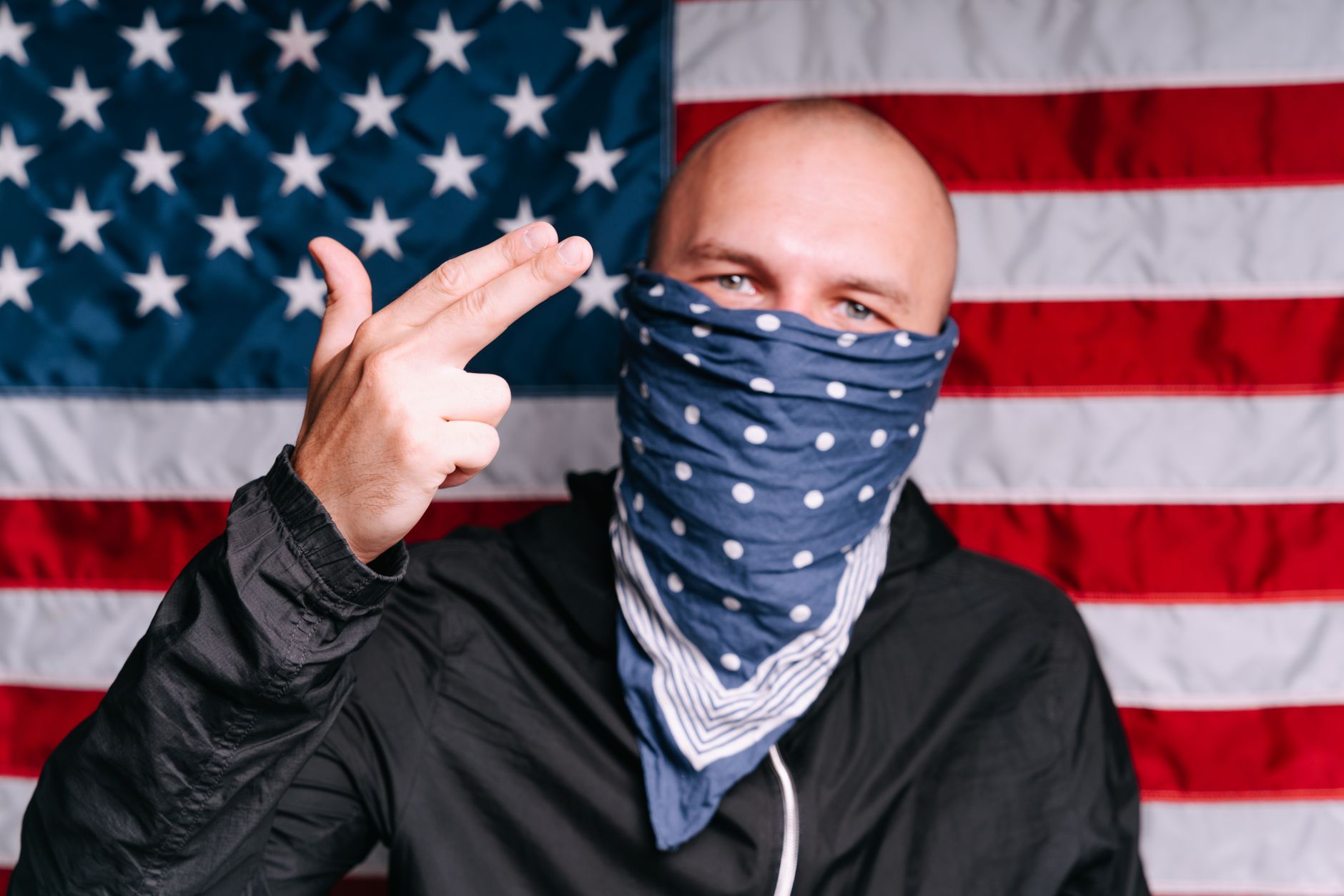
America has always argued with itself in public. What is different now is not the volume of the quarrel but its architecture. The country’s old institutions—universities, churches, legacy media, political parties—still matter, but they no longer monopolize the argument. Increasingly, the dispute over what Americans owe one another is being organized by social platforms that reward speed over reflection, posture over persuasion, and identity over institution. The result is a culture war that feels at once more diffuse and more intimate than the one that animated the country in the late 2010s. It no longer has a single theater. It has a feed.
This is especially visible among Gen Z, the first generation to mature fully inside the logic of algorithmic attention. They have inherited the moral languages of prior eras—civil rights, feminism, queer liberation, anti-racism, free speech, religious pluralism—but these languages now arrive in condensed, memetic form, stripped of institutional ballast and repackaged as content. A slogan that once belonged to a movement becomes a caption. A grievance becomes a clip. A confession becomes a brand asset. In the process, political identity has become easier to display and harder to govern. Public morality is increasingly performed in bursts, not built over time.
The social web is not merely reflecting the culture wars; it is changing their syntax. Hootsuite’s latest trends report captures the strange emotional weather of the moment: “cozy” and “calming” aesthetics coexist with chaos culture, absurdism, and micro-drama. That contradiction is not incidental. It describes a generation that is exhausted by conflict yet cannot escape it, and therefore alternates between irony and earnestness, outrage and retreat. Gen Z often appears politically omniscient and institutionally distrustful, deeply fluent in the language of justice while skeptical of any organization that claims to embody it. Their politics can be principled, but it is often situational; their affiliations are less likely to be lifelong loyalties than contingent alignments around moments of crisis.
Cancel culture, in this environment, has evolved from accusation to ambient condition. The phrase itself is now contested enough to be almost useless, a catch-all for everything from mob harassment to ordinary consequences. But the phenomenon remains real. Social platforms have made reputational enforcement easier, faster, and more granular. A professor, student, pastor, author, or corporate executive can be clipped, contextualized, and condemned before the full facts are available. The speed of judgment has exceeded the speed of verification. This does not mean that social accountability is always unjust; many powerful people have long escaped consequences by hiding behind institutions that insulated them from scrutiny. But the modern version is volatile in a way older forms of gatekeeping were not. It is decentralized punishment without due process.
That volatility has a political logic. For young users, online call-outs often function as moral shorthand in a world where formal institutions feel unresponsive. If a university, publisher, or local government seems unable or unwilling to address harm, then the platform becomes the venue of last resort. Yet the same mechanism that enables accountability also incentivizes escalation. The more visibly righteous the outrage, the more likely it is to travel. The more unforgiving the charge, the more it distinguishes the speaker within a crowded moral marketplace. Social media has turned virtue into a competitive sport, and any sport played at scale produces its own forms of exaggeration, simulation, and cheating.
Universities sit uneasily at the center of this system. No institution has been asked more often to reconcile incompatible demands: cultivate open inquiry, protect vulnerable students, certify merit, and serve as a moral referee for society. In practice, universities have become symbolic targets because they are one of the few places where Americans still expect a public argument about truth. But that expectation has been undermined by internal pressures and external suspicion alike. Students arrive already trained by digital culture to think in terms of visibility, harm, and response; faculty often find themselves balancing intellectual freedom against reputational risk; administrators, eager to avoid scandal, can end up treating controversy as a failure of brand management rather than as the essence of education.
The campus conflict of the last decade was often caricatured as a battle between enlightened progressives and embattled conservatives. That framing missed the deeper transformation. The real issue is that universities are now judged by incompatible criteria. To one audience, they are supposed to defend speech at all costs. To another, they are supposed to enforce standards of dignity and inclusion. To students raised in the logic of social media, these are not merely competing values but competing identities. The same institution may be condemned as too permissive by one side and too censorious by the other. In the age of the feed, complexity is expensive and ambiguity looks like cowardice.
Religion, meanwhile, has not vanished from the culture war so much as changed its costume. America is not becoming less spiritual in any simple sense; it is becoming less settled. Traditional denominational authority has weakened, but forms of moral certainty remain abundant. Some young Americans have drifted toward revived forms of Christianity, often in search of structure, community, and metaphysical seriousness. Others have replaced church with politics, treating activism as a moral discipline that offers ritual, belonging, and confession. The cultural battle is not between belief and unbelief alone, but between competing systems of meaning. In that respect, identity politics often functions like a secular theology: it assigns guilt, elevates testimony, demands conversion, and promises redemption through recognition.
Yet the rise of identity-based politics on the left has also helped energize a muscular counterreaction on the right. Conservative influencers and religious traditionalists have seized on social backlash, campus protests, and corporate DEI rhetoric to argue that America has become captive to a new orthodoxy. Their critique is not always consistent, and it is often opportunistic. But it has found a receptive audience among young men, disaffected graduates, and religious Americans who believe they have been told to apologize for their inheritance. In digital form, this backlash is often stripped of policy detail and recast as a battle for authenticity. The claim is not merely that the left has gone too far; it is that the establishment itself has been captured by elite moral theater.
That claim resonates because it contains a grain of truth. Corporate America, universities, and parts of the media spent years signaling alignment with fashionable causes in ways that often felt performative, risk-averse, and badly understood. The result was predictable: the harder institutions tried to communicate virtue, the more they seemed to advertise their own insincerity. Social media made these gestures legible at speed and punished anything that sounded scripted. The audience learned to detect the difference between conviction and branding. But it also learned to reward its own cynicism. Once every public declaration is assumed to be strategic, trust becomes nearly impossible to rebuild.
And yet, for all its corrosive effects, the feed has also democratized cultural power. It has allowed marginalized voices to bypass gatekeepers, exposed institutional hypocrisy, and created forms of public solidarity that would have been inconceivable in the era of three television networks. The #MeToo era, for example, was both a moral reckoning and a media transformation: what had once been buried in private became collectively auditable. The same machinery that can produce pile-ons can also surface truths. The problem is not that social media amplifies outrage; it is that it amplifies everything, including the evidence needed to contest outrage. In a healthy system, those functions would be separated. Online, they are fused.
This fusion helps explain why debates about free speech, race, gender, and religion so often become metaphysical. Participants are not simply arguing about policy or etiquette; they are arguing about what kind of country America is allowed to be. Is it a nation of shared civic commitments or a collection of overlapping identities? Is liberty best protected by neutrality or by explicit correction of past wrongs? Are universities guardians of inquiry or incubators of moral formation? Is religion a private comfort or a public source of discipline? These questions are ancient. What is new is that millions of Americans now answer them in real time before an audience trained to interpret hesitation as betrayal.
“Online politics has made everyone both witness and judge,” says a campus administrator, not because people are more moral than before, but because they are never offstage.
The tragedy of this arrangement is that it produces both overconfidence and fragility. Young Americans are often told that they are the most tolerant generation in history, and in many ways they are: more open to difference, more comfortable with fluid identity, less captive to old taboos. But tolerance is not the same as resilience. A generation raised on personalized feeds and moral immediacy can become exquisitely sensitive to offense while remaining strangely detached from durable institutions. It knows how to mobilize, but not always how to deliberate. It knows how to signal, but not always how to forgive.
That matters because institutions still do the slow work that culture cannot. Universities can be maddeningly bureaucratic, but they also preserve the conditions for serious thought. Religion can be exclusionary or dogmatic, but it also offers habits of humility and endurance. Even the best digital communities tend to be episodic, and the worst are predatory. When public life is mediated by metrics—views, likes, reposts, ratio counts—the incentives favor drama over depth. The dangerous temptation is to conclude that because institutions are imperfect, they are obsolete. In fact, the opposite is true: the more volatile the culture, the more we need places that reward patience.
There are signs that some Americans, especially younger ones, sense this. The popularity of “cozy” aesthetics, long-form content, smaller communities, and explicit disillusionment with online excess suggests not an end to the culture war but fatigue with its format. Gen Z is not abandoning politics; it is searching for a way to live inside it without being consumed by it. That search may help explain the renewed interest in religion, the appeal of localism, the migration from outrage-driven platforms to more intimate spaces, and the desire for forms of meaning that do not depend on constant public performance.
Still, the deeper problem remains. The country’s arguments over race, sex, class, faith, and power cannot be resolved by better branding or more sophisticated social strategy. They reflect real conflicts over status and belonging in a society whose institutions no longer command universal loyalty. Social media has merely made those conflicts visible, continuous, and profitable. It has not invented the culture war. It has industrialized it.
America may eventually tire of this condition, as generations tire of fashions that once felt like destiny. But the feed is patient. It will happily host a thousand new moral panics, each more fervent than the last, so long as they can be rendered as content. The challenge for universities, religious communities, and citizens alike is to resist being reduced to that logic. The question is no longer whether the culture war is real. It is whether a society can preserve any common life when its deepest disagreements are optimized for distribution.