The empire is the product
Elon Musk no longer runs a portfolio of companies so much as a linked system of ambitions. X, Tesla, SpaceX, xAI, Grok, Neuralink, and Starlink are often described as separate ventures, but that framing misses the point. Musk has built a universe in which each company feeds the others with money, attention, talent, data, engineering legitimacy, and, above all, his personal mythology. The result is not merely a business empire. It is a political and technological project that reaches from social media feeds to orbital internet, from roadways to rockets, from brain implants to artificial intelligence.
This is also why the Musk story remains so unusually unstable. In a conventional conglomerate, the units are diversified and governed by the logic of finance. In Musk’s world, the units are mutually reinforcing but also mutually contaminating. A scandal at X bleeds into xAI. A production setback at Tesla affects confidence in his broader engineering genius. A Starlink outage, a Grok fiasco, a Neuralink safety question, or a regulatory fight over autonomous driving does not stay contained. It becomes part of the same narrative: that Musk can move faster than institutions can catch him, and that the institutions are increasingly trying.
For investors, regulators, employees, and users, the challenge is not merely whether any one of these firms succeeds. It is whether the Musk ecosystem can keep expanding without collapsing under the weight of its own contradictions. He is at once builder and bottleneck, visionary and liability, the source of immense optionality and the source of recurrent risk.
X: the social network as operating system
The acquisition of Twitter, later rebranded as X, was widely treated as a billionaire’s impulsive purchase of a cultural toy. That interpretation now looks too small. X has become the front end of Musk’s larger project: a platform for distribution, identity, finance, messaging, and AI experimentation. In Musk’s telling, X is supposed to evolve into an everything app, a digital clearinghouse for modern life. In practice, it has become something equally revealing: a proving ground for his theory that scale, loosened moderation, and algorithmic intensity can create influence more efficiently than traditional media institutions.
The site’s significance in the Musk universe is not that it is the best social network. It is that it is the loudest. It gives Musk a direct channel to the public, a laboratory for testing narratives, and a vector for pushing his companies into the same conversation. When Tesla needs attention, X can supply it. When Grok needs users, X can distribute it. When Musk wants to frame a regulatory dispute or influence the cultural weather around a product launch, X is the megaphone.
That arrangement has also made X one of the clearest expressions of Musk’s governing style: minimize friction, maximize velocity, accept chaos as a cost of freedom. Supporters see ideological openness and product experimentation. Critics see degraded trust, weaker moderation, advertiser flight, and a platform increasingly shaped by the preferences of its owner rather than the expectations of a broad public. Both views contain truth. But the deeper fact is that X has ceased to be merely a business. It is the nervous system of the Musk brand.
Tesla: the original myth still finances the future
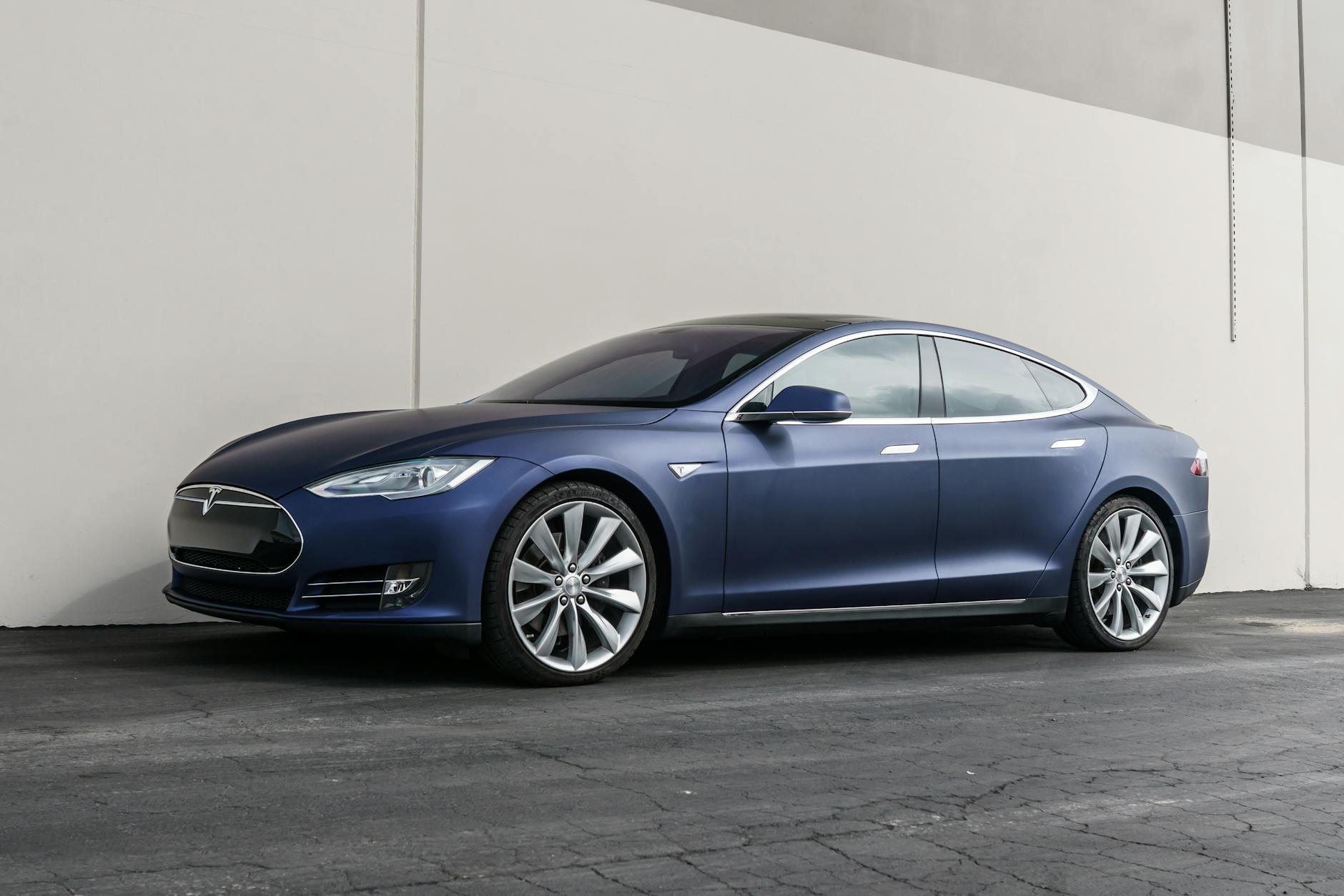
If X supplies the voice, Tesla remains the capital engine. Tesla was the company that turned Musk from a wealthy entrepreneur into a global symbol of technological disruption. It also remains the business most exposed to the tension between his ambitions and the realities of manufacturing. Tesla is not only an automaker. It is the foundation on which Musk’s credibility as an industrialist rests, and the source of the stock-market valuation that long made his broader empire possible.
Yet Tesla also illustrates the core Musk paradox. It is a company built on discipline, scale, supply-chain management, software integration, and relentless iteration, but it is led by a man whose style is often theatrical, improvisational, and political. Tesla has helped normalize electric vehicles and advanced driver-assistance systems, but it has also become synonymous with Musk’s tendency to overpromise. That gap matters because Tesla’s future increasingly depends on trust: trust in autonomy, trust in software, trust in long-term execution, trust that the company can convert hype into durable industrial advantage.
The relationship between Tesla and the rest of the Musk universe is now especially important because AI has become the connecting tissue. Musk has repeatedly suggested that advances in AI will improve Tesla’s autonomous-driving ambitions. That may be true in a broad sense, but it also deepens the overlap between Tesla’s fortunes and the uncertain frontier of machine intelligence. Tesla is no longer just competing with automakers. It is competing with the pace of AI progress, the reliability of its own data pipeline, and the market’s willingness to keep believing in a self-driving future that has repeatedly arrived later than promised.
xAI and Grok: truth, theater, and the fight for compute
xAI is Musk’s most explicit challenge to the current AI establishment. Founded in 2023, it was created to stand against what Musk described as the political correctness of other models and to pursue “truth, whether politically correct or not.” Its chatbot, Grok, was designed to have wit, personality, and a looser tone than more cautious rivals. In effect, xAI is not just an AI company; it is a philosophical argument disguised as a startup.
That is part of its appeal. It offers an alternative to the sanitized voice of mainstream consumer AI systems. It also fits perfectly into Musk’s rhetorical universe, where contrarianism is itself a product feature. But Grok’s value cannot be reduced to attitude. In a market increasingly dominated by compute-intensive model training, access to data, chips, and distribution is everything. That is where the rest of the empire matters. X provides a vast real-time content stream. Musk’s broader network provides narrative momentum. The whole machine exists to solve a strategic problem: how to build an AI stack that can compete with better-funded or better-organized rivals without surrendering the weirdness that makes it distinct.
The danger is obvious. A chatbot marketed as fearless can easily become reckless. A system sold as truth-seeking can become a projection of its owner’s politics, preferences, and insecurities. And an AI company folded into a larger media-and-infrastructure empire risks blurring the line between product, propaganda, and platform power. That does not mean xAI is doomed. It means its ambitions are inseparable from Musk’s appetite for risk and his need to keep every part of the ecosystem in motion.
Starlink and SpaceX: orbital infrastructure as leverage
SpaceX remains the cleanest example of Musk’s ability to turn an improbable idea into a working industrial asset. It has changed the economics of launch, built one of the most consequential rocket companies in the world, and created a genuine strategic capability in Starlink, the satellite internet service that has become essential infrastructure in remote regions, disaster zones, and conflict environments. Starlink is not just a side business. It is the connective tissue between Musk’s terrestrial ambitions and his celestial ones.
SpaceX and Starlink matter because they give Musk leverage beyond consumer markets. A rocket company with reusable launch capability and a satellite network that can cover gaps in national infrastructure is not merely a commercial enterprise; it is a geopolitical actor. Governments may depend on it, militaries may rely on it, and competitors may struggle to match its pace. That makes SpaceX one of the few Musk ventures whose strategic importance is widely accepted even by those who distrust his other projects.
Yet even here, the Musk pattern appears. The achievement is real, but so is the concentration of power. Starlink’s success has made Musk a private provider of public utility-like services, with all the ambiguity that implies. Who gets access? Under what conditions? With what oversight? The answers matter because the service is now woven into civil and military systems. SpaceX may be the least controversial part of the Musk universe technologically, but it may be among the most consequential politically.
Neuralink: the body as the next frontier
If X is the mind, and Starlink the sky, Neuralink is the body. The neurotechnology company represents Musk’s most intimate claim: that the human brain itself can be interfaced with machines. Neuralink’s stated goal is to build a generalized brain interface to restore autonomy to people with unmet medical needs, including enabling quadriplegics to control computers and mobile devices through thought. That medical mission gives the company a compelling humanitarian rationale. It also places it at the frontier of a field where the ethical stakes are high and the technical obstacles are immense.
Neuralink is a test of whether Musk’s engineering culture can survive in a domain where failure is not just expensive but deeply personal. Brain-computer interfaces are not rockets. The body is not a software stack. Medical devices must satisfy regulators, clinicians, patients, and ethics boards in ways that consumer gadgets do not. That makes Neuralink perhaps the clearest example of the gap between Musk’s rhetoric of acceleration and the slower, more exacting pace demanded by biology.
Still, the company is important precisely because it extends the Musk universe into the realm of human augmentation. If Tesla is about mobility, Neuralink is about cognition and autonomy. It is easy to dismiss the project as science fiction with a demo. But that would understate its significance. Even partial success would expand Musk’s role from builder of machines to architect of interfaces between machine and mind.
The controversy is not a side effect; it is part of the model
Every Musk enterprise comes with a familiar second product: controversy. At this point, the controversy is not incidental to the brand. It is baked into the growth model. Musk’s companies benefit from his ability to seize attention, polarize audiences, and place himself at the center of debates that would normally belong to institutions. This produces a unique kind of power. It also produces a unique kind of fragility.
Critics argue that Musk’s style encourages impulsiveness, weakens governance, and substitutes personality for process. They point to volatile management decisions, regulatory conflicts, labor disputes, product overpromises, and public statements that move markets or unsettle employees. Supporters counter that his willingness to ignore consensus is precisely what has allowed him to build in sectors that were once considered sluggish, overregulated, or impossible to reform. The truth is that both assessments are accurate. Musk has succeeded in part because he treats friction as evidence of opportunity. But friction is also how society signals limits.
What makes the Musk universe unlike a normal corporate portfolio is that the same personality drives the same basic method across every domain: make a huge wager, provoke the system, convert attention into momentum, and hope execution catches up. Sometimes it does. SpaceX is the strongest argument in his favor. Sometimes it doesn’t. X is the clearest warning. Tesla remains the hinge between those outcomes, while xAI, Grok, Starlink, and Neuralink show the expanding reach of the experiment.
“The Musk universe is not really about companies. It is about control over the infrastructures that shape modern life.”
The logic of one-man industrialism
The deeper story is that Musk has become a one-man theory of industrial power in the twenty-first century. He understands that the most valuable companies are no longer isolated products but ecosystems: vehicles linked to software, satellites linked to services, AI linked to data, media linked to distribution, and hardware linked to identity. He has also grasped that attention itself is a form of capital. X amplifies the brand. Tesla validates the engineering myth. SpaceX confers technical seriousness. Starlink adds strategic relevance. xAI and Grok keep him in the future tense. Neuralink pushes the whole project into human biology.
That architecture is brilliantly coherent and deeply exposed. It depends on a single operator whose strengths are inseparable from his weaknesses. It relies on institutions that tolerate him because he delivers value, even when he irritates them. It thrives on a public willing to treat each new venture as either salvation or scandal. And it assumes that the future will keep rewarding speed, spectacle, and scale over steadiness, governance, and restraint.
The most important question about Musk is not whether he is too powerful. It is whether his form of power can be durable. In one sense, the answer is already yes: he has built a network that spans online discourse, electric vehicles, rocket launches, satellite internet, brain interfaces, and frontier AI. In another sense, the answer is still unresolved: the more these systems converge around him, the harder it becomes to separate genuine innovation from personal risk.
That tension is the essence of the Musk era. He has made himself the connector between sectors that once seemed unrelated, and in doing so has become both unusually influential and unusually vulnerable. The universe he has built is spectacular. Whether it is stable is another matter entirely.