The architecture of a modern empire
Elon Musk’s power is no longer best understood company by company. It is a system: X for attention, xAI and Grok for machine intelligence, Tesla for industrial scale, SpaceX for launch and orbit, Starlink for connectivity, and Neuralink for the most intimate frontier of all, the human brain. The companies are distinct on paper, but together they form a lattice of influence that reaches from the timeline to the sky, from the factory floor to the nervous system. xAI, founded in July 2023, was explicitly framed as a project to “understand the true nature of the universe,” but it also functions as the newest node in Musk’s increasingly integrated platform economy.[1][2]
The strategic brilliance of the model is obvious. Musk does not merely compete in multiple industries; he builds overlapping ones. X is not just a social network but a distribution channel. xAI is not just an AI lab but a consumer product embedded in that distribution. Starlink is not only a satellite internet service but a logistics and communications layer that can follow SpaceX wherever it operates. Tesla is not only a car company but a data-gathering machine, a robotics bet, and a political symbol. Neuralink offers the most speculative promise of all: the possibility that the interface between mind and machine will eventually become another Musk platform. The sum is not diversification. It is concentration.
X: the town square he bought
When Musk acquired Twitter and renamed it X, he did more than change a brand. He turned a global platform for news, politics, and conversation into a private instrument that reflects his taste for speed, conflict, and experimentation. X is now the site where Musk speaks most directly to the world, often without the mediation of executives, journalists, or institutional filters. That makes it powerful. It also makes it volatile. The platform’s value lies in its scale and its role in public discourse, but its identity is now inseparable from the preferences of one owner.
The stakes are larger than content moderation, though that remains central. X has become part of Musk’s broader commercial architecture. According to reporting on xAI, the company trains on X data, while Grok is offered as an exclusive feature for X Premium subscribers, and X itself serves as a distribution channel for xAI products.[1] That arrangement is shrewd: it turns the social network into both product and pipeline. It also raises the old question of whether the platform serves users, advertisers, or Musk’s wider strategic ambitions. In the Musk universe, the answer is often “all three,” which is another way of saying that conflicts of interest are not bugs but features.
“The platform is not merely a business. It is the front door to the rest of the empire.”
xAI and Grok: truth-seeking, with a punchline
xAI is the most revealing of Musk’s companies because it sits at the intersection of his techno-philosophy and his politics. He launched it in 2023 with rhetoric about truth-seeking, scientific curiosity, and a desire to challenge what he portrays as ideologically constrained AI systems.[1][2] That framing has always had two audiences. To engineers, it says: build something better. To Musk’s supporters, it says: build something less obedient to elite consensus. In practice, xAI is both a serious competitor and a cultural project.
Grok, its flagship chatbot, is designed to be irreverent, current, and unusually willing to wade into controversial terrain. That gives it an identity distinct from the cautious tone of mainstream AI assistants. But the same qualities that make Grok attractive also make it risky. A system optimized for edginess can sound insightful, but it can also sound reckless. A model tuned to resist “political correctness” can look, depending on the question, like a truth machine or a grievance machine. The ambiguity is not accidental; it is part of the brand.
There is also a more practical story here. xAI’s rise has been fueled by Musk’s ability to marshal resources quickly, including massive funding and compute infrastructure, and to fold the company into the broader X ecosystem.[1] That makes xAI more than a start-up and less than a fully independent institution. It is part of Musk’s larger bid to control the tools that shape how people search, converse, and decide what is real. In the AI era, that is a form of power more consequential than owning media in the old sense. A newspaper could influence what people read. An AI assistant can influence what they believe they have understood.
Tesla: the original kingdom, now under strain
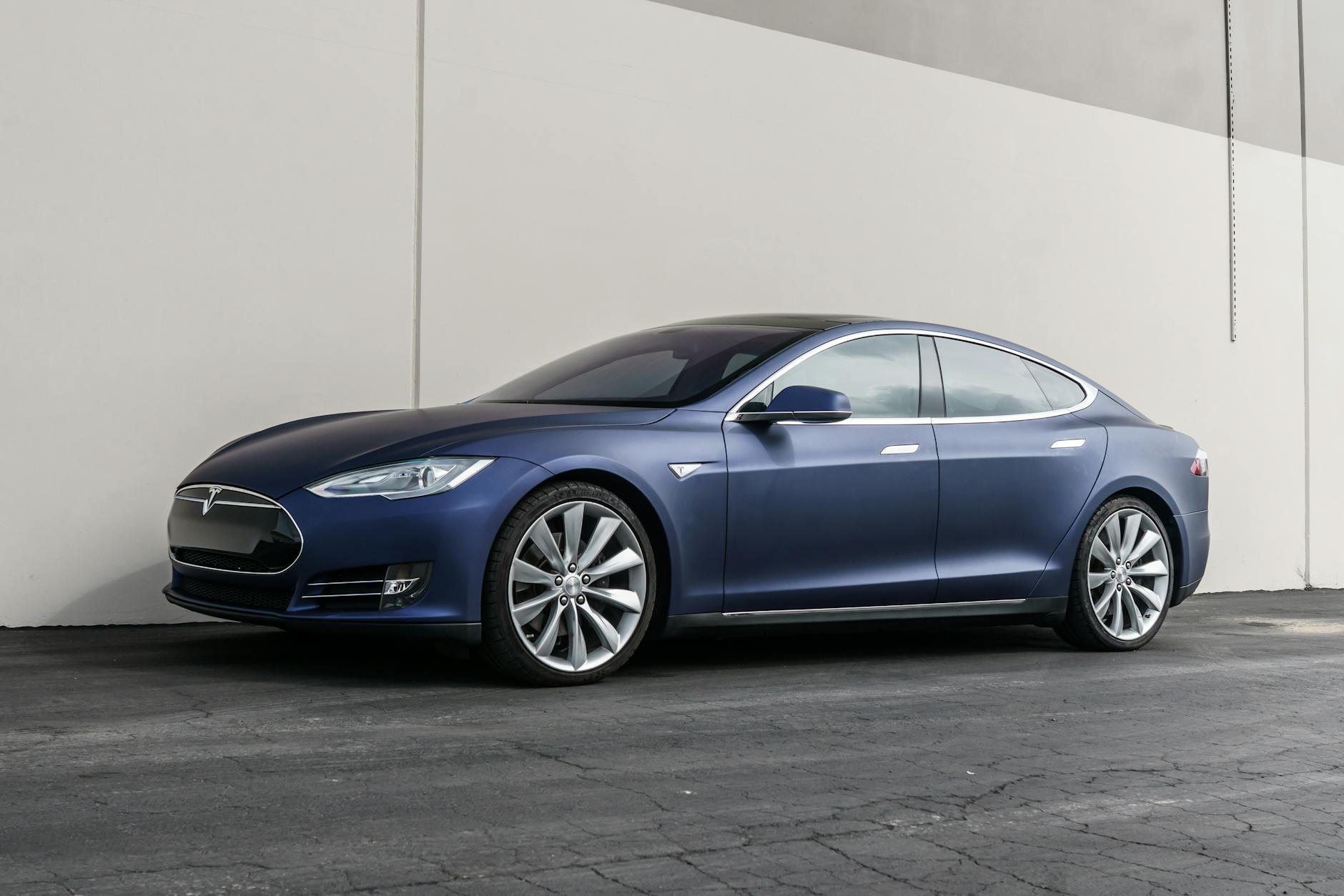
Tesla remains the foundation of Musk’s public myth. It gave him the reputation as a builder who could make the impossible normal: electric vehicles at scale, software-defined cars, battery systems, and a credible claim that the auto industry had been too slow, too complacent, and too conservative. Tesla still matters enormously. It is the company that made Musk a household name beyond tech circles and turned him into a cultural protagonist rather than a mere executive.
But Tesla now sits in a more complicated position. It is both the cash-generating base of the empire and the company most exposed to the costs of Musk’s distractions. The market no longer grants the easy assumption that Tesla’s future will be defined only by vehicle sales. Investors now have to think about autonomy, robotics, software, and the possibility that Tesla is ultimately a platform company with wheels. That is a visionary thesis, but also a demanding one. The more Musk speaks about AI, robotaxis, and humanoid machines, the more Tesla is judged less as an automaker than as a promise. Promises are harder to value than products.
Tesla also illustrates Musk’s recurring pattern: convert skepticism into capital, then convert capital into optionality. That has worked brilliantly in the past. It may still work. Yet the farther Musk moves from the concrete business of manufacturing, the more Tesla’s identity becomes entangled with his broader persona. For supporters, that is a strength. For critics, it is a governance risk. Both are correct.
SpaceX and Starlink: infrastructure above politics
If Tesla is the company that made Musk rich and famous, SpaceX is the one that made him strategically indispensable. SpaceX has changed the economics of launch and the geography of orbit, and Starlink has turned that orbital infrastructure into a communications network with geopolitical reach. Together they are among the most consequential private industrial projects of the century.
SpaceX is exceptional because it has moved from aspiration to infrastructure. Rockets are not toys for billionaires; they are national assets, commercial tools, and military enablers. Starlink deepens that role. It provides connectivity in remote places, disaster zones, and conflict areas, making it both a consumer service and a strategic layer of global communications. That duality is what makes it powerful and controversial. A network that can help a farmer in a rural district can also shape the operational environment of a war zone. Musk’s private decision-making can therefore carry public consequences far beyond the balance sheet.
This is the Musk pattern at its most consequential: build something useful enough that governments cannot ignore it, then make that usefulness so ubiquitous that dependence becomes the default. The achievement is extraordinary. The political implication is unsettling. When critical infrastructure is privately owned, the boundary between service and leverage can become very thin.
Neuralink: the frontier of intimacy
Neuralink occupies a different imaginative register. SpaceX looks outward; Neuralink looks inward. It is the most speculative company in the portfolio and the most symbolically loaded. Brain-computer interfaces promise medical benefits, especially for people with paralysis or severe neurological disease, but they also raise profound ethical questions about consent, identity, safety, and the line between therapy and enhancement.
Musk has long understood that some companies are judged not only by what they do, but by what they make people imagine. Neuralink is one of those. Even before the technology becomes widespread, it changes the cultural conversation about what a human being is in an age of machine intelligence. It suggests a future in which the interface is no longer a keyboard, a screen, or a voice assistant, but the brain itself. That is why it excites investors and alarms ethicists in equal measure. It is not merely a medical device company. It is a philosophical provocation with electrodes.
The controversy is not incidental
Any honest account of Musk’s universe has to treat controversy as structural, not episodic. It is not that scandals happen around him. It is that his businesses, his rhetoric, and his public behavior repeatedly generate conflict as part of their operating model. He courts confrontation because confrontation keeps him central. He treats institutional resistance as evidence that he is challenging stale orthodoxies. Sometimes he is right. Sometimes he is simply refusing constraints that exist for good reasons.
The recurring issues are familiar: moderation disputes at X, worries about misinformation, criticism of workplace culture, regulatory scrutiny, labor tensions, product delays, public feuds, and the persistent question of whether Musk’s genius is inseparable from a willingness to externalize risk. In his world, volatility is often sold as dynamism. Yet volatility is not the same as innovation. It can be a cost passed on to employees, users, investors, regulators, and the public.
What makes this universe especially difficult to assess is that the controversies are not peripheral to the success. They are bound up with the brand. Musk’s followers admire the willingness to break norms; his critics see a pattern of rule-breaking dressed up as heroism. The same behavior that can produce breakthrough products can also produce needless damage. The distinction matters, but the empire often blurs it.
“Musk’s genius is not merely technical. It is organizational: he can make institutions move faster than they want to.”
A system built on leverage
The most important fact about the Musk universe is not that it contains several companies. It is that those companies increasingly reinforce one another. X amplifies Musk’s worldview and supplies data; xAI turns that data into product; Grok gives X a reason to keep users inside the ecosystem; Tesla keeps the manufacturing myth alive; SpaceX supplies the prestige of frontier engineering; Starlink creates infrastructure dependence; Neuralink points toward the final frontier of human-machine integration. The whole structure is unusually integrated for something that remains nominally decentralized.
That integration is why Musk remains so difficult to classify. He is not quite a traditional industrialist, not quite a media owner, not quite a software mogul, and not quite a political actor, though he has become all four in different ways. His empire resembles a privately held stack of strategic assets, each one extending the reach of the others. It is an audacious design. It also concentrates power in a way that should make democracies uneasy.
The paradox of Musk is that he is simultaneously one of the most productive builders of the age and one of its most destabilizing figures. He has accelerated electric vehicles, reusable rockets, satellite broadband, and frontier AI. He has also normalized the idea that the most consequential technologies can be guided by one highly idiosyncratic man whose public impulses often seem to outrun institutional restraint. That tension is now central to the story. The Musk universe is not simply a business empire. It is a test case for whether modern society can tolerate innovation so concentrated that it begins to look like sovereign power.