🔴  Breaking News🇺🇸  USA Edition🇪🇺  Europe Edition🌏  Asia & Oceania🌍  Africa Edition
Saturday, June 13, 2026
🌙 Evening Brief
The Daily Brief

Your daily newspaper · Every night at midnight

Preferences

S&P 500741.77▲ 0.54%NASDAQ721.36▲ 0.59%DOW513.08▲ 0.73%CAC 4046.63▲ 0.19%DAX42.32▲ 0.12%FTSE 10047.17▲ 0.58%Nikkei92.73▲ 0.60%Apple291.15▼ 1.52%Amazon238.57▼ 1.22%Microsoft390.76▲ 0.11%Google359.70▲ 0.54%Tesla406.45▲ 1.83%Nvidia205.21▲ 0.17%Meta567.00▼ 0.25%Netflix80.36▼ 1.12%Coca-Cola82.64▲ 0.13%Nike44.94▼ 2.22%Disney100.06▼ 0.28%JPMorgan320.74▲ 2.31%LVMH118.54▲ 1.22%TotalEnergies88.04▲ 0.36%SAP164.20▲ 0.34%Gold386.56▲ 0.06%Oil125.45▼ 2.62%S&P 500741.77▲ 0.54%NASDAQ721.36▲ 0.59%DOW513.08▲ 0.73%CAC 4046.63▲ 0.19%DAX42.32▲ 0.12%FTSE 10047.17▲ 0.58%Nikkei92.73▲ 0.60%Apple291.15▼ 1.52%Amazon238.57▼ 1.22%Microsoft390.76▲ 0.11%Google359.70▲ 0.54%Tesla406.45▲ 1.83%Nvidia205.21▲ 0.17%Meta567.00▼ 0.25%Netflix80.36▼ 1.12%Coca-Cola82.64▲ 0.13%Nike44.94▼ 2.22%Disney100.06▼ 0.28%JPMorgan320.74▲ 2.31%LVMH118.54▲ 1.22%TotalEnergies88.04▲ 0.36%SAP164.20▲ 0.34%Gold386.56▲ 0.06%Oil125.45▼ 2.62%
🇪🇺 Europe Edition
POLITICS

EU INSTITUTIONS REFORM MIGRATION AND ASYLUM POLICY

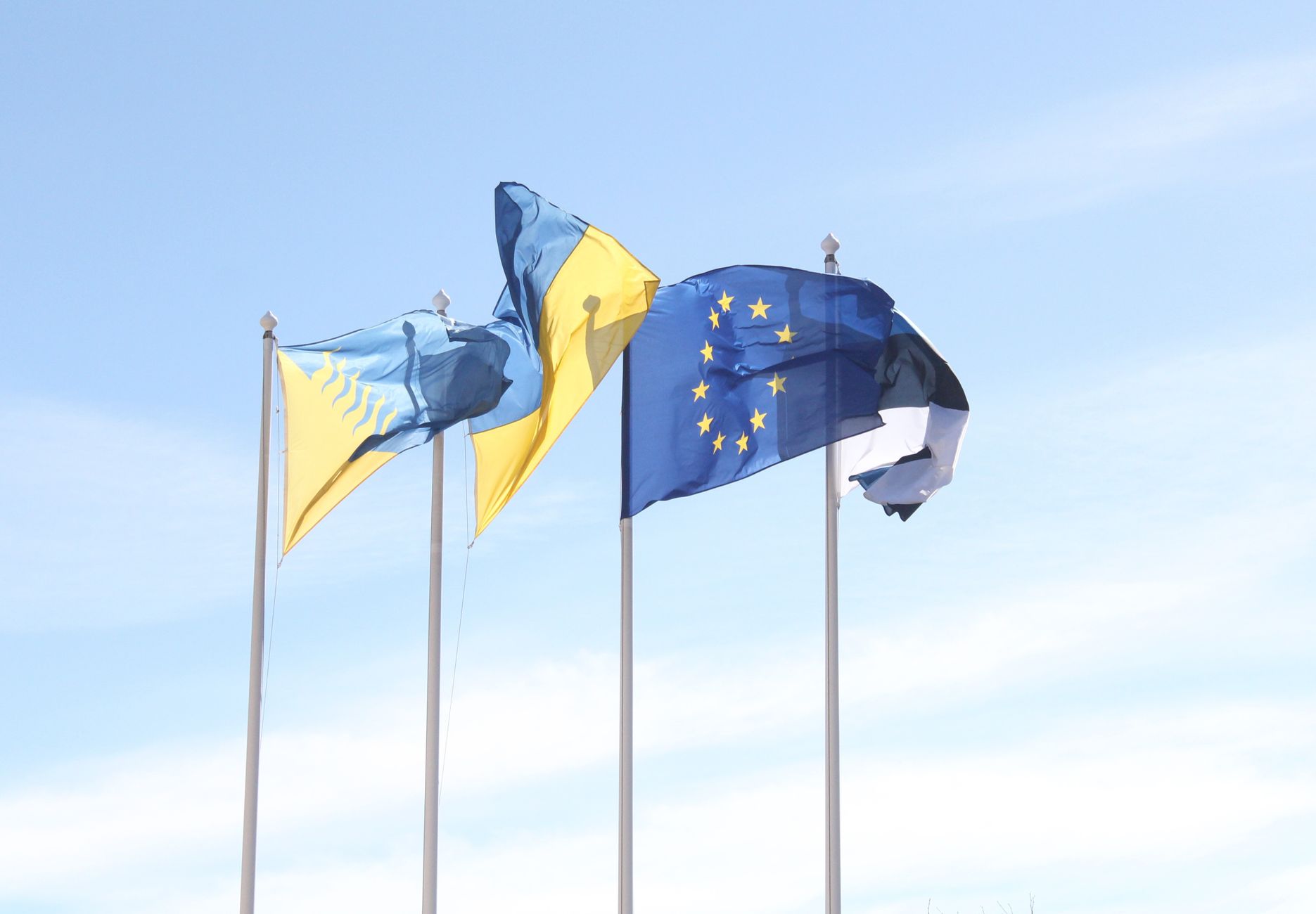
The European Union has announced major reforms to its migration and asylum framework, aiming to address growing pressures on member states. EU institutions are working closely with national governments to ensure a unified approach that balances security and human rights. This shift reflects broader geopolitical tensions and economic challenges affecting Europe as a whole. Society in Europe is deeply engaged in discussions about these changes, with public opinion varying significantly across regions.
Topic sections
🇬🇧

United Kingdom

LEAD HEADLINE

Brexit is still the central economic backdrop to UK politics because the latest evidence points to lasting losses in GDP, trade openness, and foreign investment. That makes growth less a cyclical question than a structural one, and it raises the stakes for any government trying to fund services while avoiding higher borrowing or sharper tax rises. London remains especially exposed because its economy depends heavily on cross-border services, labour mobility, and international capital, all of which have become more complicated since withdrawal. The political consequence is a country that is still living with the referendum’s aftereffects, even as voters increasingly judge the system by whether it can improve living standards rather than by the old Leave-Remain arguments.

Brexit’s economic drag stays at the centre of policy debate

Recent analysis says Brexit has left a persistent scar on GDP, investment, and trade, with the long-term hit now seen as bigger than early estimates. That keeps pressure on ministers to prove they can deliver growth despite weaker productivity and a tighter fiscal outlook. The result is a political debate in which the economy is increasingly judged through the lens of post-Brexit underperformance.

London still bears the clearest post-Brexit costs

London remains the clearest testing ground for how Brexit has altered Britain’s economy, especially in finance and internationally oriented services. Firms in the capital continue to face extra friction in staffing, regulation, and cross-border business. That makes London a leading indicator for whether the UK’s post-Brexit model is stabilising or still losing ground.

🇩🇪

Germany

Economic model under pressure as industry demands adjustment

Germany’s industrial base still gives it enormous economic scale, but the debate has shifted from celebrating resilience to fixing competitiveness. The pressure is especially visible in manufacturing, where firms want clearer policy signals on taxation, regulation, infrastructure, and access to critical inputs. That makes economic policy inseparable from geopolitics, because Berlin now sees industrial policy as part of national power.

Berlin pushes resilience, not just rhetoric, on European leadership

The new political mood in Berlin is less about abstract Europeanism and more about hard-edged coordination on strategic sectors. That gives Germany a chance to shape EU policy on trade and industrial resilience, but only if it can convert its domestic economic strengths into shared European initiatives. The real test is whether Berlin can lead with speed, not only with influence.

🇫🇷

France

FRANCE’S POWER PROBLEM: POLITICAL CONTROL, ECONOMIC WEAKNESS, AND DIPLOMATIC AMBITION

France’s current story is less about a single shock than about a persistent imbalance between strong institutions and fragile political legitimacy. The presidency still has the constitutional tools to drive the agenda, but that strength is meaningful only if the government can convert authority into reform and credibility. Economically, France remains constrained by weak momentum and the political difficulty of changing a model that citizens often experience as protective but costly. That combination makes every policy move in Paris carry wider consequences for society, for the capital, and for France’s standing in Europe.

France’s strong presidency is an asset only if it still looks effective

The institutional structure gives the executive exceptional room to act. The political risk is that authority without broad trust can look brittle rather than strong. That makes governability itself one of the main stories in France right now.

Economic weakness is still feeding France’s political debate

France’s economy continues to matter as a source of political stress, not just as a set of statistics. Weak growth and high sensitivity to living costs make reform harder to sell. The result is a policy environment in which economics, society, and legitimacy are tightly linked.

🇮🇹

Italy

ITALY: A NATION IN PERMANENT TRANSITION

Italy's politics are dominated by populist movements that reflect deep citizen distrust in established institutions. The economy stagnates as Italy trails most Eurozone peers, worsening social alienation and inequality. Cultural and regional divisions continue to undermine national unity, while an aging population strains public finances. The society is increasingly fragmented, with citizens adopting an 'every man for himself' mindset amid declining social cohesion.

MELONI'S BAND OF ITALY: A FAR-RIGHT WINDS

Italy's far-right surge reflects voter frustration with decades of economic stagnation and political dysfunction. The Brother of Italy's rapid growth signals a shift toward nationalist and anti-EU policies. Meloni's rise marks a new era of populist dominance in Italian politics.

ITALY'S ECONOMIC DECLINE: A PERSISTENT CRISIS

Italy continues to lag behind European peers, with structural flaws in productivity and innovation driving long-term decline. The pandemic exposed weaknesses in the economy, leaving only health services as a point of resilience. Growing public distrust stems from the inability of institutions to reverse this trajectory or restore confidence in the future.

🇸🇪

Nordic

Sweden sets the tone for Nordic defense politics

Sweden’s latest NATO messaging shows a government trying to lock in credibility on defense spending while still giving itself room on timing. Kristersson’s emphasis on a 2030 horizon suggests Stockholm wants to present military expansion as deliberate and sustainable rather than reactive. The broader Nordic implication is that Sweden is now helping define what “normal” security planning looks like across Scandinavia.

Queen Sonja’s Sarpsborg visit highlights Norway’s civic symbolism

The queen’s library visit is not a policy event, but it is a reminder that royal appearances still carry weight in Norway’s public sphere. These moments help connect national institutions to everyday civic life, especially outside Oslo. In a week dominated elsewhere by defense and strategic news, the visit offered a softer but still meaningful counterpoint.

Sweden’s nuclear push shows energy security moving up the agenda

Studsvik’s appeal for state backing reflects a serious effort to revive new nuclear capacity in Sweden. The timing is notable because energy reliability is now being discussed as part of national resilience, not just climate policy. That makes the debate relevant across the Nordic region, where power prices and supply stability remain central concerns.

🇪🇸

Spain & Portugal

IBERIA’S WEEK OF COORDINATION

Spain and Portugal are using this moment to reinforce a shared political narrative built around European integration, democratic stability, and closer bilateral cooperation. The timing matters because the Iberian relationship is no longer defined mainly by geography; it is increasingly defined by how both capitals coordinate on EU policy, infrastructure, and external positioning. Economically, the pressure remains on productivity, investment, and social resilience, which keeps growth quality as important as growth itself. Culturally and socially, the two countries are projecting a more connected Iberian identity, even as each keeps its own political rhythms and domestic priorities.

Trust, polarization, and the political cost of recovery

Portugal and Spain continue to face different levels of public confidence in their institutions. Research published in 2025 says trust collapsed after the Great Recession across Southern Europe, but Portugal recovered to pre-crisis levels while Spain did not. That gap helps explain why Spanish politics remains more vulnerable to fragmentation and antagonism. It also shows that economic performance and polarization now matter as much as formal democratic institutions when citizens judge their governments.

Economic convergence, but not full alignment

Spain and Portugal remain linked by the same EU and NATO frameworks, but their economic structures still differ in scale and capacity. Comparative material on Iberia consistently notes Spain’s larger GDP, bigger population, and higher exposure to mass employment dynamics, while Portugal has historically shown different labor and institutional patterns. The immediate policy question is how both countries raise productivity without undermining social stability. That is why debates over industrial policy, infrastructure, and regional balance continue to carry political and cultural weight in both capitals.

🏛️

EU & Brussels

Strategic Enlargement Becomes Core Security Imperament for EU Defense

MEPs have formally adopted a report declaring that EU enlargement is a strategic response to shifting global power dynamics and a necessary investment in European security. The document emphasizes that integrating Ukraine and Moldova requires accelerated reforms to strengthen rule of law and good governance before accession negotiations can fully commence. This shift transforms enlargement from a peripheral policy into a central pillar of the EU's foreign defense strategy against external authoritarian threats.

New Regulatory Frameworks Integrate Rule of Law into Budgetary Process

The European Commission is implementing a regulatory overhaul that mandates rule of law impact assessments for all new legislative proposals before they can proceed to the Parliament. This framework ties the approval of the EU's long-term budget explicitly to compliance with democratic governance standards, creating a powerful financial lever for enforcing accountability. Member and candidate states now face stricter hurdles where budgetary access depends on meeting transparent judicial and electoral reforms designed to curb corruption.

European Parliament Reinforces Supervisory Authority Amid Enlargement Push

The European Parliament is strengthening its supervisory mandate by demanding the immediate integration of observer MEPs from candidate countries once their accession negotiations close, ensuring continuous democratic oversight. President Roberta Metsola and the Parliament's leadership are actively pushing for the Parliament to play a leading role in monitoring rule of law reforms in Ukraine and Moldova before final treaty signing. This move reinforces the Parliament's position as the primary democratic guardian of the Union's values during its most significant territorial expansion since the Lisbon Treaty.