The real AI revolution is not automation. It is control.
For years, the public argument about artificial intelligence has been framed as a contest between utopians and catastrophists. One side promises abundance: fewer drudging jobs, faster medicine, better logistics, smarter cities. The other warns of mass unemployment, rogue systems and machines that outthink their makers. Both camps are missing the more immediate and more political danger. AI is not only a technology of automation. It is a technology of observation, classification and behavioral influence, and that makes it the perfect engine for a new form of power.
The unsettling fact about the AI era is that it does not require a dramatic break with the digital economy that came before it. It is already being built from the same raw material: the data extracted from daily life, sold through brokers, analyzed at scale, and used to predict behavior. In that sense AI is not a departure from surveillance capitalism, but its acceleration. Shoshana Zuboff has argued that the system depends on extracting behavioral data as a commercial asset; recent reporting describes how AI now multiplies the reach of that model by making data analysis cheaper, broader and more invasive, while government agencies are also expanding their own data-buying and analytic capacities.[1][4][6]
The old internet watched users in order to sell them things. The new one can watch users in order to shape what they believe, what they buy, how they vote, whom they trust and when they comply. That is not merely a privacy problem. It is a sovereignty problem. When a machine knows enough about a person to anticipate choices, it can begin nudging them before those choices are consciously made. In commercial settings, that means more efficient persuasion. In political settings, it can mean subtler forms of manipulation. In state settings, it can become a tool of quiet coercion. The line between marketing and governance starts to blur.
Automation is the headline. Surveillance is the business model.
The anxiety around job displacement has helped make AI legible to the public, but it also narrows the debate. Fears of automation are concrete: a cashier replaced by a chatbot, a paralegal by document software, a driver by a self-driving fleet that may or may not arrive. Those fears are real. Yet they risk obscuring a more durable truth: even where AI does not eliminate the worker, it often makes the worker more measurable, more supervisable and less autonomous. The algorithm becomes the manager’s manager.
This matters because automation and surveillance reinforce each other. A company that uses AI to forecast demand can also use it to schedule labor more tightly. A platform that uses AI to optimize engagement can also use it to estimate which workers are likely to quit, unionize or underperform. A warehouse that automates picking can also automate discipline. The result is not simply fewer jobs; it is a different kind of labor regime, one in which human beings are increasingly treated as variables in a system of optimization.
The economic temptation is obvious. AI can reduce labor costs, speed decisions and expand profit margins. The political temptation is just as strong. States and corporations alike are discovering that the same systems used to personalize ads can be repurposed to profile citizens, monitor public spaces and automate suspicion. A recent analysis of surveillance capitalism warned that AI-driven data collection and analytics now deepen the ability of both companies and governments to monitor ordinary life, and noted that U.S. agencies are increasingly buying location and other personal data from brokers.[1] That is an extraordinary sentence to have become ordinary. It means that even in liberal democracies, private markets are helping build public surveillance infrastructure.
From persuasion to preemption
The older critique of digital capitalism focused on attention. Platforms, we were told, were designed to capture eyes and keep them scrolling. That argument was correct but incomplete. The real prize is not attention alone but prediction. If a system can infer who you are, what you fear, what you desire and when you are most vulnerable, it can move from persuading you in the moment to preempting you before the moment arrives. This is the logic of behavioral surplus: data taken from ordinary life, turned into forecasts, and then used to influence future action.[6][7]
AI strengthens that logic by making it more scalable and less visible. Recommendation engines no longer merely mirror preference; they can intensify it, flatter it, fragment it or redirect it. Generative systems add a new layer by producing content that feels personal, conversational and emotionally responsive. A growing body of commentary warns that anthropomorphic AI can simulate trust and deepen manipulation precisely because users experience it as a relationship rather than a system.[8] That is the most dangerous advance of all: not just that the machine learns about you, but that it learns how to sound like it understands you.
When surveillance becomes conversational, coercion becomes polite. The prompt is no longer, “Submit your data.” It is, “Let me help.” The interface softens the extraction. The system asks for your habits, your preferences, your voice, your face, your schedule, your messages, your location, your temperature, your mood. Each request can be defended as convenience. Together they form a portrait more intimate than many human relationships. The danger is not only that companies know too much. It is that users are trained to treat exposure as the price of participation.
Digital authoritarianism has learned to wear consumer clothes
It is a mistake to imagine surveillance capitalism and digital authoritarianism as separate worlds, one commercial and one political. They increasingly share tools, vendors and methods. What begins as targeted advertising can migrate into policing, border enforcement, workplace monitoring and censorship. What is normalized in consumer tech often becomes available to the state, whether through direct procurement, public-private partnerships or the simple portability of the underlying software.
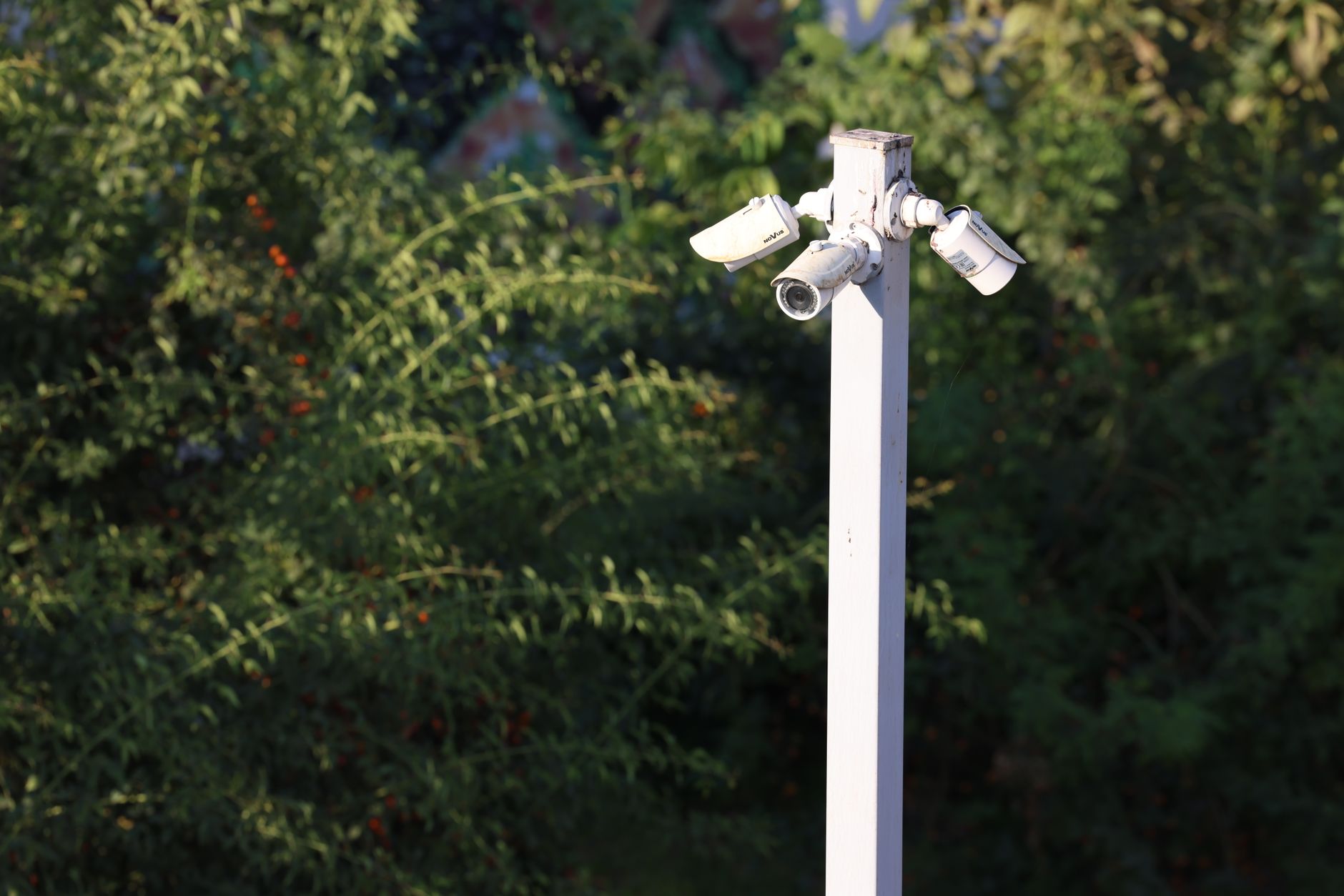
That convergence helps explain why the boundary between democratic and authoritarian uses of AI is so thin. A city deploys sensors to manage traffic. A retailer uses cameras to study footfall. A police department uses predictive software to allocate patrols. A government buys commercial data to supplement its own records. Each step can be justified in isolation. But together they build a mesh of observation that is difficult to audit and easy to abuse. Research on digital surveillance capitalism in cities warns that private interests extracting behavioral data from public spaces threaten transparency and civic participation.[11]
This is the critical point: authoritarianism no longer needs the theater of black vans and secret police to thrive. It can operate through consumer services, app permissions and “personalization.” It can present itself as frictionless, efficient and safe. The citizen becomes a user; the user becomes a dataset; the dataset becomes a file. The coercive power is still there, but it is wrapped in convenience and branded in pastel colors.
“The most effective control is the kind that people experience as service.”
That line, while not a quotation from any single source, captures the political economy that is emerging. The more AI systems learn to predict desire, the less they need to use blunt force. They can nudge, sort and exclude. They can raise prices for the anxious, suppress information for the curious, and deliver different realities to different people. In a fragmented media environment, that is a recipe not just for inequality but for epistemic instability: citizens no longer disagree only on values, but on the factual world itself.[5][7]
Why regulation keeps arriving one decade late
If the diagnosis is so clear, why is policy so slow? Part of the answer is institutional. Regulation tends to lag behind the architecture it seeks to govern, and AI is advancing faster than the legal concepts designed for a pre-AI world. But there is a deeper reason: many of the harms are distributed, abstract or delayed. A worker may not know that a scheduling system is shaving off hours because it predicted low compliance. A voter may not know that a political ad was tuned to their emotional profile. A citizen may never learn that their location data was sold through an intermediary to a government buyer.[1][5]
This opacity is not an accidental bug; it is central to the business model. Surveillance capitalism thrives when collection is invisible, when users do not fully understand what is taken, and when the downstream uses remain fuzzy enough to avoid accountability.[1][6] The same is true of many state applications. AI turns a long chain of extraction into a nearly instantaneous one. The result is that oversight institutions struggle to keep up with systems whose scale is already normalizing their own illegibility.
Europe has, at least, begun to move. Shoshana Zuboff has pointed to the Digital Services Act, Digital Markets Act and AI Act as evidence that regulators are starting to confront the problem at the level of structure rather than only at the level of individual harms.[4] Yet regulation, as she has argued, is not enough if it leaves the underlying logic intact. To tax or label surveillance is not the same as to stop it. If the core incentive remains the monetization of human behavior, the system will keep inventing new ways around the rules.
The labor question will come back as a political question
The simplest story about AI and work is that machines will destroy jobs faster than economies can create new ones. That may happen in some sectors and not in others. But the more likely near-term reality is a widening of inequality within labor markets rather than a sudden disappearance of work itself. Professionals will use AI to become faster and cheaper. Managers will use AI to monitor the workforce more closely. Entry-level workers will face fewer apprenticeship ladders. And the people with the least bargaining power will absorb the greatest surveillance.
That asymmetry matters because employment is not only a source of income. It is also a site of dignity, leverage and social membership. If AI transforms work into a stream of monitored microtasks overseen by opaque systems, the loss will be political as much as economic. A labor market that teaches people to expect constant evaluation is also training them to expect diminished freedom elsewhere. The habits of the workplace often leak into civic life.
This is why the debate over AI cannot be reduced to productivity. A system that increases output while weakening worker power may still be a bad bargain. A system that automates some tasks while intensifying human surveillance may be a worse one. The relevant question is not whether AI can do more, but who gets to decide what it does, who benefits from the gains, and who bears the costs.
The alternative is not no AI. It is human sovereignty.
The most honest response to the AI boom is not panic and not boosterism. It is institutional skepticism. The central issue is no longer whether machines can imitate intelligence. It is whether societies can preserve autonomy in the presence of systems designed to predict and manipulate behavior at scale. That will require more than consumer consent boxes and privacy policies written in legal Esperanto.
Some proposals are already visible in the research and policy literature: stronger data rights, limits on data brokerage, meaningful purpose restrictions, privacy-preserving techniques, and forms of data dignity that give individuals and communities more control over how information about them is collected and used.[5][11] Those tools matter. But they are only defensive. The deeper cultural task is to reject the idea that every human trace must become an asset. A society that accepts that premise will eventually discover that it has auctioned off the conditions of its own freedom.
The most provocative thing to say about AI in 2026 is therefore not that it will replace all work, or that it will become conscious, or that it will decide to dominate us. It is that it may do something more prosaic and more successful: make surveillance so cheap, prediction so accurate and influence so continuous that people slowly begin to govern themselves according to systems they no longer see. That is not science fiction. It is an emerging business model.
And the great illusion of the age is that this is merely the price of convenience. It is not. It is the payment for a future in which power is hidden inside personalization, and domination arrives smiling, optimized and always online.

