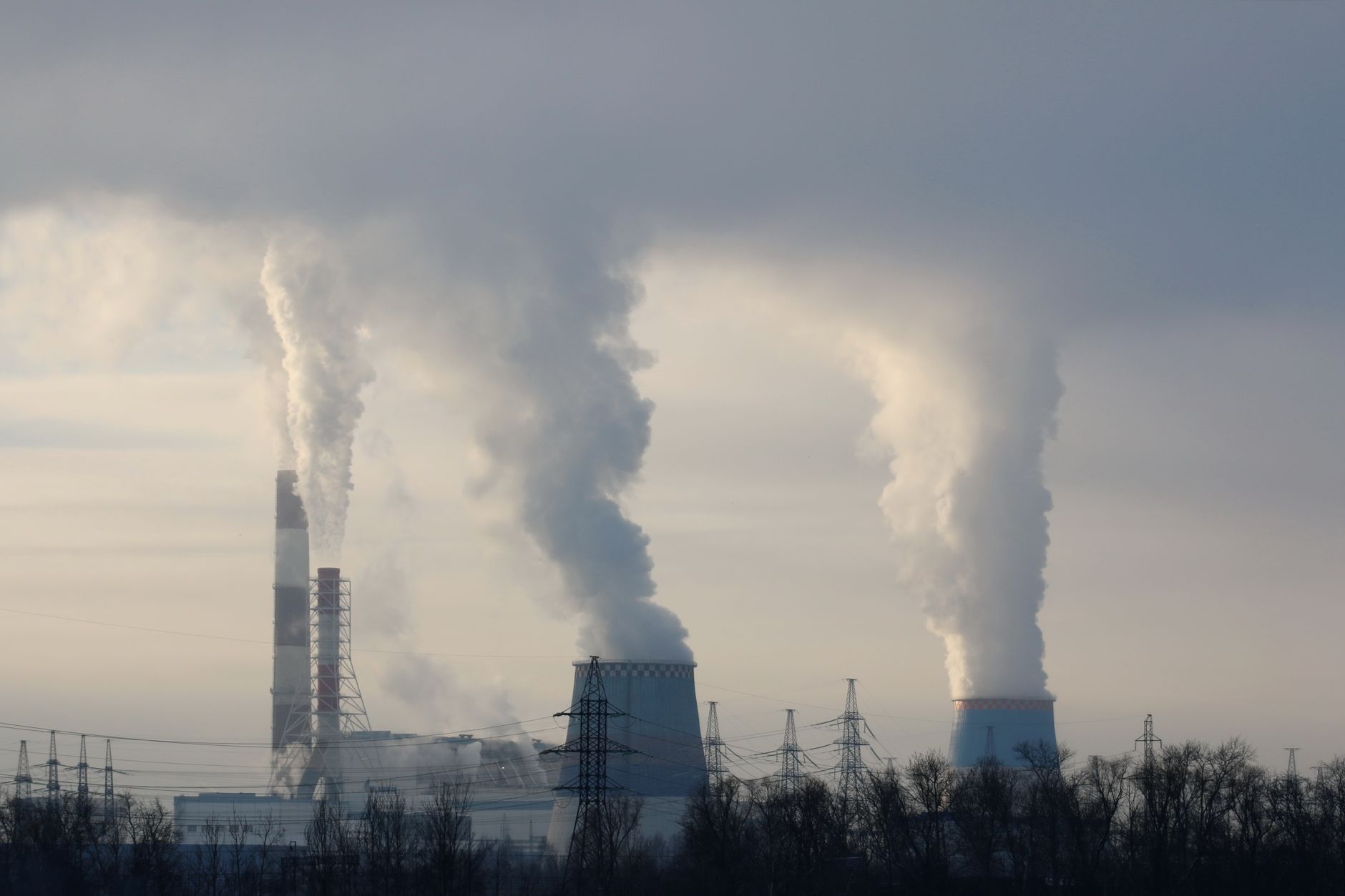
The world has entered an age of managed disorder
The biggest story of the moment is not simply war, nor technology, nor the crisis of democracy, nor the future of media. It is the way those four forces have fused into a single, destabilising system. The age of neat categories is over. A missile barrage in one theatre can move oil prices, disrupt elections, inflame online propaganda, and accelerate the weaponisation of information in another. What used to be called geopolitics now behaves like a live software update for the entire global order.
This is why the present feels more dangerous than a succession of isolated crises. The wars are overlapping. Reports this week describe simultaneous pressure in Iran, Ukraine, and the Red Sea, with ripple effects already spreading through energy markets and supply chains.[1][3][5] At the same time, Washington is trying to balance escalation and diplomacy with Iran and push Russia and Ukraine back toward talks, while the strategic waterway of the Strait of Hormuz remains under severe strain.[4][6] These are not separate headlines. They are symptoms of a world in which coercion has become modular, portable and networked.
That is the core fact to understand: power is no longer exercised only by states through territory and armies. It is also exercised by governments through data, by companies through platforms, and by information operators through attention. The result is not chaos in the vulgar sense. It is managed disorder: a condition in which actors capable of causing instability often benefit from doing so, and where institutions struggle to reassert control because the systems they govern are faster, more fragmented and more politically vulnerable than before.
Geopolitics has become a supply-chain problem
The old language of geopolitical risk was built for a world of chokepoints and alliances. That language still matters, but it is no longer sufficient. When the Strait of Hormuz is threatened, the consequences are not confined to naval planners in the Gulf. They travel immediately through insurance markets, shipping schedules, refinery margins, consumer prices and political expectations. The reports of extreme pressure on global commodity and energy markets are therefore not a side effect of conflict; they are part of its strategic purpose.[5]
Even the arithmetic of war has changed. A modern assault is not merely an attack on a front line. It is an attempt to produce cascading effects across logistics, finance and legitimacy. Ukraine illustrates this grimly. Reports of massive missile and drone strikes across numerous provinces show how contemporary warfare seeks to overwhelm air defences, exhaust civilian resilience and force political adaptation through cumulative attrition.[3][5] The battlefield is still territorial, but victory is increasingly measured by whether a society can keep functioning under persistent pressure.
Iran’s centrality to the moment goes beyond any single confrontation. It is the hinge on which a broader contest turns: between regional deterrence and regional collapse, between diplomatic pause and strategic escalation. The reported collapse of the ceasefire between the United States and Iran, together with conflicting public claims about reopening the Strait of Hormuz, shows how fragile even temporary restraint has become.[1][4] When diplomacy is this unstable, every public denial matters almost as much as a formal agreement. Each becomes a signal to markets, allies and domestic audiences that the ground beneath them is still moving.
The deeper point is more unsettling. In 2026, geopolitics no longer merely disrupts the economy. It *is* the economy’s stress test. The world’s most important transit lanes, energy corridors and military flashpoints are converging into one another. In that environment, governments can no longer pretend that security policy is separate from inflation, or that trade policy is separate from war.
Technology has not escaped politics; it has absorbed it
For more than a decade, the most common political fantasy in Silicon Valley was that technology would outpace institutions and then improve them. That fantasy is now dead. Technology has not transcended politics. It has become one of politics’ favourite tools.
The reason is simple: the technologies that shape public life are now optimized for speed, scale and behavioural influence rather than deliberation. Artificial intelligence, recommendation systems, synthetic media and pervasive surveillance do not merely “support” politics. They alter the incentives under which political actors operate. They reward provocation over explanation, certainty over ambiguity, and spectacle over substance. In a world of permanent crisis, those are not side effects. They are strategic advantages.
This matters because the next phase of technological competition will not be won by whoever invents the most impressive model, but by whoever can use new tools to reorganise institutions, labour and perception faster than rivals can regulate them. States are already treating AI as a strategic asset, not a consumer product. Firms are treating geopolitical volatility as a business opportunity. And authoritarian actors have discovered that the cheapest way to project power is often to flood the zone rather than to occupy it.
The most dangerous misconception is that technological progress is neutral. It is not. The design of platforms shapes what citizens see, what they fear and what they think others believe. In a democracy, that means the information system is not a background layer. It is part of the constitutional environment. Once the public square is mediated by algorithms whose incentives are commercial, political and opaque, the line between persuasion and manipulation becomes increasingly difficult to police.
Democracy is being hollowed out from the inside
The modern democratic crisis is often described as a crisis of trust. That is true, but incomplete. Trust is not collapsing in the abstract. It is being eroded by a more specific phenomenon: the sense that institutions cannot match the speed, precision or ruthlessness of the forces acting on them.
That is why democracy is so vulnerable to the current moment. It asks citizens to accept friction: elections, checks and balances, independent journalism, court procedures, public debate. Those mechanisms are slow by design. They are supposed to be. But systems designed for legitimacy are now competing with systems designed for virality, coercion and disruption. The result is asymmetry. Democracies must justify themselves publicly, while their adversaries can simply saturate the environment.
Some of the danger comes from external pressure: foreign conflicts that weaponise energy, migration, cyber operations and disinformation. Some of it comes from within: leaders who learn to treat institutional constraint as a weakness, not a safeguard. Recent reporting about political transitions, hardening blocs and elections in several countries illustrates how fragile democratic continuity has become even where formal procedures survive.[1] Holding an election is not the same as preserving liberal democracy. If the information space is polluted, if opposition is degraded, and if institutions are steadily repurposed for partisan survival, democracy becomes procedural theatre.
There is also a subtler erosion underway. Citizens are increasingly invited to choose not between competing visions of the common good, but between rival panics. That is a recipe for permanent mobilisation and intermittent paralysis. It rewards those who can command attention, not those who can govern. The democratic centre is therefore squeezed from two sides: by populists who exploit grievance and by technocrats who promise competence without accountability. Neither is adequate to the scale of the present crisis.
The media is not failing because it is weak; it is failing because it is trapped
Nothing reveals the new order more clearly than the media. Traditional journalism is still essential, but it is operating in a degraded environment. It must explain complex, overlapping crises to audiences whose attention has been fragmented by the very platforms on which those crises are fought. It must verify facts in real time while falsehood travels faster and cheaper. And it must do so under the suspicion that all institutions, including the press, are simply participants in the same degraded spectacle.
This is not an argument for nostalgia. The old media order had its own failures: gatekeeping, conformity, elitism and blindness. But it did offer a common temporal rhythm. A finite number of institutions decided what mattered enough to become widely known. That era is gone. Today, news competes with influence operations, creator economies, partisan broadcasters and machine-generated content. The public does not merely consume information. It swims in it.
The consequence is not that truth has vanished. It is that truth has become more expensive to establish and less powerful on arrival. In a crisis-driven information market, the first version of events often shapes the largest emotional response. Later correction rarely has equal force. That asymmetry is not just a media problem. It is a governance problem. Democracies depend on a minimum shared reality. When that collapses, policy becomes hostage to narratives that can be manufactured, amplified or inverted at will.
“The public square is no longer a place where facts compete with opinions. It is a battlefield where attention itself is the prize.”
The most serious mistake media organisations can make is to imagine that their role is merely to report the crisis. The role is to explain the system producing it. That means connecting the war to the market, the platform to the ballot box, the algorithm to the newsroom, the diplomacy to the supply chain. The audience does not need more isolated updates. It needs coherent interpretation.
The real contest is over who gets to define reality
What unites the wars, the technology race, the democratic backlash and the media collapse is a struggle over narrative authority. In a stable order, states define borders, companies define products, voters define governments and journalists define the agenda. In the current order, those roles are being scrambled. States use commercial platforms to communicate. Companies behave like quasi-sovereigns. Populists use media logic to govern. Editors are forced to think like strategists.
This would be unsettling even if the institutions involved were strong. They are not. The post-Cold War assumption that integration would tame power has been replaced by the reality that integration can also accelerate contagion. A conflict in one region now reaches everyone through prices, devices and feeds. A political lie no longer needs to persuade the whole country; it only needs to reach the right sliver of the public at the right moment. A technological breakthrough no longer just improves productivity; it can also destabilise labour markets, legal norms and strategic deterrence.
The smart response is not fatalism. Managed disorder is still managed. That means choices remain available. States can build resilience into supply chains, energy systems and election infrastructure. Platforms can be forced toward transparency. Newsrooms can rebuild authority through rigour rather than performance. Democratic governments can stop confusing speed with strength. None of this will restore the old order. But it might create a more survivable one.
That said, the mood of the moment should not be underestimated. The world is not simply witnessing another cycle of turbulence. It is watching the exhaustion of an old operating system. For thirty years, elites in politics, business and media assumed that institutions could absorb shocks faster than shocks could reconfigure institutions. That assumption is now in question. The shocks are learning. So are the actors who exploit them.
The defining struggle of this era is therefore not between East and West, or left and right, or old media and new media. It is between systems that still require legitimacy and systems that can profit from instability. The latter currently have the advantage. The task for everyone else is to prove that democratic order, factual reporting and international restraint can still be more than sentimental aspirations.
If that sounds grim, it is because the moment is grim. But clarity is preferable to consolation. The biggest story of 2026 is that the world’s most powerful institutions are no longer being tested one at a time. They are being tested together, in public, under conditions designed to exhaust them. The question is no longer whether the old boundaries will hold. It is whether new ones can be built before the collapse of one domain infects the others beyond repair.