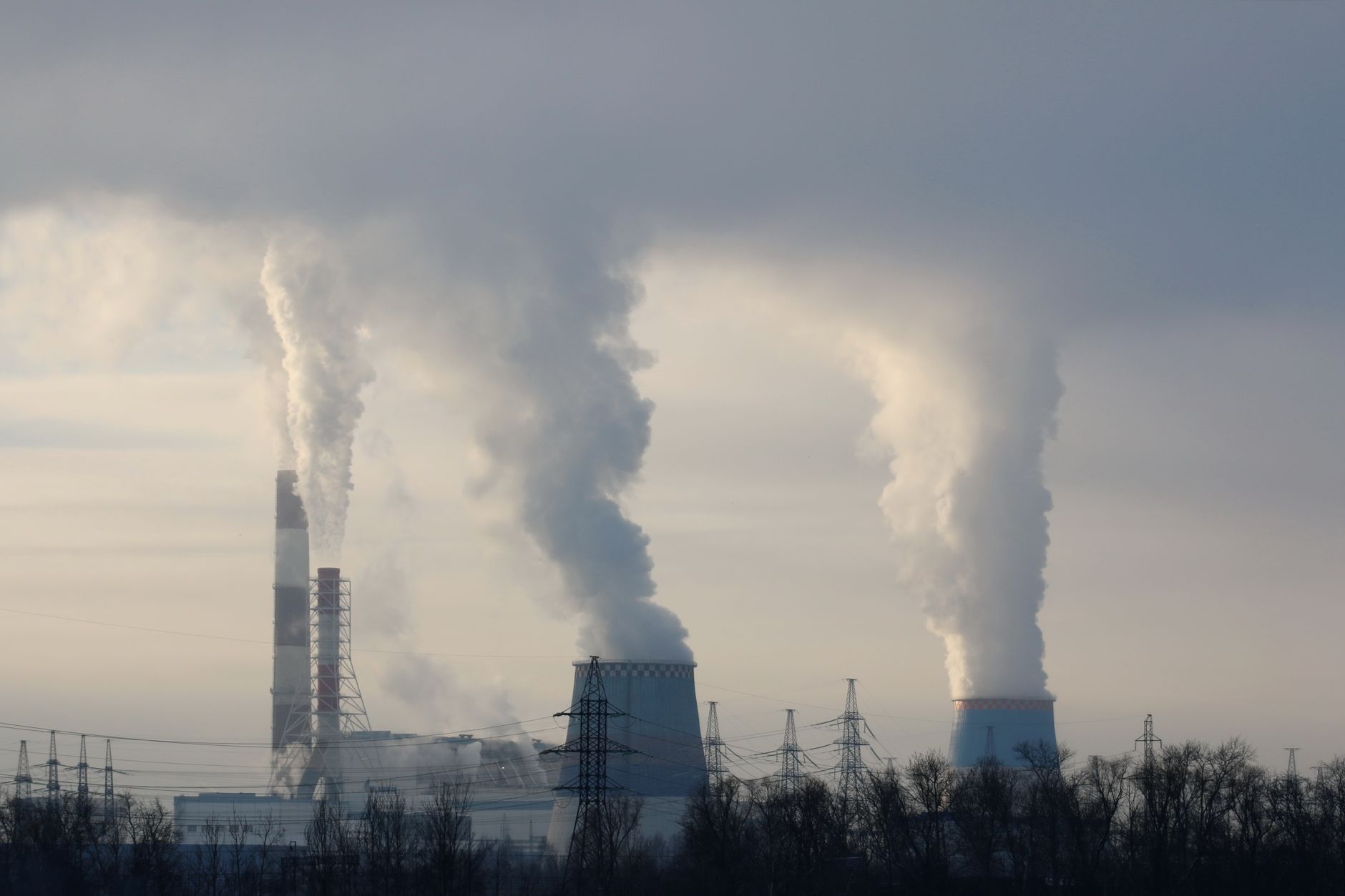
The age of managed chaos
The biggest story of this moment is not the latest missile strike, tariff threat, platform controversy, or election dispute. It is the convergence of all four into a single governing condition: the world is moving from an era of contested order into one of managed chaos. In July 2026, the geopolitical picture is marked by intensifying tensions, persistent conflict hotspots, and strategic realignments that expose how fragile the current world order has become.[1] In the same month, the most consequential risks are not confined to one theater; the United States is facing an escalating confrontation with Iran, Russia is pressing its war in Ukraine, and China is widening its gray-zone pressure around Taiwan, all while trade restrictions and diplomatic improvisation reshape the global economy.[3][4]
This is the essential editorial fact of the year: the old machinery of stability is still running, but it is no longer commanding events. Governments still issue communiqués, markets still open at 9:30, platforms still moderate content, and elections still produce winners. Yet beneath that procedural normalcy, the basic architecture of coordination is failing. The result is not outright collapse. It is something more corrosive and harder to reverse: the normalization of improvisation, in which crisis management becomes the permanent mode of governance.
Power is no longer exercised through stable institutions so much as through repeated acts of emergency administration.
That matters because the institutions now under strain were designed for a different world. The postwar order assumed that great-power rivalry could be bounded by diplomacy, that trade would soften strategic competition, that information would be filtered by professional gatekeepers, and that democratic legitimacy would rest on a shared factual baseline. Each of those assumptions is now under pressure. The result is a system in which geopolitics amplifies technology, technology distorts democracy, and democracy destabilizes media, which then feeds back into geopolitics. This is not four separate crises. It is one recursive crisis.
Geopolitics without a referee
The most visible theater of this disorder is the international system itself. Reporting from July 2026 describes a month defined by tense diplomacy and persistent conflict, with regional flashpoints and major security implications rather than a single dominant war.[1] More specifically, the US-Iran confrontation has escalated into a dangerous cycle involving military action, casualties, and the risk of broader regional war, while shipping, energy flows, and aviation are the most exposed channels.[3][4] Meanwhile, Russia’s war in Ukraine continues to demonstrate that industrial-scale violence can coexist with diplomatic fatigue, and China’s behavior in the Taiwan Strait shows how coercion can advance without crossing the threshold that would trigger a formal response.[3]
What makes this era distinct is not merely the number of crises, but the absence of a credible referee. The institutions that once mediated disputes — alliances, international organizations, even the idea of predictable American stewardship — no longer enjoy automatic authority. A world in which the United States imposes fresh tariffs on allies and adversaries alike, while also selectively reopening diplomatic channels in places such as Libya, is a world in which strategy looks increasingly transactional and increasingly personal.[3] The system is not so much being rebuilt as re-priced, one pressure point at a time.
That volatility has economic consequences, but its political effect is deeper. When states no longer trust the durability of rules, they begin to hedge everywhere: in weapons, in supply chains, in currency reserves, in media narratives, in election systems. Hedge behavior is rational in the short run and destabilizing in the long run. It encourages national self-protection while discouraging the shared commitments that make order possible. The world is therefore becoming more secure in the language of sovereignty and less secure in practice.
Tech has become the accelerant
Technology was once sold as the neutral layer above politics. That fantasy is dead. Today’s technology stack is not a platform for society; it is a battlefield for power, attention, and legitimacy. Information systems increasingly determine which crises become visible, which narratives become credible, and which institutions remain trusted. In that sense, tech is not merely adjacent to the geopolitical crisis. It is one of its main accelerants.
The reason is straightforward. Digital systems compress time. A military escalation becomes a global media event in seconds. A rumor becomes an organizing principle before it can be checked. A policy change on trade or migration can be translated instantly into market fear, activist mobilization, or disinformation. If geopolitics is now more volatile, technology is a principal reason why volatility travels faster and farther than before.
But the deeper issue is not speed alone. It is the privatization of the public sphere. A small number of platforms and infrastructure providers now shape what billions of people see, and they do so through systems optimized for engagement, not verification. That creates a structurally unstable environment for democracies, which need a minimum shared reality to deliberate, compromise, and lose elections peacefully. Without that baseline, politics becomes a competition of epistemic tribes: groups that do not merely disagree on policy, but inhabit different versions of reality.
Artificial intelligence intensifies this condition. Even without invoking speculative doomsday scenarios, the immediate problem is obvious: synthetic content lowers the cost of persuasion, impersonation, and saturation. The information environment becomes cheaper to flood and harder to audit. Democracies are already struggling to distinguish authentic civic expression from coordinated manipulation. The next phase will be worse, because the line between evidence and fabrication will be increasingly hard to police at scale.
The crisis is not that technology is too powerful; it is that it is too frictionless for democratic life.
Democracy is being hollowed out from within
If geopolitics is the outer pressure and technology the accelerant, democracy is the vessel cracking under both. Democratic systems were built to manage disagreement through institutions that force delay, scrutiny, and compromise. Those mechanisms now look, to many citizens, like inefficiency or corruption. In a media environment organized around outrage and immediacy, patience appears weak, moderation appears evasive, and procedure appears fraudulent.
This is why democratic decline in the present tense often does not look like a coup. It looks like exhaustion. Electoral systems remain in place, but trust in them erodes. Courts still function, but are treated as partisan weapons. Legislatures still pass laws, but citizens increasingly assume that policy is made elsewhere. Leaders still invoke the people, but often govern by permanent crisis. The formal shell remains intact even as legitimacy drains away.
The July 2026 news cycle underscores this broader pattern. Around the world, states are facing not just external threats but internal strains: protests, institutional weakness, administrative overload, and the politics of fear.[3] In an age of geopolitical anxiety, citizens become more receptive to strongman narratives. The promise is simple: order will return if power is centralized, complexity simplified, and enemies identified. The reality is usually the opposite. Centralization often makes systems brittle. Simplification often makes them lie to themselves. Enemy politics may mobilize support, but it rarely solves the underlying problems that produced the fear in the first place.
Democracy’s deeper vulnerability is that it depends on losers accepting defeat. That acceptance is possible only when citizens trust the legitimacy of the process and the honesty of the information surrounding it. Once media ecosystems fragment into rival truth regimes, electoral loss becomes easier to interpret as theft, manipulation, or existential threat. At that point, democracy survives only as a brand name attached to a system whose norms are evaporating.
The media is no longer the mirror
The future of media is inseparable from this democratic decay. Traditional journalism once served, at its best, as the mirror that helped societies see themselves clearly enough to argue productively. That function is now compromised by fragmentation, platform dependency, and public distrust. Media no longer merely reflects reality; it competes with it.
The competition is asymmetric. Serious journalism still gathers facts, verifies claims, and contextualizes power. But it does so within an attention economy that rewards speed, emotion, and simplification. A well-sourced article can be buried by a viral falsehood. A careful explanation can be outrun by a meme. A nuanced foreign-policy analysis can be flattened into a clip designed to trigger allegiance or contempt. The public sphere has become less like a newspaper and more like a market in which outrage is the dominant currency.
That does not mean journalism is obsolete. It means journalism has become more necessary and less automatically influential. In moments of systemic stress, people need institutions that can distinguish signal from noise, and reality from coordinated manipulation. Yet those institutions must also confront their own limits. When trust is low, even accurate reporting can be dismissed as partisan. When audiences are polarized, the same facts are processed through incompatible moral frameworks. The old ideal of a common story for the entire nation may no longer be recoverable in full.
Still, the editorial case for journalism remains strong because the alternative is not freedom from elites; it is dependence on more opaque elites. If the press weakens, the vacuum is filled not by a more democratic conversation but by platform algorithms, state propaganda, influencer politics, and machine-generated noise. The public loses not only a narrator but a verifier.
When everyone can publish, the hardest and most valuable act is no longer expression; it is verification.
What this moment demands
The temptation in such a moment is to search for a single villain: Washington, Beijing, Moscow, Silicon Valley, the platforms, the populists, the technocrats, the journalists. But the point is more disturbing. The crisis is systemic because it is co-produced. State rivalry pushes societies toward suspicion. Technology turns suspicion into scale. Democratic institutions buckle under the pressure. Media, meanwhile, is incentivized to turn every shock into content.
That means the most honest answer is also the least satisfying one: there is no one reform, summit, law, or election that will restore the lost equilibrium. A more stable world would require several things at once. Geopolitics would need restraint and credible diplomacy. Technology would need rules that reintroduce friction, provenance, and accountability. Democracies would need institutional reforms that make electoral legitimacy harder to sabotage and easier to trust. Media would need business models that reward verification rather than sensationalism. None of this is impossible. All of it is politically difficult.
And yet the absence of a clean solution is not an argument for despair. It is an argument for clarity. The great intellectual error of the past decade has been to treat each institutional failure as isolated and temporary. In fact, they are compounding one another. A tariff war weakens trust. A war abroad legitimizes hardline politics at home. A disinformation campaign makes compromise look like surrender. A degraded media ecosystem turns every event into evidence for someone’s conspiracy. The system then appears to justify the very behaviors that destabilize it.
That is why the defining story of the moment is not simply that the world is dangerous. It is that the mechanisms once used to manage danger are themselves becoming part of the danger. The challenge now is to rebuild institutions that can tolerate conflict without collapsing into it. Until that happens, the world will remain trapped in a condition that feels temporary but may last a very long time: an age in which order is performed, not secured.

