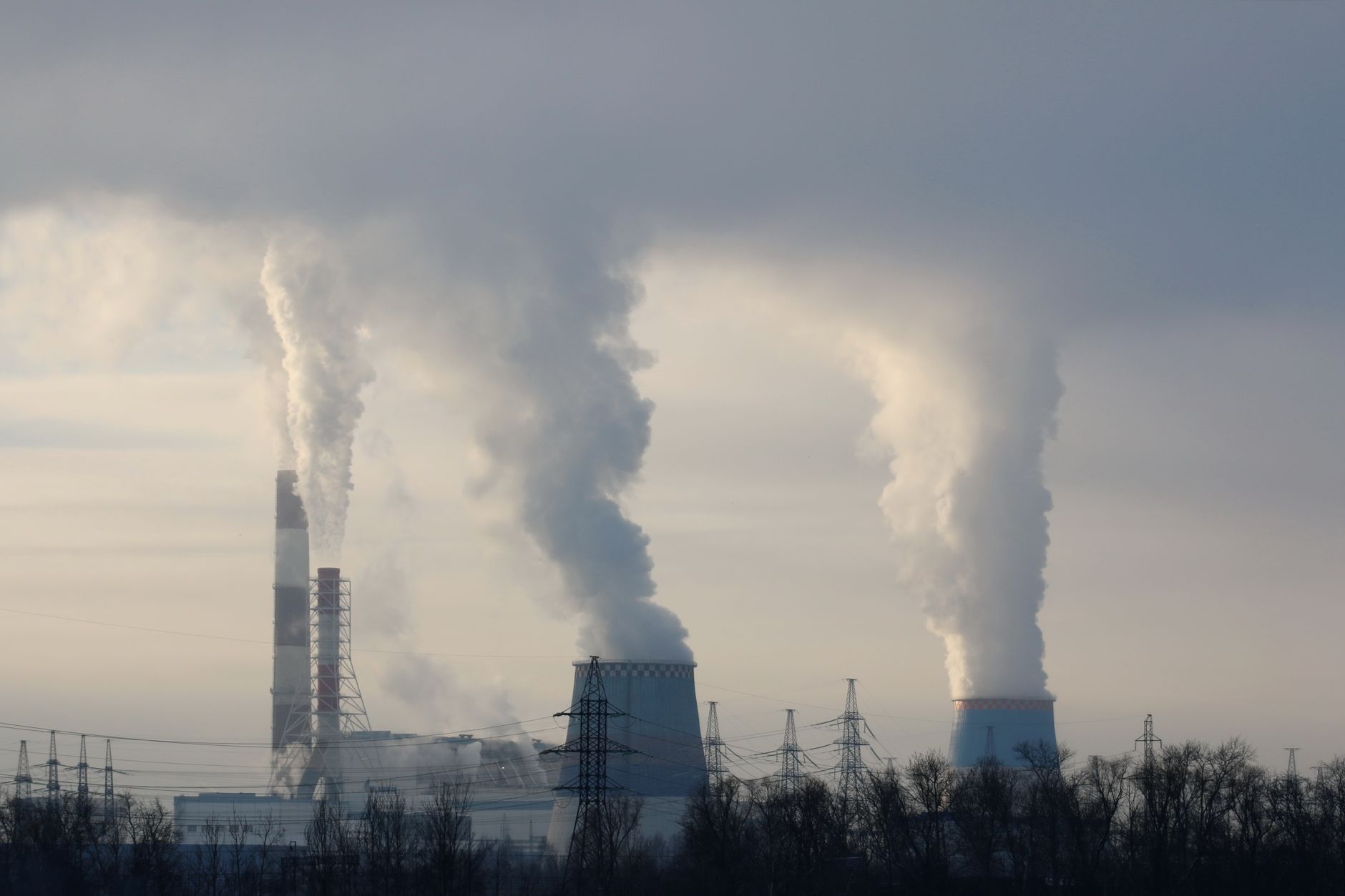
The age of separate crises is over
The biggest story of this moment is not simply the war between the United States and Iran, though that conflict has become the month’s most dangerous accelerant. It is the wider collapse of the distinctions that once organized global politics: war and markets, state power and private technology, democracy and spectacle, information and coercion. What used to be separate crises are now feeding each other. The result is a world that is easier to inflame, harder to govern and increasingly vulnerable to a kind of political weather made by humans but experienced like fate.
That is why the most important headline is not the latest strike, summit or scandal, but the fact that the international system now behaves less like a rules-based order than like a set of overlapping nervous systems. A missile strike in the Gulf can move oil prices, and oil prices can move elections. A platform algorithm can elevate a conspiracy in hours, and a conspiracy can destabilize a parliament. A courtroom ruling can affect the power of the state, while the state’s response can be amplified, distorted or monetized by the same networks that once promised to democratize speech. This is not just turbulence. It is structural change.
War has returned, but not in the old form
The United States-Iran conflict now defines the geopolitical temperature of the summer. The latest reporting describes a ceasefire collapsing, near-daily exchanges, US strikes deep into Iran, Iranian retaliation against American bases across the Gulf and Houthi attacks on shipping that have effectively widened the battlefield into the Red Sea. Oil has surged above $100 a barrel, a reminder that in a globally interconnected economy, war is never local for long.
Yet the deeper significance is not the number of sorties or the geography of the strikes. It is that modern war increasingly works by threshold crossing. The old logic of escalation assumed identifiable stages, clear red lines and some residual confidence that rational actors would step back before catastrophe. Today, the incentives point the other way. Each side can frame restraint as weakness. Each incident is instantly fed into domestic politics, propaganda ecosystems and market expectations. There is no separate arena in which diplomacy can quietly do its work; every move is live-streamed into a permanent referendum on credibility.
The danger, then, is not only broader war in the Middle East, though that remains real. The danger is the normalization of perpetual crisis as a governing condition. When a conflict becomes ambient, it ceases to be exceptional. Energy markets adjust. Shipping routes reroute. Citizens become numb. Leaders mistake endurance for control. That is how crisis hardens into system.
The new great-power contest is with the domestic order
For years, analysts described the world as entering a multipolar era. That remains true, but it is incomplete. The more revealing fact is that major powers are now constrained less by external rivals than by their own internal fractures. The United States is simultaneously a superpower, a divided polity and the chief source of volatility in the very system it built. That makes its actions uniquely consequential and uniquely unpredictable.
This is why the familiar language of containment, deterrence and alliance management no longer suffices. Great-power competition in 2026 is not only between states; it is between political models under stress. Anxious democracies, disciplined authoritarian systems and hybrid regimes are all trying to prove that they can deliver security, growth and coherence in an age of shocks. So far, the evidence is discouraging. The democratic model is vulnerable to paralysis and polarization. The authoritarian model is efficient at concentration but brittle under scrutiny. The hybrid model often combines the worst of both: surveillance without competence, elections without legitimacy.
That is the geopolitical story beneath the headlines. The world is not merely becoming more dangerous. It is becoming more internally unstable, and that instability is feeding external aggression. Leaders who cannot command consensus at home often seek it abroad. They discover that foreign conflict can be a solvent for domestic division, at least temporarily. The temptation is ancient. The tools are new.
Technology has become a sovereign actor
If geopolitics is the stage, technology is now one of the principal actors. The old liberal fantasy held that digital networks would distribute power, flatten hierarchy and make censorship obsolete. Instead, the great platforms have become intermediaries of attention, and attention has become the raw material of politics. Whoever controls the distribution of visibility controls the terms of public reality.
This matters because media is no longer merely reporting on events; it is part of the event itself. Algorithms reward outrage, compression and emotional certainty. That biases political life toward theatrical conflict and away from institutional patience. In war, the effect is worse. Military escalation is no longer mediated primarily by official statements and print deadlines, but by viral clips, synthetic images and contested narratives that move faster than verification. Governments can no longer assume a chronological advantage. The first believable story often becomes the durable one.
There is also a strategic dimension. Artificial intelligence, surveillance systems, cyber tools and automated persuasion are changing the balance between offense and defense. States can now generate propaganda at scale, tailor messages to narrow audiences and simulate legitimacy with astonishing efficiency. The same technologies that help companies optimize delivery or personalize entertainment can be repurposed to optimize coercion. That does not mean technology determines politics. It means politics is being rewritten in the language of technology: speed, scale, feedback loops and disruption.
In that sense, the biggest tech story of the moment is not any one company or model release. It is the quiet fact that digital systems have become institutional rivals to states. They shape what people see, what they fear and what they believe long before policy has a chance to intervene. Media once interpreted power. Now it helps constitute power.
Democracy is being drained by performance
Democracy’s crisis is often described as a crisis of trust. That is true, but incomplete. Trust has not merely eroded; it has been weaponized, fragmented and monetized. The public square is now crowded with actors who profit from making citizens doubt every institution while believing everything that flatters them. The result is not skepticism in the healthy sense. It is epistemic exhaustion.
The more profound problem is that democratic institutions are increasingly evaluated as if they were content streams. They are judged on excitement, tempo and emotional payoff rather than durability, fairness or competence. Elections become episodes. Parliaments become arenas. Courts become stages. Journalism, too, is pulled into this logic, rewarded when it amplifies conflict and punished when it explains complexity. This is not simply a media problem; it is a political economy problem. Systems built for attention will always drift toward spectacle.
That drift has consequences. Populations fed on permanent drama become less able to absorb compromise. They interpret ambiguity as deceit, delay as failure and moderation as surrender. In that environment, democratic leaders are incentivized either to perform strength or to disappear into technocratic irrelevance. Neither is healthy. One corrodes legitimacy. The other vacates the field.
Power now travels through narrative faster than through law.
The phrase is worth dwelling on because it captures the inversion of a much older order. Liberal democracies once assumed that law would discipline narrative. Facts would constrain persuasion. Institutions would outlast moods. Today, narrative often outruns law, while institutions are left trying to catch up to public realities created elsewhere. By the time a regulator acts, the market has moved. By the time a court rules, the conversation has moved on. By the time a government responds, the rumor has become common sense.
The future of media is not neutrality but credibility
If this era has a moral test, it is whether media institutions can recover authority without pretending to be neutral machines. The age of pure objectivity, if it ever existed, is over. What audiences want now is not the illusion that journalists have no judgment, but confidence that their judgment is disciplined, evidence-based and independent of faction. Credibility has become the scarcest asset in public life.
That is a demanding standard. It requires news organizations to resist both partisanship and performative balance. It requires them to distinguish significance from virality. It requires slower, more analytical reporting in a market that rewards instant reaction. And it requires them to admit uncertainty when certainty would be more profitable. Those are not signs of weakness. They are the conditions of seriousness.
At the same time, media cannot pretend that the old distribution model still exists. The center of gravity has shifted to platforms, creators, direct-to-audience personalities and AI-mediated discovery. That means the future of journalism will depend less on owning attention than on earning trust repeatedly in hostile conditions. The institutions that survive will be those that can explain the world better than the algorithm can, not those that merely shout louder than it does.
But there is a harsher truth. The media cannot save democracy alone, because the media is not the cause of the crisis. It is one of the arenas in which the crisis is being fought. If citizens no longer share even a minimal common reality, journalism becomes less a referee than a contested institution in a wider struggle over truth itself.
The real conflict is over who gets to define reality
That is why the headline story of the moment links geopolitics, technology, democracy and media. They are not separate domains. They are different expressions of the same fight: who gets to define reality, who gets to impose it and who pays the price when it fractures.
States once monopolized force. They no longer monopolize information. Platforms once promised connection. They now govern attention. Democracies once relied on shared facts. They now compete amid institutional suspicion. The old order assumed that these systems would constrain one another. Instead, they are increasingly amplifying one another’s failures.
This produces a grim but useful correction to the fashionable language of disruption. Not every disruption is innovation. Some are regressions disguised as progress. Not every acceleration is efficiency. Some are shortcuts to catastrophe. And not every new medium broadens freedom. Some narrow it by making manipulation cheaper and truth more expensive.
The most sober interpretation of 2026 is that the world is entering a period in which power will be more fragmented, information more contested and war more entangled with domestic politics than at any time in recent memory. That is not a prediction of collapse. It is a warning against complacency. The institutions of the mid-20th century were built for a world with clearer borders between conflict, commerce and communication. Those borders are gone.
What comes next will be decided by whether governments can rediscover restraint, whether platforms can be made accountable without becoming tools of censorship, whether media can earn trust without surrendering complexity and whether democracies can produce not just passion, but competence. Those are not separate questions. They are the same question asked in four languages.