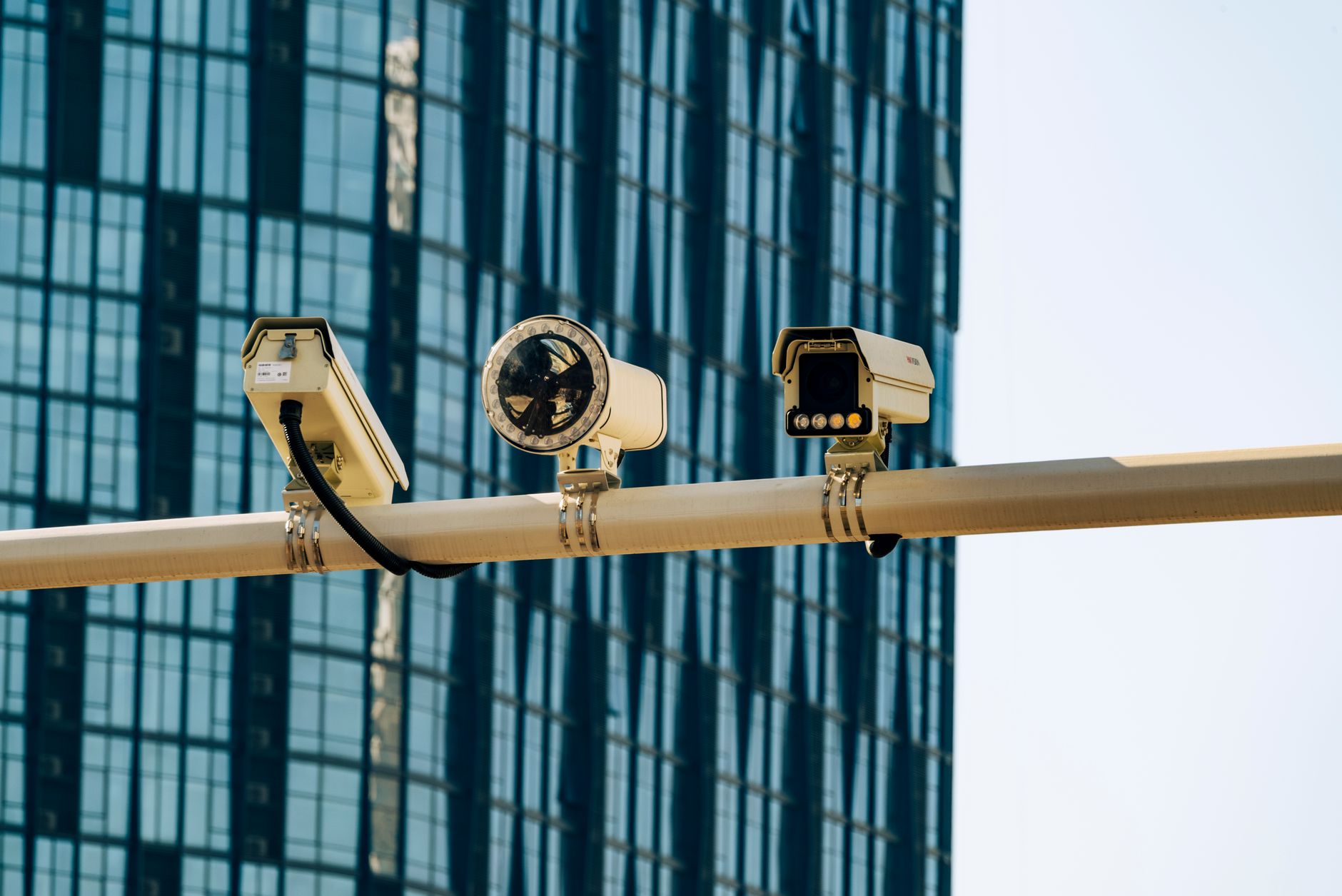
The Data Brokers' Bonanza
On March 18, 2026, FBI Director Kash Patel stood before Congress and delivered a revelation that should have shaken the foundations of American liberty. In a matter-of-fact tone, he confirmed that the bureau routinely purchases Americans' location histories, browsing habits, and intimate digital footprints from shadowy data brokers. No warrants required, no judicial oversight—just cold, hard cash changing hands in a marketplace where privacy is the commodity.
This isn't hyperbole or conspiracy. It's the logical endpoint of surveillance capitalism, a term coined by Harvard professor Shoshana Zuboff to describe how Silicon Valley transformed human experience into a raw material for profit. What began as targeted ads has metastasized into a totalizing system where every swipe, step, and search feeds an insatiable AI beast. Companies like Google, Meta, and emerging AI powerhouses unilaterally harvest your data, often unrelated to the services you think you're consenting to. Tinder, for instance, now deploys AI to scan entire camera rolls, ostensibly for 'better matches' but really to predict and manipulate behavior.
The scale is staggering. Data brokers aggregate this behavioral surplus—Zuboff's phrase for the excess insights gleaned beyond what's needed for service provision—and sell it onward. Artificial intelligence then sifts through it, revealing not just what you buy, but what you feel, think, and might do next. Opting out? A myth. Fine-print clauses ensure collection continues, and even deleted apps leave digital ghosts.
'Our personal and private experiences have been hijacked by Silicon Valley and used as the raw material for extremely profitable digital products,' Zuboff warned years ago. Today, that hijacking has gone public.
Private enterprise built the infrastructure, but government is the eager customer. Unlike data collected directly, which triggers Fourth Amendment scrutiny, bought data slips through legal cracks. The Pentagon's recent spat with Anthropic, labeling the AI firm a 'national security risk' for refusing to adapt its Claude model for mass domestic surveillance or autonomous weapons, underscores the tension. Tech resists—sometimes—but the pull of lucrative contracts is irresistible for most.
From Corporate Panopticon to State Arsenal
Surveillance capitalism didn't spring from nowhere. Its roots trace to the post-dot-com crash era, when Google pioneered extracting value from user data. Facing oblivion, executives bet on behavioral prediction as the new oil. Facebook followed, securitizing the post-9/11 landscape to justify ever-expanding data hoards under the guise of safety. Voluntary safeguards? Fleeting illusions, as history shows.
Fast-forward to 2026, and AI has supercharged this model. Machine learning doesn't just monitor; it anticipates. Neighborhood doorbell cameras, Flock's license-plate readers, and hyperlocal apps like Nextdoor create a crowdsourced panopticon, where citizens unwittingly police each other. Your Ring footage trains algorithms that predict crime—or dissent—before it happens. This group- and self-surveillance cycle is self-reinforcing: the more we participate, the more normalized it becomes.
Governments worldwide are plugging in. The U.S. isn't alone; China's digital authoritarianism provides the blueprint, but America's version is insidious because it's draped in capitalism's flag. The FBI's data buys enable tracking without probable cause, from political protesters to ordinary citizens. Abroad, partnerships with tech firms entrench AI surveillance, from predictive policing in Europe to biometric borders in the Middle East.
Consider the moral distortion. Zuboff argues this system disrupts the privacy essential for 'identity work'—the quiet space to form thoughts and selves—and undermines 'moral autonomy' for democratic worldmaking. AI doesn't just watch; it nudges. Cambridge Analytica was the crude prototype; today's versions are elegant, embedding in feeds to shape elections, consumption, even revolutions.
Jobless Shadows in the Automation Gloom
Layer on AI-driven automation, and the stakes skyrocket. Surveillance capitalism thrives on displacement. As algorithms automate trucking, coding, even journalism, the displaced become data points in a vast experiment. Uber's driver data fuels not just routing but predictive models for labor control—when to work, how much to earn, whom to serve.
Economists long debated job displacement, but 2026 brings clarity: it's here, unevenly. White-collar professions crumble under generative AI, while low-wage gigs digitize into surveilled precarity. The result? A bifurcated society where the surveilled underclass generates data to enrich the elite, who in turn sell it to states for control. This isn't mere unemployment; it's existential reconfiguration, where human value derives from extractable behavior.
Provocatively, this fusion breeds digital authoritarianism without a single dictator. It's emergent, market-driven. Tech firms profit from the data firehose; governments buy compliance at scale. Dissenters aren't dragged to gulags—they're algorithmically marginalized, their feeds flooded with division, their movements preempted.
The EU's Flickering Beacon
Amid the gloom, Europe's stirring. Shoshana Zuboff, in a recent interview, applauded the EU's Digital Markets Act and AI Act, blunt instruments curbing big tech's excesses. 'AI is surveillance capitalism continuing to evolve and expand,' she said, urging the bloc not to bow to transatlantic pressure—implicitly from a Trump-influenced America wary of regulation.
Yet enforcement lags. GDPR fines mount, but data flows persist through subsidiaries and dark patterns. The EU's initiatives expose the U.S. lag: Congress debates while the surveillance state solidifies. Bipartisan bills to ban data sales to foreign adversaries falter on domestic exemptions, preserving the FBI's playground.
Globally, the fight's uneven. India's Aadhaar biometrics centralize 1.4 billion identities; Brazil's high courts battle WhatsApp surveillance. But without unified resistance, AI's advance normalizes the abnormal.
Reclaiming the Human Frontier
What to do? Radical imagination is key. First, legislate data as a human right, not commodity. Ban government purchases outright, mandate warrants for all behavioral data. Second, break the brokers: transparency registries exposing every sale, with felony penalties for non-compliance.
Tech must pivot. Anthropic's stand against domestic spying shows it's possible. Mandate 'privacy by design' in AI, with open audits. Users? Demand device-level controls—true opt-outs, not illusions. Boycott feeds that surveil; revive offline life.
Yet the deepest challenge is cultural. We've habituated to exposure, trading privacy for convenience. Reclaiming autonomy demands friction: slower tech, mindful consumption, communal vigilance. Education must teach digital literacy as citizenship.
Zuboff's warning rings truer now: this is 'the fight for a human future at the new frontier of power.' Surveillance capitalism promised efficiency; it delivered subjugation. AI amplifies it, automation atomizes us, and governments gratefully accept the reins. The Rubicon crossed on March 18 wasn't Patel's testimony—it was our collective silence since.
In 2026, the panopticon is complete. But machines don't dream of freedom; we do. The question is whether we'll wake up in time.
Word count: 1,728

