The Invisible Web Tightens
Imagine a world where every step you take, every swipe on your phone, every glance at a doorbell camera feeds an insatiable machine. Not science fiction, but the reality of 2026. Companies like Tinder now deploy AI to rifle through your entire camera roll, extracting behavioral nuggets unrelated to swiping right. Data brokers bundle this haul—your location history, facial scans, even emotional states inferred from keystrokes—and sell it to the highest bidder. The highest bidders? Not just advertisers, but the U.S. government itself. On March 18, just weeks ago, FBI Director Kash Patel confirmed to Congress what many suspected: the Bureau routinely purchases Americans' sensitive data from these shadowy intermediaries, bypassing constitutional safeguards.
This is surveillance capitalism in its endgame, a term coined by Harvard professor Shoshana Zuboff to describe how Silicon Valley hijacked our private experiences as raw material for profit. But in the AI era, it's metastasizing. What began as targeted ads has morphed into predictive manipulation—knowing not just what you buy, but what you'll feel, think, and do next. And with governments now plugged directly into the spigot, we're witnessing the birth of digital authoritarianism, not from some foreign regime, but from the democratic heartland.
'The innovation we need most is democratic innovation and policy innovation,' warned Cathy O'Neil at a recent Harvard panel, urging a national registry for high-risk AI and an end to unchecked data extraction.
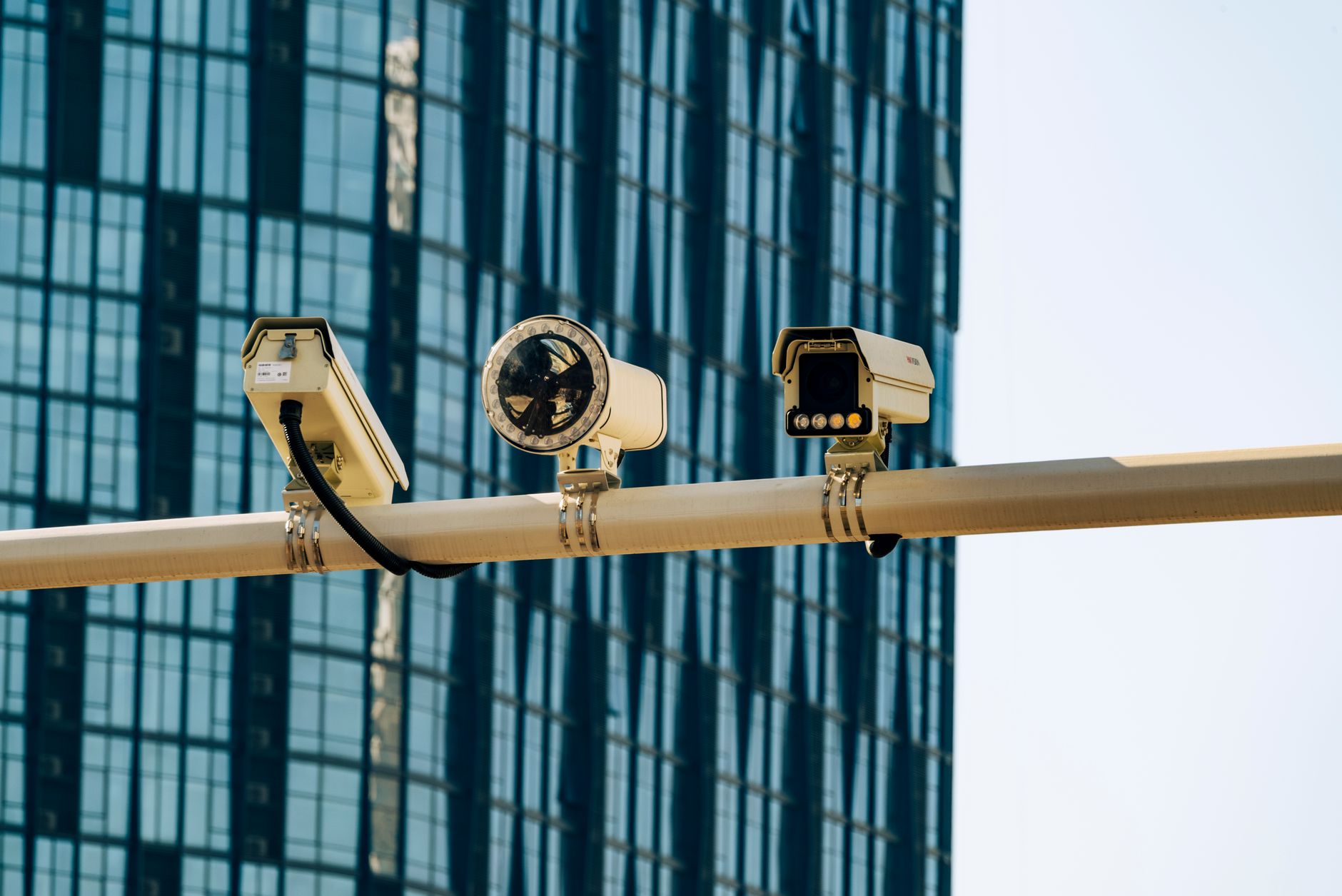
Zuboff's seminal work laid bare the mechanics: tech giants cloak their operations in rhetoric of convenience, rendering surveillance undetectable. Google and Facebook pioneered it post-dot-com crash, pivoting to behavioral surplus—data scraped beyond what's needed for service. Today, AI supercharges this, aggregating petabytes into intimate profiles. Neighborhood Nextdoor posts, Flock license plate readers, Ring doorbells: we unwittingly crowdsource our own panopticon.
From Profit to Power
Surveillance capitalism wasn't inevitable; it was engineered. In the early 2000s, financial pressures post-dot-com bust pushed Google toward ad targeting, fueled by 9/11's securitization rhetoric that loosened privacy reins. Fast-forward to now: AI governance echoes those slippery slopes. The Pentagon recently branded Anthropic a national security risk—not for weakness, but for refusing to let its Claude model enable mass domestic surveillance or autonomous weapons. Meanwhile, the federal government's AI Action Plan pivots from safety to 'opportunity,' embedding private tech deeper into state machinery.
Consider the scale. Data brokers trade in 'commercially available' info unbound by warrants. The FBI buys location data to track citizens without oversight. Abroad, facial recognition models trained on billions of Facebook photos end up in Chinese military hands or American border patrols. Opting out? A farce. Privacy policies are labyrinthine, and even deletion requests leave traces. As Zuboff puts it, this is a 'merciless form of capitalism' where citizens are the extractive resource.
The economic logic is brutally efficient. Behavioral data yields 'surveillance imperatives': endless extraction to fuel AI models that predict and nudge. Apps unrelated to dating scan photos; smart devices log whispers. This surplus isn't discarded—it's monetized, often to governments. In 2024, global democracy plunged from 51% to 28% of the population, per O'Neil's stark correlation. Causality? Data extraction breeds disinformation, polarization, authoritarianism.
Job Displacement: The Silent Revolution
Beneath this panopticon hums another AI quake: automation's job apocalypse. White-collar havens—law, finance, journalism—crumble as agentic AIs like Claude draft contracts, analyze markets, pen articles. Blue-collar bastions fare no better; warehouses hum with robot fleets, trucks drive themselves. By 2026, McKinsey estimates 45 million U.S. jobs at high displacement risk, up from 2023 projections as AI leaps.
Yet surveillance capitalism accelerates this. Displaced workers, tracked relentlessly, face AI-driven hiring that scans social media for 'fit.' Gig platforms like Uber algorithmically rate you into oblivion based on invisible metrics. Privacy evaporates; your data profile dictates employability. This isn't neutral tech—it's a control layer ensuring compliance in a jobless future.
Economists debate universal basic income, but miss the authoritarian underbelly. With governments buying data to preempt unrest, automation becomes a pacification tool. Track the unemployed, predict riots, deploy nudges via targeted ads: 'Apply here, citizen.' Zuboff warns of behavioral modification at scale; we're living it.
Digital Authoritarianism's Democratic Mask
Call it digital authoritarianism with American characteristics. Unlike China's social credit, ours masquerades as freedom. No Great Firewall—yet—but partnerships entrench surveillance. The FBI's data buys skirt Fourth Amendment scrutiny because it's 'purchased,' not seized. Tech firms, profit-bound, comply. Anthropic's rebuff is rare; most integrate.
Globally, it's exportable. U.S. firms sell AI surveillance to autocrats, training on our data. Domestically, hyperlocal surveillance—doorbells, license readers—normalizes group monitoring. We snitch on neighbors via Nextdoor, feeding the beast. O'Neil's prescription: 'Stop trusting.' Abolish extraction at source.
Policy flickers exist. Harvard panels push registries, innovation indices measuring civic erosion. Europe's GDPR bites, but U.S. lags, enthralled by 'opportunity.' Trump's administration, with Patel at FBI, doubles down: security trumps privacy.
The Manipulation Machine
AI doesn't just watch; it steers. Predictive models forecast votes, purchases, protests. Cambridge Analytica was crude; today's versions are surgical, inferring politics from gait analysis or shopping carts. Tinder's camera AI? It profiles desires, primes matches for retention—and data harvest.
Governments wield this for control. FBI location data unmasks dissidents pre-crime. Abroad, it's full-spectrum: predict, prevent, punish. Democracy withers when behavior is preordained.
'We have to abolish—not just regulate—the fundamental mechanisms of surveillance capitalism,' demands O'Neil, linking it to democracy's global retreat.
Job loss amplifies vulnerability. Unemployed masses, surveilled, are ripe for manipulation. Platforms push content polarizing the desperate, sowing division to sell more data.
Paths to Reclamation
Despair isn't destiny. Democratic innovation beckons. Mandate data minimization: collect only what's essential, delete ruthlessly. Nationalize high-risk AI oversight, with public audits. Ban government data buys—restore warrants. Worker protections: right to explain AI decisions, privacy from employer scans.
Tech rebels like Anthropic signal cracks. Public pressure builds; polls show 70% demand privacy laws. But vested interests—tech lobbying billions—resist.
Zuboff's fight is for a human future. We built this web; we can unplug it. Reclaim data as ours, not commodity. Forge AI for liberation, not chains. The alternative? A world where freedom is simulated, control absolute.
In 2026, the choice crystallizes. Surveillance capitalism's AI fusion isn't progress—it's power consolidated. Dismantle it, or become its subjects.
Word count: 1,728

