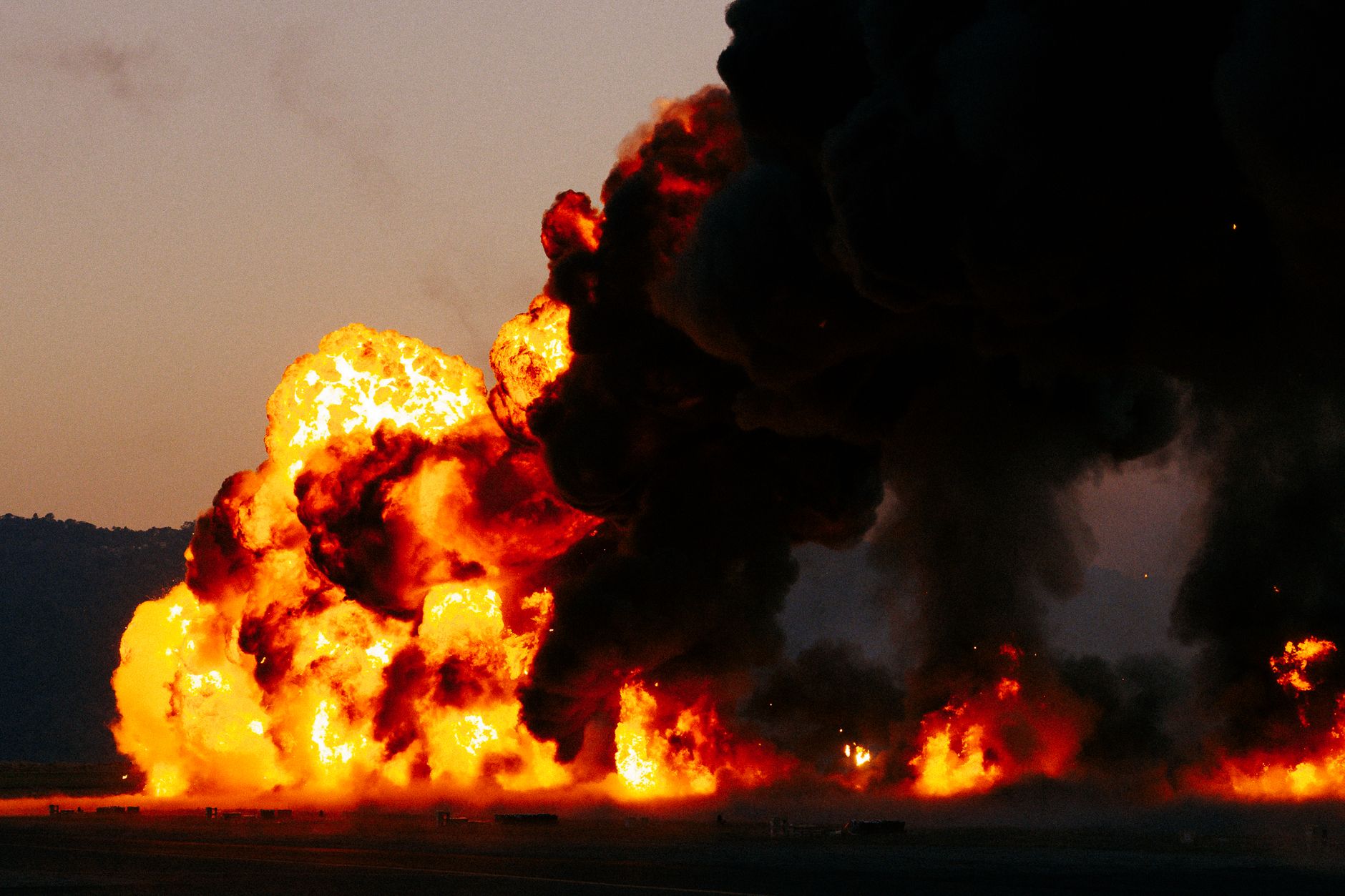
The world has stopped being separable
Every era produces a false comfort. Ours was the belief that geopolitics, technology, democracy, and media were different rooms in the same house—connected, certainly, but still distinct enough to be analyzed separately. Wars belonged to generals and diplomats. Disinformation belonged to editors and platform executives. Democratic decay belonged to constitutional scholars and election lawyers. Silicon Valley belonged to venture capitalists who insisted they were building tools, not outcomes.
That arrangement is over. The defining fact of the moment is that power no longer respects those old compartments. A tariff announcement can move markets, reshape alliances, and decide elections. A social platform can alter public belief before a government has finished drafting its response. A drone strike can be justified by a narrative disseminated online and contested by influencer networks before official casualty counts are known. Even the language of statecraft has changed: states now act like platforms, platforms like states, and voters like audiences trapped inside a permanent, engineered present.
This is not merely a period of instability. It is a new operating system for global life, and it is running badly.
America is the accelerant
The most consequential fact in global affairs is that the United States, long the system’s anchor, has become one of its chief sources of volatility. That is not a partisan claim; it is a structural one. For decades, Washington was the place other nations looked to for continuity, even when they disliked American power. Today, whether under populist pressure, institutional fatigue, or plain political improvisation, the United States increasingly behaves like a superpower in a hurry: transactional, impatient, and willing to turn policy into theatre.
That matters because global order is not maintained by abstract rules alone. It depends on expectations—about sanctions, alliances, trade, military commitments, and the credibility of American promises. When those expectations become unstable, every actor begins to hedge. Allies talk more openly about autonomy. Adversaries test red lines. Markets price in disorder. The result is a strange feedback loop in which American unpredictability is defended as strength, then reflected back as global insecurity.
The hemisphere closest to the United States offers a revealing example. Pressure on Venezuela, renewed attention to migration routes, energy leverage, and counter-narcotics policy all point to a broader doctrinal shift: Washington is no longer content to project power only across oceans; it wants to shape outcomes nearby, where the costs are lower and the symbolism sharper. That might be tactically rational. It is also morally and strategically hazardous. Great powers that rediscover their backyard often rediscover temptation alongside discipline.
If the 20th century was about the United States underwriting the order, the 2020s may be about the United States arbitrating its breakdown.
Tech has become geopolitics by other means
For a decade, politicians treated technology as an adjacent issue: a matter of privacy, antitrust, and the occasional speech about innovation. That has become absurd. Technology is now the central infrastructure of influence, coercion, and legitimacy. Chips decide industrial sovereignty. Cloud systems determine military resilience. AI models shape information environments. Payments rails and export controls have become weapons of statecraft.
What makes this transformation so unsettling is not simply the scale of technology, but its ambiguity. A semiconductor supply chain can be read simultaneously as economic policy, national security doctrine, and industrial espionage. A model trained on public data can become an instrument of propaganda, surveillance, or labor disruption without ever resembling a missile or a tank. The line between civilian and strategic technology has dissolved.
And then there is AI, the most overpromised and underexplained invention of the decade. Its boosters insist that it will democratize knowledge. Its critics warn of job displacement, synthetic media, and epistemic chaos. Both are right, which is why the public conversation remains so muddled. AI is not a single product; it is a force multiplier. In competent institutions, it can improve productivity and analysis. In weak ones, it can automate confusion. In a healthy democracy, it can widen access to expertise. In a brittle one, it can flood the zone with plausible lies faster than fact-checking can keep pace.
The deeper issue is not whether AI is intelligent enough. It is whether societies are coherent enough to absorb what it does. Most are not.
Democracy is being hollowed out from the inside
The most dangerous threats to democracy used to arrive in obvious uniforms: coups, censorship, banned parties, imprisoned opponents. Those still happen, but the more common democratic failure today is subtler. Institutions remain formally intact while public trust, shared reality, and political restraint erode beneath them. Elections continue, but losers refuse legitimacy. Courts remain open, but each verdict is treated as factional warfare. Legislatures sit, but governance has become performance art. The state persists; consent does not.
This is where media and democracy merge. A democracy requires not merely information, but a shared framework for deciding what counts as true, relevant, and urgent. That framework has been shattered. The old gatekeepers were imperfect and often arrogant, but they did perform one crucial function: they narrowed the distance between reality and public understanding. The new media order expands that distance. It rewards outrage, compresses attention, and turns every event into a content opportunity. In such an environment, politics becomes less a contest of ideas than a competition for narrative gravity.
That change has been devastating for liberal democracy, which depends on delayed gratification, institutional legitimacy, and the boring accumulation of trust. Social media rewards speed and certainty; democracy requires patience and doubt. The two are now in direct conflict. Populist leaders exploit this by presenting themselves as the only authentic interpreters of the people’s rage. Tech platforms amplify them by design. Traditional media, trying to remain relevant, often mistakes volume for importance and ends up laundering the same turbulence it should be contextualizing.
Democracy is not dying everywhere. But in many places it is becoming a skin rather than a skeleton: visible, familiar, and increasingly incapable of holding the body together.
The future of media may be the future of truth
Media institutions are often discussed as if their crisis were principally commercial. That is too small a diagnosis. The business model is broken, yes. But the deeper problem is epistemic authority. Audiences no longer know whom to trust, and publishers no longer know how to earn trust without becoming platforms for tribal affirmation.
The old bargain was simple: journalists gathered information, applied verification, and offered interpretation; readers paid for a filtered version of reality. The new bargain is messier. People encounter news as fragments, often stripped of provenance, embedded in feeds that reward emotional reaction. They arrive at articles through search engines, recommendation systems, podcasts, clips, and group chats. The brand of a newsroom matters less than the network in which the story travels.
This has had two pernicious effects. First, it encourages media organizations to chase engagement rather than significance. Second, it weakens the public’s ability to distinguish serious reporting from strategic manipulation. States, parties, and activists now understand that they can bypass journalists altogether and speak directly to audiences through influencers, livestreams, and algorithmically amplified outrage. The press is no longer the center of the information system. It is one node among many, and often not the most powerful one.
Yet the answer is not nostalgia. The answer is rigor. In a world of synthetic media, deepfakes, and persuasive misinformation, the value of disciplined reporting rises, not falls. The institutions that survive will be those able to prove, not merely assert, their seriousness. Verification will matter more. Transparency will matter more. So will humility. The age of omniscient editorial authority is gone. What can replace it is something more modest and more useful: a demonstrated commitment to getting the facts right, even when the facts disappoint one’s audience.
In a synthetic information economy, credibility is not a brand identity; it is a form of public infrastructure.
The new world order is made of frictions
It is tempting to describe our moment as one of fragmentation. That is true, but incomplete. What is really emerging is an order built around friction: between blocs, between institutions, between facts and beliefs, between human judgment and machine-generated scale. Friction is expensive. It slows growth, distorts diplomacy, and destabilizes domestic politics. But it also reveals where power now lies.
Consider trade. The era of seamless globalization has given way to a more suspicious system of tariffs, export controls, strategic stockpiles, and industrial policy. Governments speak the language of resilience while pursuing self-interest under patriotic cover. Consider war. Conflicts are no longer isolated theaters; they are stages on which drones, cyberattacks, satellite imagery, sanctions, and viral narratives interact. Consider elections. They are no longer just national contests but global events, watched, gamed, and influenced across borders by actors who need not even care who wins in the traditional sense.
What binds these frictions together is distrust. States distrust each other’s intentions. Citizens distrust institutions. Users distrust platforms. Platforms distrust regulators. Everyone distrusts the information they consume, even as they consume more of it than ever. This is why so many political arguments now feel recursive. People are not only disputing policy; they are disputing reality itself.
And yet the danger of pessimism is that it can become lazy. It is easy to declare that the world has entered a dark age of algorithmic tribalism and leave it there. But history is not only the record of collapse. It is also the record of adaptation. The question is whether institutions can adapt quickly enough to matter.
What seriousness would look like
Seriousness, in this moment, would begin with naming the scale of the change. Policymakers should stop pretending that technology policy is separate from national security, or that media regulation is separate from democracy, or that economic policy is separate from geopolitical strategy. These are now one system. Treating them as separate domains guarantees failure.
For governments, that means rebuilding capacity: industrial policy that is actually strategic, election systems that are resilient, intelligence institutions that can track information warfare without becoming it, and alliances that are based on credible commitments rather than rhetorical nostalgia. For technology companies, it means accepting that scale creates obligations. A platform that intermediates speech at global scale is not a neutral pipe. It is a political actor, whether it likes that fact or not.
For media institutions, it means resisting the temptation to become lifestyle brands with opinions. Their comparative advantage is not speed alone, and certainly not certainty performed as confidence. It is verification, context, and an appetite for complexity. In an era of algorithmic simplification, that is not a luxury. It is a civic necessity.
For citizens, seriousness means developing a healthier suspicion. Not cynicism—cynicism is passive and flattering—but suspicion disciplined by evidence. It means remembering that outrage is often engineered, that viral claims are often incomplete, and that the most important truths tend to arrive without spectacle.
The story underneath the stories
If there is one headline that captures the moment, it is this: the machinery that once organized modern life is being rewired in public. States are improvising. Platforms are governing. Media is fragmenting. Democracies are fraying. And beneath all of it is a struggle over who gets to define reality in an age when reality can be manufactured at scale.
That struggle will not be resolved by a single election, a single regulation, or a single technological breakthrough. It will be decided, cumulatively, by whether institutions can recover credibility and whether citizens can recover judgment. The stakes are not abstract. They determine whether conflicts remain containable, whether elections remain legitimate, whether facts remain distinguishable from fabrication, and whether power remains accountable to anything beyond its own momentum.
The biggest story of the moment is therefore not that the world is changing. It is that the categories we used to understand change have collapsed into one another. Geopolitics now runs through code. Democracy now depends on media. Media now depends on technology. And technology has become a proxy battlefield for the great contest of the age: whether societies can still agree on what is real, before the machinery of manipulation makes the question irrelevant.
If that sounds alarmist, it should. The age of permanent emergency is not a metaphor. It is the condition we now inhabit.

