Developing
/
AS-2445
/
Global
/
12:45
Israel’s national election has produced no clear winner, with Prime Minister Benjamin Netanyahu’s bloc projected to fall short of the 61-seat majority needed to form a government. Arab parties may hold the balance of power as coalition negotiations begin.[1][2]
Developing
/
AS-2443
/
Global
/
12:01
Israel’s pivotal election appears deadlocked, with Benjamin Netanyahu’s bloc and the opposition led by Gadi Eisenkot both falling short of the 61-seat majority needed to form a government. Arab parties may hold the balance of power in coalition negotiations.[1][2]
Developing
/
AS-2439
/
Global
/
08:45
Israel’s election has produced no clear majority, with Prime Minister Benjamin Netanyahu’s bloc reportedly ahead of the opposition but short of the seats needed to govern. Arab-led parties may become decisive coalition partners, prolonging political uncertainty in a strategically vital region.
Developing
/
AS-2438
/
Global
/
08:30
Israel’s parliamentary election has produced no clear winner, with neither Prime Minister Benjamin Netanyahu’s bloc nor opposition leader Gadi Eisenkot’s bloc projected to reach the 61 seats needed to form a government. With nearly half the vote counted, Netanyahu’s bloc held a narrow projected lead, leaving coalition negotiations and political uncertainty ahead.
Developing
/
AS-2436
/
Global
/
06:45
Israel’s wartime election has produced no clear governing majority, with exit polls showing a narrow advantage for opposition leader Gadi Eisenkot’s bloc over Prime Minister Benjamin Netanyahu’s coalition. Coalition negotiations could determine whether Eisenkot forms a government or Netanyahu remains caretaker prime minister.
Developing
/
AS-2435
/
Global
/
06:30
Exit polls indicate Israeli opposition leader Gadi Eisenkot’s bloc may have narrowly outperformed Prime Minister Benjamin Netanyahu’s coalition, but neither side appears able to form a government alone. The result could trigger prolonged coalition negotiations and create significant uncertainty over Israel’s wartime leadership and policy direction.
Developing
/
AS-2434
/
Global
/
06:01
Israel’s wartime election produced no clear winner, with exit polls indicating that neither Prime Minister Benjamin Netanyahu’s coalition nor the opposition led by Gadi Eisenkot can immediately form a government. The result could trigger prolonged coalition negotiations and leave Netanyahu governing in a caretaker capacity.
Breaking
/
AS-2433
/
Global
/
02:45
Israel’s national election has produced no clear winner, with exit polls suggesting opposition leader Gadi Eisenkot’s bloc is ahead of Prime Minister Benjamin Netanyahu’s coalition. Eisenkot says he will move quickly to form a government, but coalition negotiations could lead to prolonged political uncertainty.
Breaking
/
AS-2432
/
Global
/
02:30
Israel’s election has produced no clear winner, with early projections showing opposition leader Gadi Eisenkot’s bloc ahead of Prime Minister Benjamin Netanyahu’s ruling coalition. Eisenkot says the result reflects a loss of confidence in Netanyahu and pledges to move quickly to form a government.[1][2]
Developing
/
AS-2431
/
Global
/
02:01
Exit polls in Israel project opposition parties ahead of Prime Minister Benjamin Netanyahu’s bloc, but neither side appears to have a clear parliamentary majority. The result could produce a prolonged coalition-building process and uncertainty over Israel’s political direction.
Developing
/
AS-2429
/
Global
/
00:30
Israel’s pivotal general election has ended without a clear winner, raising the prospect of prolonged coalition negotiations. The result could shape the country’s security policy, Gaza strategy and wider regional diplomacy.
Breaking
/
AS-2423
/
Global
/
20:30
Israelis are voting in the country’s first parliamentary election since the Hamas-led attacks of October 7, 2023, with turnout reported at its highest in decades. The election is widely viewed as a referendum on Prime Minister Benjamin Netanyahu and could shape Israel’s policy toward Gaza and the wider region.
Breaking
/
AS-2419
/
Global
/
19:01
Israelis are voting in the country’s first national election since the October 7 attacks, with Prime Minister Benjamin Netanyahu facing a closely contested race. The result could determine whether Netanyahu remains in power or whether an opposition bloc led by former general Gadi Eisenkot forms the next government.
Breaking
/
AS-2397
/
Global
/
00:45
Brazilian President Luiz Inácio Lula da Silva has won reelection, while rival Flavio Bolsonaro rejects the result as inexplicable and refuses to concede. The outcome denies U.S. President Donald Trump a potentially powerful regional ally and challenges South America’s recent rightward shift.
Breaking
/
AS-2385
/
Global
/
17:45
Brazilian President Luiz Inácio Lula da Silva has won a fourth term after narrowly defeating right-wing challenger Flávio Bolsonaro in a knife-edge runoff. The result is a major political setback for Brazil’s right, though Bolsonaro supporters are contesting the outcome.[3][8]
Developing
/
AS-2383
/
Global
/
17:01
Luiz Inácio Lula da Silva won Brazil’s presidential runoff for a fourth non-consecutive term, according to the country’s electoral authorities. His opponent, Flávio Bolsonaro, refused to concede and said he would seek to annul the result, raising the prospect of a political and legal dispute.[1][2]
Breaking
/
AS-2378
/
Global
/
12:30
Luiz Inácio Lula da Silva has won Brazil’s presidential runoff, securing a fourth nonconsecutive term after defeating Senator Flávio Bolsonaro. His opponent has refused to concede, raising immediate concerns about political tensions and the transition of power.
Developing
/
AS-2377
/
Global
/
12:01
Luiz Inácio Lula da Silva defeated Flávio Bolsonaro in Brazil’s presidential runoff, securing a historic fourth nonconsecutive term. Bolsonaro has reportedly refused to concede, raising tensions over the election result.[1][3]
Developing
/
AS-2376
/
Global
/
10:45
Brazilian President Luiz Inácio Lula da Silva has won a historic fourth nonconsecutive term after defeating Senator Flávio Bolsonaro in a closely contested runoff. Bolsonaro says he will reject the result and pursue a legal challenge, raising concerns about political instability in Latin America’s largest democracy.
Breaking
/
AS-2375
/
Global
/
10:30
Brazilian President Luiz Inácio Lula da Silva has won a historic fourth, nonconsecutive term after defeating Senator Flávio Bolsonaro in a closely contested runoff. Bolsonaro has rejected the result and said he will pursue a legal challenge, raising immediate concerns about political stability and a contested transition.
Breaking
/
AS-2367
/
Global
/
02:45
Luiz Inácio Lula da Silva defeated Senator Flavio Bolsonaro to win a historic fourth term as Brazil’s president, according to Reuters coverage reported by Arab News. The result marks a major political shift in Latin America and a setback for Brazil’s right-wing opposition.
Breaking
/
AS-2364
/
Global
/
00:45
Brazilian voters are choosing between Luiz Inácio Lula da Silva and Flávio Bolsonaro in a closely watched presidential runoff. Bolsonaro led the first round but fell short of the majority needed to avoid a second vote, making the result consequential for Brazil’s political direction.
Breaking
/
AS-2355
/
Global
/
19:45
Brazilian voters are choosing between Flávio Bolsonaro and Luiz Inácio Lula da Silva in a closely watched presidential runoff. The result could reshape Brazil’s domestic politics and its approach to regional and international issues.
Developing
/
AS-1681
/
Global
/
10:45
Brazilian President Luiz Inácio Lula da Silva and Senator Flávio Bolsonaro will face each other in a presidential runoff on October 25 after neither won a first-round majority. The result could reshape Brazil’s domestic direction and Latin America’s political balance.
Developing
/
AS-1670
/
Global
/
02:02
Brazil began reporting first-round presidential election results in a closely contested race led early by Senator Flavio Bolsonaro. The election is being shaped by corruption scandals, economic anxiety and accusations of foreign interference.
Breaking
/
AS-1644
/
Global
/
08:30
Brazilian voters are heading to the polls in a closely contested presidential election between rival political camps. The result could significantly reshape Brazil’s domestic direction and regional influence.
Breaking
/
AS-1243
/
Global
/
02:45
Russia’s ruling pro-Putin party is on track to retain a large majority in parliamentary elections held under wartime conditions and amid massive Ukrainian drone strikes on Moscow. The vote, criticized by Kyiv for including occupied Ukrainian regions, underscores Vladimir Putin’s tightening political grip as the war and cross-border attacks escalate.
Breaking
/
AS-1240
/
Global
/
00:45
Russia’s pro-Putin United Russia party is on track to retain control of parliament in a tightly managed wartime election held under the shadow of Ukrainian drone attacks on Moscow.[4][5][7] Preliminary results suggest the Kremlin-backed party will keep its constitutional majority, reinforcing Vladimir Putin’s grip on power as the war and associated security tensions continue.[4][7]
Breaking
/
AS-1239
/
Global
/
00:30
Russia’s ruling pro-Putin party is on track to win a wartime parliamentary election as Ukraine launches its largest drone attack yet on Moscow and surrounding regions. The dual developments highlight both the consolidation of political power inside Russia and the continuing escalation of the conflict with Ukraine, including attacks deep inside Russian territory. Authorities report damage and heightened security concerns around the capital as voting enters its final day.
Breaking
/
AS-1187
/
Global
/
12:01
Ukraine has carried out what Moscow officials describe as the biggest-ever drone assault on the Russian capital, targeting the city and an oil refinery as Russia’s parliamentary election enters its final day.[3][4] Russian authorities say the attacks were aimed at disrupting the vote and report at least two deaths in the wider Moscow region.[3] The escalation comes as global leaders converge at the United Nations with the wars in Ukraine and the Middle East already straining the international order.[3][4]
Breaking
/
AS-0849
/
Global
/
02:45
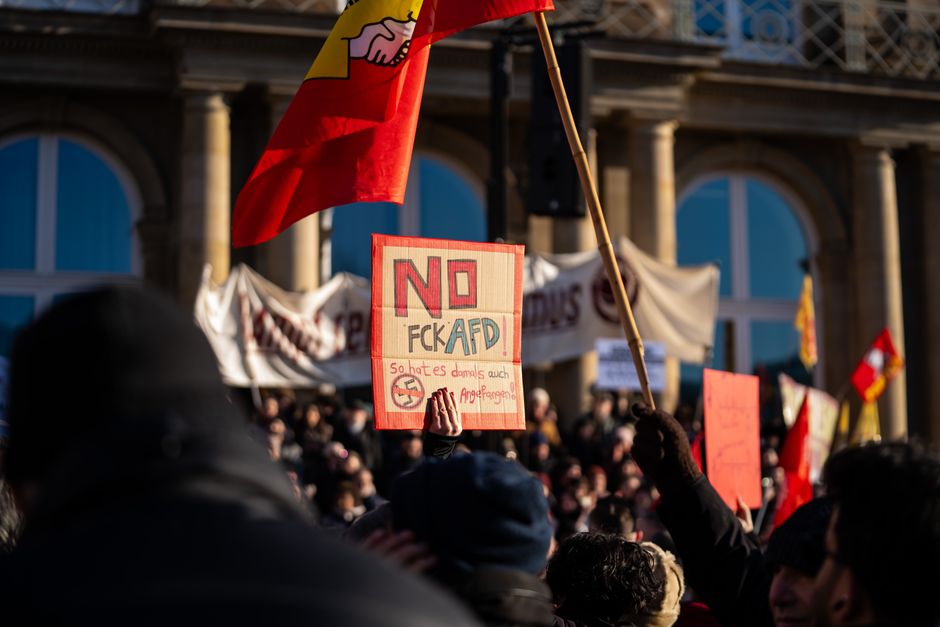
Germany’s far-right Alternative for Germany (AfD) party has won a historic victory in a regional state election, sending political shockwaves across Europe.[4][5] The upset result is intensifying pressure on the German chancellor and raising concerns among EU partners about the rise of extremist politics at the heart of the bloc.[4][5]
Breaking
/
AS-0770
/
Global
/
19:30
Germany’s far-right Alternative for Germany (AfD) party has won a landslide victory in the Saxony-Anhalt state election, taking around 44% of the vote and more than doubling its previous support.[1][3][7] Chancellor Friedrich Merz’s Christian Democratic Union (CDU) has slumped to a historic low of around 18%, underscoring a major political shift in Europe’s largest economy.[1][3][7]
End of transmission — refreshing every 60s
 Photo — Tara Winstead / Pexels