Developing
/
AS-1419
/
Global
/
12:30
Iran has rejected a truce proposal from U.S. President Donald Trump that Tehran said could have reopened the Strait of Hormuz to shipping within a week. The standoff is intensifying international concern over energy security, global trade, and the risk of wider regional conflict.
Developing
/
AS-1415
/
Global
/
10:01
President Donald Trump has rejected Iran’s proposal to reopen the Strait of Hormuz, while Tehran says it will await Washington’s official response and remains unwilling to compromise on its nuclear program. The confrontation threatens a major global trade and energy route and is drawing urgent international concern.
Breaking
/
AS-1410
/
Global
/
06:30
U.S. President Donald Trump rejected an Iranian proposal to reopen the Strait of Hormuz and end fighting, while Tehran said diplomacy remains the only path to resolving its conflict with the United States and Israel. The standoff threatens a crucial global energy and shipping route and follows international calls for its reopening.
Breaking
/
AS-1406
/
Global
/
02:01
U.S. President Donald Trump has reportedly rejected an Iranian proposal to reopen the Strait of Hormuz and end fighting in the Middle East war. The development leaves diplomacy stalled while disruption to a major global energy and shipping route continues.
Developing
/
AS-1400
/
Global
/
22:01
U.S. President Donald Trump rejected Iran’s proposal to reopen the strategically vital Strait of Hormuz within seven days under specified conditions. The decision heightens uncertainty over maritime security, regional escalation and global energy supplies.
Breaking
/
AS-1387
/
Global
/
12:45
Iran has proposed reopening the Strait of Hormuz within seven days under a plan submitted to the White House, while reports say Washington has rejected or resisted Tehran’s proposal. The standoff threatens a major global energy and shipping route and remains part of a wider US-Iran military and diplomatic crisis.
Breaking
/
AS-1386
/
Global
/
12:30
Iran has proposed a phased arrangement to reopen the Strait of Hormuz, a critical global energy route, amid negotiations with the United States. The proposal’s viability and Washington’s response remain uncertain, keeping the risk of wider regional escalation high.
Developing
/
AS-1382
/
Global
/
10:01
Iran has proposed a phased agreement to reopen the Strait of Hormuz and end the wider Middle East war, while the United States has not accepted Tehran’s terms. The development carries major global significance because the strait is a critical route for international energy shipments.
Breaking
/
AS-1379
/
Global
/
08:00
Iran is awaiting an official U.S. response to its proposed seven-day plan to reopen the strategically vital Strait of Hormuz and end fighting in the wider Middle East conflict. The Wall Street Journal reported that President Donald Trump rejected the proposal, raising the risk of renewed U.S. bombing and continued disruption to global energy flows.[3][11]
Developing
/
AS-1377
/
Global
/
06:30
U.S. President Donald Trump has rejected an Iranian proposal to reopen the Strait of Hormuz within seven days, as negotiations remain deadlocked over Iran’s nuclear program. Yemen’s internationally recognized government has declared general mobilization amid a reported Houthi offensive, raising the risk of wider regional escalation.
Breaking
/
AS-1369
/
Global
/
22:45
U.S. President Donald Trump said he paused an attack on Iran planned for Friday to allow negotiations over a possible deal ending the war. The development follows escalating regional tensions and competing diplomatic efforts involving Iran, Russia and the United States.
Breaking
/
AS-1367
/
Global
/
22:01
Iran has proposed reopening the Strait of Hormuz within seven days if the United States accepts its conditions, according to an Associated Press news roundup. The development comes amid continuing U.S.-Iran hostilities, Saudi reports of fresh Houthi attacks, and heightened diplomatic activity at the United Nations.
Breaking
/
AS-1366
/
Global
/
20:45
U.S. President Donald Trump said he paused a planned attack on Iran to allow negotiations over a possible deal ending the war. Iran has reportedly offered a proposal involving reopening the Strait of Hormuz and restarting talks, while regional tensions remain high.
Developing
/
AS-1365
/
Global
/
20:30
U.S. President Donald Trump says he has paused a planned attack on Iran to allow negotiations over a possible deal to end the war. The development could temporarily reduce the immediate risk of a wider Middle East conflict, but the outcome of talks remains uncertain.
Breaking
/
AS-1364
/
Global
/
20:01
Iran has proposed reopening the Strait of Hormuz within seven days if the United States meets its conditions, according to Associated Press reporting. The offer comes amid reported Houthi attacks on Saudi targets and international moves to protect vital Gulf energy infrastructure.
Breaking
/
AS-1362
/
Global
/
19:30
The U.S. Senate narrowly rejected a war-powers resolution that would have required President Donald Trump to end U.S. attacks on Iran. The measure failed 49-50 amid growing political tensions over the conflict.
Breaking
/
AS-1360
/
Global
/
17:45
The seven-month Iran war is intensifying, with Iran warning that it and its Houthi allies could open a new front targeting energy supplies in the Red Sea. A commercial vessel was struck in the Strait of Hormuz, killing one crew member, while oil prices rose above $105 a barrel amid stalled diplomatic efforts.
Developing
/
AS-1359
/
Global
/
17:30
The seven-month U.S.-Iran war is intensifying regional and economic risks, with the Strait of Hormuz still central to efforts to end the conflict. Negotiators are reportedly exploring a phased deal involving the reopening of the waterway and possible U.S. sanctions relief, while Iran and its Houthi allies warn of further attacks if hostilities continue.
Developing
/
AS-1358
/
Global
/
17:02
Saudi Arabia is mobilizing regional support against Iran-aligned Houthis as the seven-month U.S.-Israeli war with Iran continues. Saudi, Turkish and Pakistani military chiefs are expected to discuss assistance under a joint defense pact, while diplomatic efforts have produced no clear breakthrough.
Developing
/
AS-1356
/
Global
/
14:30
Saudi Arabia is rallying regional military support after Iran-backed Houthi attacks intensified, raising fears of wider conflict and disruption to global oil supplies. Military chiefs from Saudi Arabia, Turkey and Pakistan are expected to discuss support under a joint defense pact.
Breaking
/
AS-1355
/
Global
/
14:01
The seven-month U.S.-Iran war is escalating across the Middle East, with renewed threats against energy infrastructure and a commercial vessel attack in the Strait of Hormuz that killed one crew member. Oil prices have risen above $105 per barrel as diplomatic efforts at the United Nations produce little visible progress.
Breaking
/
AS-1354
/
Global
/
12:45
The seven-month U.S.-Iran war is intensifying as Houthi attacks continue against Saudi Arabia and shipping near the Strait of Hormuz, while diplomatic efforts show limited progress. Oil prices remain above $105 per barrel, and a recent vessel attack killed one crew member and forced the evacuation of more than 20 mariners.
Developing
/
AS-1351
/
Global
/
10:45
The United States and Iran are discussing a phased agreement that could reopen the Strait of Hormuz and help end the war, according to reports citing diplomatic sources. The negotiations come as attacks involving Iran-backed Houthis and disruption around regional energy infrastructure continue to threaten global oil supplies.
Developing
/
AS-1349
/
Global
/
10:01
U.S. and Iranian negotiators are reportedly discussing a phased path out of the war, including reopening the Strait of Hormuz and easing the U.S. economic blockade. The talks come amid Houthi missile attacks on Saudi Arabia and continuing concern over global energy supplies.
Developing
/
AS-1348
/
Global
/
08:45
The United States and Iran are discussing a phased agreement that could reopen the Strait of Hormuz and end the current blockade, according to reports citing diplomatic sources. The initiative comes amid continuing regional attacks, pressure on energy supplies, and international efforts to prevent a wider war.
Breaking
/
AS-1347
/
Global
/
08:30
The U.S.-Israeli war with Iran is escalating across the Middle East, with Iran-aligned Houthis claiming attacks on Saudi Arabia and diplomatic efforts seeking to reopen the Strait of Hormuz. Saudi Arabia, Turkey and Pakistan are preparing urgent consultations under a joint defense pact, while Iran has proposed a seven-day plan to halt hostilities and revive nuclear negotiations.
Breaking
/
AS-1346
/
Global
/
08:01
The Iran war remains the most consequential global breaking story, with fighting involving the United States, Iran, Saudi Arabia and Houthi forces disrupting energy security and maritime trade. Iran has proposed a seven-day plan that would reopen the Strait of Hormuz and revive nuclear talks, while the U.S. Senate rejected a measure requiring congressional authorization for continued military action.
Breaking
/
AS-1345
/
Global
/
06:45
Iran has proposed a seven-day plan that would reopen the Strait of Hormuz and revive nuclear talks, while Houthi attacks and escalating violence in Yemen increase pressure on global oil supplies. France is preparing to send soldiers to Saudi Arabia to help secure energy infrastructure.
Breaking
/
AS-1343
/
Global
/
06:01
The U.S.-Iran war remains the most consequential breaking international story, with indirect talks reportedly underway at the United Nations and Iran proposing a seven-day plan that could reopen the Strait of Hormuz and revive nuclear negotiations. Military tensions continue across the region, including Saudi interceptions of Houthi missiles and the suspension of Iranian airline flights by the United Arab Emirates.
Developing
/
AS-1341
/
Global
/
02:30
The United States and Iran are discussing a phased agreement that could reopen the Strait of Hormuz and end the blockade, according to reports citing sources. The negotiations come as the two countries remain far apart over ending their war, while regional tensions and threats to neighboring airports continue.
Breaking
/
AS-1337
/
Global
/
00:03
Saudi Arabia says it intercepted six ballistic missiles fired by Yemen’s Iran-backed Houthi movement toward cities in the kingdom. The reported attack raises immediate concerns about renewed regional escalation amid broader tensions involving Israel, Iran and Gaza.
Developing
/
AS-1334
/
Global
/
22:01
Saudi Arabia says it intercepted six ballistic missiles fired by Yemen’s Iran-backed Houthi movement toward cities in the kingdom. The attack comes as U.S.-Iran diplomatic efforts show little progress, raising fears of wider regional escalation.[4]
Developing
/
AS-1330
/
Global
/
19:45
The U.S.-Iran conflict remains the most consequential global story, with negotiations showing no clear breakthrough as leaders trade threats at the United Nations. Brent crude rose above $105 a barrel, while Iran-backed Houthis launched missiles toward Saudi Arabia, raising fears of wider regional escalation.
Developing
/
AS-1326
/
Global
/
17:30
Saudi Arabia says it intercepted six ballistic missiles fired by Yemen’s Iran-backed Houthi movement toward Saudi cities. The report raises immediate concerns about a widening regional conflict involving Iran-aligned forces and Gulf states.
Developing
/
AS-1273
/
Global
/
00:45
The Iran war is dominating discussions as world leaders gather in New York for the U.N. General Assembly. Escalating conflicts in the Middle East, Europe and Africa are also central to diplomatic efforts, while fighting in Yemen threatens to displace up to 230,000 people.
Developing
/
AS-1272
/
Global
/
00:30
The escalating U.S.-Iran conflict is the central international crisis as world leaders gather in New York for the U.N. General Assembly. Iran-backed Houthi forces are pushing deeper into western Yemen, while the U.N. refugee agency warns continued fighting could displace up to 230,000 people.
Breaking
/
AS-1271
/
Global
/
00:03
The U.S.-Iran conflict is widening, with Iran-backed Houthi forces pushing deeper into western Yemen and displacing more than 100,000 people. The escalation is unfolding as world leaders gather in New York for the United Nations General Assembly, raising concerns about broader regional destabilization.
Breaking
/
AS-1265
/
Global
/
20:01
The escalating U.S.-Iran war is the most consequential global story as world leaders gather in New York for the U.N. General Assembly. President Donald Trump is expected to defend U.S. attacks on Iran, while a U.N.-commissioned mission says the United States was likely responsible for war crimes in two February 28 strikes.
Breaking
/
AS-1255
/
Global
/
12:45
Houthi forces have reportedly seized territory near Yemen’s Bab al-Mandab Strait, while the United Nations condemned an attempted Houthi missile strike on Riyadh. The developments raise immediate concerns for regional security and global maritime trade.
Breaking
/
AS-1254
/
Global
/
12:30
Saudi Arabia has launched airstrikes on Yemen’s strategic Red Sea port city of Mokha after renewed attacks by Iran-backed Houthi forces, reportedly killing at least six people and injuring eight. Britain says it will provide defensive military support to Saudi Arabia, while the G7 has condemned Houthi strikes and called on Iran to end its support.
Breaking
/
AS-1253
/
Global
/
12:01
The Iran-U.S. conflict is intensifying, with Houthi forces reportedly advancing in Yemen and claiming a drone attack on Saudi Arabia. Oil prices have risen toward $100 a barrel, while Washington has warned Americans to reconsider travel to the Middle East.
Breaking
/
AS-1252
/
Global
/
10:45
Fighting has intensified in Yemen, with Houthi forces reportedly seizing territory near the Bab al-Mandab Strait, a critical global shipping route. The United Nations has condemned an attempted Houthi missile strike on Riyadh, raising immediate concerns about regional escalation and maritime security.
Breaking
/
AS-1251
/
Global
/
10:30
The war involving Iran, the United States and Israel is the most consequential breaking international story, with regional fighting threatening shipping through the Strait of Hormuz and the Red Sea. Diplomatic efforts are intensifying at the United Nations as Gulf leaders seek to contain attacks and prevent further escalation.
Developing
/
AS-1250
/
Global
/
10:01
The Iran-US war is escalating across the Gulf, with renewed Houthi attacks on Saudi Arabia and reported strikes affecting shipping near the Strait of Hormuz. Gulf leaders are seeking greater US protection as negotiations over reopening the waterway stall.
Breaking
/
AS-1249
/
Global
/
08:45
Saudi Arabia conducted airstrikes on Yemen’s strategic Red Sea port city of Mokha, killing at least six people and injuring eight, according to Houthi-linked reporting. The strikes come amid escalating Iran-linked regional conflict, stalled talks over the Strait of Hormuz and threats to shut down Iranian commercial airlines worldwide.
Developing
/
AS-1248
/
Global
/
08:30
Iran’s foreign minister is traveling to New York for the UN General Assembly as tensions with the United States remain high and prospects for peace appear limited. Washington is also threatening to intensify pressure on Iranian airlines, while Iran-backed Houthis continue attacks affecting regional security.
Developing
/
AS-1247
/
Global
/
08:01
The ongoing US-Iran war is the most consequential breaking international story, with Iran’s foreign minister arriving in New York as leaders gather for the UN General Assembly. The G7 is urging Iran to stop arming Yemen’s Houthis, while markets are watching for possible US-Iran talks.[2][4][6]
Developing
/
AS-1246
/
Global
/
06:45
Iran’s military says the United States is preparing to resume strikes, while regional fighting involving Houthi forces and Saudi Arabia continues. The developments raise the risk of a wider Middle East conflict and further disruption to energy and shipping routes.
Developing
/
AS-1245
/
Global
/
06:30
Iranian Foreign Minister Abbas Araghchi arrived in New York for the United Nations session while the war between Iran and the United States continues. The development comes amid escalating regional tensions, including attacks involving Yemen and Saudi Arabia.
Breaking
/
AS-1238
/
Global
/
00:00
The most consequential breaking story is the rapid escalation around the Yemen war and broader US–Iran confrontation, including Houthi attacks on Saudi Arabia and threats traded between Washington and Tehran.[3][5][10][15] These developments raise immediate risks for regional war, disruption of global energy and trade routes, and wider international involvement.[3][5][10][15]
Breaking
/
AS-1237
/
Global
/
22:45
The most urgent global story right now is rapidly escalating **US–Iran tensions** across West Asia, with war fears rising just as world leaders gather in New York for the opening of the **81st UN General Assembly**. Iran has outlined new conditions for nuclear and security talks while regional attacks and US travel warnings highlight the risk of a wider confrontation.[12][15] These developments are converging with Houthi strikes, US warnings to citizens, and hardening rhetoric on both sides, making this the key geopolitical flashpoint today.[3][7][12][14][15]
Breaking
/
AS-1230
/
Global
/
19:30
Renewed Houthi attacks on vessels in key Middle East waterways are intensifying a broader US-Iran confrontation and disrupting one of the world’s most important trade corridors.[5][15] Maritime agencies are warning that the Red Sea and Strait of Hormuz crises now pose a serious threat to global supply chains and regional stability.[5][15] The situation remains fluid, with shipping alerts and military posturing raising fears of wider conflict.[5][15]
Developing
/
AS-1215
/
Global
/
08:30
US President Donald Trump says he has entered a critical "deciding mode" on the Iran war, warning that "big things" are in store if Tehran does not change course.[1][6][8] Iranian officials, citing intelligence that new US strikes may be imminent, threaten retaliation against the United States and its allies.[1][6][8] The standoff is heightening fears of a wider regional conflict affecting energy supplies and global security.[6][8]
Breaking
/
AS-1214
/
Global
/
08:01
US President Donald Trump has signaled he is in a critical ‘deciding mode’ over the ongoing war with Iran and warned that ‘big things’ could happen soon if Tehran does not change course.[1][6][7] Iranian officials say they have intelligence that the United States is preparing to resume strikes and have threatened retaliation against the US and its allies.[1][6][7] The standoff is heightening regional tensions, disrupting energy supplies, and prompting calls for a new security framework in the Gulf.[1][6]
Breaking
/
AS-1212
/
Global
/
06:30
Iran has warned the United States and its allies that it will retaliate against any major new attack, saying it has credible intelligence that fresh military action is imminent.[5] The warning comes amid heightened regional tensions, including recent strikes by Yemen’s Iran‑aligned Houthis on Saudi targets that have disrupted energy supplies and maritime traffic.[5] Markets and governments are closely watching for escalation that could further destabilize the Gulf and global oil flows.[2][5]
Developing
/
AS-1211
/
Global
/
06:01
Tensions between the United States and Iran in the Gulf are disrupting traffic through the strategic Strait of Hormuz, a key chokepoint for global oil and commodity flows.[2] About a dozen commodity vessels transited the strait over the weekend, down sharply from 35 the prior weekend, as both sides remain locked in a political and military stalemate.[2] The standoff is unfolding against a backdrop of wider regional instability, including recent Houthi attacks on Saudi targets and threats of further retaliation.[6][7]
Breaking
/
AS-1199
/
Global
/
20:01
Iran‑aligned Houthi forces have stepped up attacks on Saudi Arabia, prompting US embassies across the region to issue security alerts and warn of possible rapid escalation. The flare‑up is heightening tensions in the Gulf just as broader regional conflicts and great‑power rivalries remain unresolved.
Breaking
/
AS-1195
/
Global
/
17:45
Yemen’s Houthi movement has launched missiles and drones at Saudi Arabia’s capital Riyadh, triggering explosions, a major fire at Aramco facilities, and emergency security alerts from US embassies. The United States is warning that the conflict could escalate rapidly as President Trump cuts short a weekend trip to return to the White House. The attacks have also led to travel disruption warnings and raised fears of a broader regional war involving Iran and US forces.[2][5][6][9][11][12]
Breaking
/
AS-1193
/
Global
/
17:00
Saudi air defenses have intercepted and destroyed a ballistic missile launched by Yemen’s Houthi forces toward the Saudi capital, Riyadh.[5][3] Regional and Western embassies are warning that the confrontation could escalate quickly, with possible flight disruptions and wider security risks.[1][5]
Breaking
/
AS-1192
/
Global
/
14:45
Yemen’s Houthi movement has claimed responsibility for new attacks targeting Saudi Arabia, with thick smoke reported near Riyadh’s main airport and Saudi air defenses intercepting incoming projectiles. Multiple governments have issued security alerts warning that the situation could escalate quickly, with possible flight cancellations, airspace closures and wider travel disruption.
Breaking
/
AS-1191
/
Global
/
14:30
U.S. embassies have issued security alerts after Houthi attacks on Saudi Arabia, warning of possible flight cancellations, airspace closures, and wider travel disruption. The situation is being described as potentially fast-escalating, with smoke reported near Riyadh airport and regional tensions rising sharply.
Breaking
/
AS-1190
/
Global
/
14:01
Yemen’s Houthi rebels have launched coordinated missile and drone attacks targeting Saudi Arabia, including attempts against Riyadh and key oil facilities, prompting new US travel alerts and security warnings. The strikes heighten already severe regional tensions, with officials warning that the situation could escalate rapidly and disrupt air travel and energy infrastructure.[2][12][15]
Breaking
/
AS-1189
/
Global
/
12:45
Saudi Arabia reports that a ballistic missile launched by Yemen’s Houthi movement was intercepted near Riyadh, prompting flight disruptions and security alerts across the region.[11][13] US embassies have warned of possible rapid escalation, highlighting risks of further airspace closures and travel disruption.[2] The incident underscores growing regional volatility and the wider impact of the Saudi-Houthi conflict on international aviation and security.[2][11][13]
Breaking
/
AS-1188
/
Global
/
12:30
The United States is preparing options for a large-scale military operation against Yemen’s Houthi movement following a series of drone and missile attacks targeting Saudi Arabia, including near Riyadh’s airport. Reports say security alerts have been issued by US embassies and senior officials met at Camp David to review potential strike plans, raising fears of rapid regional escalation.[1][3][13] The tensions are closely tied to wider Iran–US frictions and ongoing conflict dynamics across the Middle East.[5][6][9]
Breaking
/
AS-1186
/
Global
/
10:45
Saudi Arabia’s air defenses have intercepted a ballistic missile launched by Yemen’s Houthi movement near Riyadh, as additional attempted attacks on other locations are reported.[8][1] US embassies have issued security alerts warning that the situation could escalate rapidly, with potential flight cancellations, airspace closures and wider travel disruption.[2] The incident comes as tensions across the Middle East rise and Western governments monitor the risk of broader regional escalation.[2][8]
Breaking
/
AS-1185
/
Global
/
10:30
Saudi Arabia reports that it has intercepted a ballistic missile launched by Yemen’s Houthi movement near Riyadh, amid additional attempted attacks on other locations. Governments are issuing security alerts warning that the situation and regional conflict could escalate rapidly.[1][2][7]
Breaking
/
AS-1184
/
Global
/
10:01
Yemen’s Houthi movement has claimed responsibility for fresh attacks on Saudi Arabia, with thick smoke reported near Riyadh’s airport and authorities investigating possible drone or missile strikes. Several governments, including the US, are warning that the confrontation could escalate rapidly and disrupt regional air travel and energy markets.
Breaking
/
AS-1183
/
Global
/
08:45
Saudi forces have intercepted major Houthi attacks while Yemenis flee by boat as the Middle East conflict spreads, raising fears of wider regional war.[3][2] The fighting is increasingly impacting key maritime and oil routes, putting global energy markets and civilian shipping at risk.[3][4][7]
Breaking
/
AS-1182
/
Global
/
08:30
Thick smoke and explosions have been reported near Riyadh’s main airport, with Houthi forces claiming responsibility for an attack on the Saudi capital. Saudi authorities say they have moved to thwart the assault as regional tensions linked to the war in Iran and Yemen continue to escalate.[1][6][8][11]
Breaking
/
AS-1180
/
Global
/
06:45
Thick smoke and apparent explosions have been reported near Riyadh’s main airport, causing major disruption to flights and raising fears of a significant escalation in the regional conflict. Yemeni Houthi forces have claimed responsibility for an attack on the Saudi capital, though full details and casualty figures are still emerging.[1][13]
Breaking
/
AS-1179
/
Global
/
06:30
The United States has issued a comprehensive security alert across the Middle East as the Iran war escalates and Tehran sets new conditions for talks with Washington.[12] Iran has warned that President Trump’s threats will not achieve results while preparing for potential US military action and reshaping its strategy toward naval power.[2] This comes amid reports that Russia is assisting Iran with spy satellites and regional actors like the Houthis are intensifying attacks, raising the risk of sudden escalation.[14][1][13]
Breaking
/
AS-1178
/
Global
/
06:01
The most urgent global story is the fast-escalating US–Iran war and broader Middle East conflict, as Iran publicly sets detailed conditions for renewed talks with Washington while regional attacks and security alerts intensify.[4][6][11] Saudi forces are reported to have thwarted Houthi attacks on Riyadh, Houthis claim strikes on Riyadh and Aramco, and the US has issued expanded travel and security warnings over the risk of rapid escalation.[4][6][11] This combination of active military incidents, Iranian negotiating conditions, and global economic and security fallout makes the Middle East war the top breaking story worldwide.[4][8][11]
Breaking
/
AS-1175
/
Global
/
02:01
The most pressing breaking story in the available coverage is the widening confrontation involving Saudi Arabia and the Houthis, with Saudi Arabia issuing its first air raid alerts for Riyadh since the Houthi escalation. Reuters also reports that the Saudis and Houthis have exchanged strikes, while civilians in Yemen are fleeing by boat as the conflict broadens regionally.
Breaking
/
AS-1174
/
Global
/
00:45
Saudi Arabia and Yemen’s Houthi forces have exchanged cross‑border strikes, forcing civilians to flee by boat as the broader Middle East conflict widens. The violence is raising fears of a larger regional war, threatening key oil and maritime routes.
Breaking
/
AS-1172
/
Global
/
00:00
Saudis and Yemen’s Houthi forces are exchanging cross‑border strikes as the broader Middle East conflict widens beyond its original fronts.[11] The escalation is forcing Yemenis to flee by boat, underscoring rising regional instability and humanitarian risk.[11] This expansion of the war threatens key shipping lanes and could draw in more regional and global powers.[11]
Breaking
/
AS-1171
/
Global
/
22:45
The most urgent global story is the escalation of the Iran–US-led war and its spread across the Middle East, drawing in Yemen’s Houthis and threatening wider regional destabilisation.[5][8][11][13] Cross-border attacks between Saudi forces and Houthi fighters, new drone and missile strikes, and war-related energy and security concerns are driving a rapidly evolving crisis with global economic implications.[8][11][12][13]
Breaking
/
AS-1168
/
Global
/
20:45
Saudi Arabia has issued emergency air raid alerts across the kingdom, including the first such alert in Riyadh, citing a hostile aerial threat linked to intensified fighting with Iran‑backed Houthi rebels in Yemen.[3][5][11][14] Reports also describe flames and smoke near King Khalid International Airport and multiple recent strikes, underscoring the risk of wider regional escalation.[4][5][11]
Breaking
/
AS-1167
/
Global
/
20:30
Saudi Arabia issued emergency alerts across the kingdom after a hostile aerial threat, with black smoke reported near Riyadh airport amid renewed fighting linked to Yemen. Multiple outlets also reported Russian attacks on Ukraine and a US-Denmark Greenland security deal, but the Saudi/Yemen escalation appears to be the most immediate fast-moving crisis in the latest wire updates.
Breaking
/
AS-1166
/
Global
/
20:01
Saudi forces and Yemen’s Houthi movement are exchanging cross‑border strikes as the war centered on Iran spreads across the Middle East.[4][5][7] The escalating conflict is driving civilians to flee by boat, threatening regional stability and global energy markets.[4][10]
Breaking
/
AS-1165
/
Global
/
19:45
The most urgent global story is the rapidly escalating Middle East conflict, as Saudi Arabia and Yemen’s Houthi movement exchange heavy strikes and civilians flee by boat amid spreading regional war. The fighting is now threatening key oil routes and maritime chokepoints, raising global economic and security risks.[4][5][6]
Breaking
/
AS-1163
/
Global
/
19:01
Saudi Arabia and Yemen’s Houthi movement have exchanged new cross-border strikes, forcing civilians to flee by boat as fighting spreads and intensifies across the wider Middle East. The clashes are driving fresh displacement and heightening regional and global concerns over oil supply routes and broader conflict escalation.[1][9][10][15]
Breaking
/
AS-1156
/
Global
/
12:45
Saudi Arabia and Yemen’s Iran-backed Houthi movement are trading cross-border strikes as Yemenis flee fighting by boat across the Red Sea.[11] The escalating Middle East war is creating new risks for global oil supplies and contributing to rising fuel prices and broader economic strain.[11][12] This combination of military escalation, humanitarian displacement and energy-market disruption currently makes it the most globally consequential breaking story.
Breaking
/
AS-1153
/
Global
/
10:45
Saudi Arabia and Yemen’s Houthi forces are exchanging cross-border strikes, driving civilians to flee by boat and raising fears that the wider Middle East conflict is escalating. The clashes threaten key oil infrastructure and shipping routes, increasing global concern over energy supplies and regional stability.
Breaking
/
AS-1136
/
Global
/
22:01
Saudi forces and Yemen’s Houthi movement are exchanging cross‑border strikes, driving civilians to flee by boat as the region’s wider war spreads into Yemen. The escalation risks drawing in more regional actors and further disrupting vital Red Sea and Gulf shipping lanes.[4][7]
Breaking
/
AS-1123
/
Global
/
12:45
Escalating clashes around Yemen and the Bab al-Mandeb Strait, combined with cross‑border strikes between Saudi Arabia and Yemen’s Iran‑backed Houthis, are disrupting a key chokepoint that handles a large share of global maritime trade and oil flows.[5][10] The widening Middle East conflict and major new US arms sales to Saudi Arabia are raising fears of broader regional war and severe impacts on global energy markets.[10][13]
Breaking
/
AS-1119
/
Global
/
10:30
The United States has approved a potential $24.3 billion sale of 48 F-35 fighter jets to Saudi Arabia, deepening its military backing for Riyadh amid an escalating regional conflict. At the same time, clashes off Yemen’s western coast have brought shipping through the Bab al-Mandeb Strait to a standstill, threatening a key artery for global trade and energy flows.
Breaking
/
AS-1117
/
Global
/
08:45
Escalating fighting off Yemen’s western coast has shut down commercial traffic through the Bab al‑Mandeb Strait, a chokepoint that handles around 10% of global maritime trade.[4] Houthi forces have seized key coastal positions, forcing vessels to reroute around Africa and raising fears of major disruptions to energy and goods flows.[4]
Breaking
/
AS-1109
/
Global
/
02:00
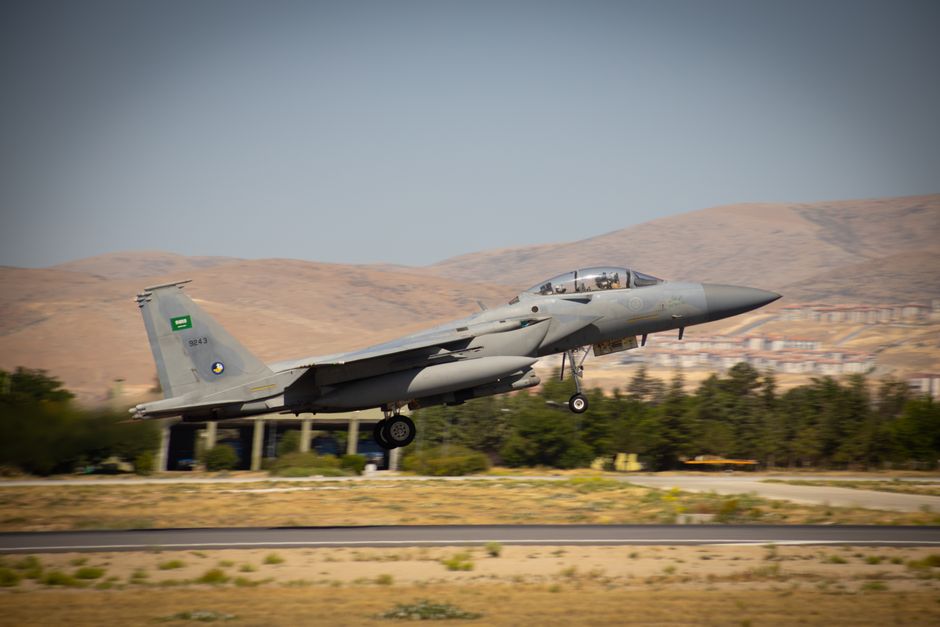
Iran-backed Houthi rebels say they have shot down a Saudi F-15 fighter jet over Yemen and released video of the wreckage, as their rapid military advances deepen regional instability. The escalation is adding pressure on global energy supplies and heightening fears of wider confrontation in the Gulf.
Breaking
/
AS-1077
/
Global
/
02:30
The most consequential breaking story is the escalating US-Iran war and related Houthi attacks that are destabilizing the Red Sea, Strait of Hormuz and Saudi Arabia’s critical oil infrastructure. This conflict is driving global oil prices above $100 per barrel, triggering energy shocks, protests over fuel costs, and urgent diplomatic and military moves across multiple countries.
Breaking
/
AS-1061
/
Global
/
17:00
Saudi Arabia’s air defenses destroyed a Houthi drone south of Mecca before it entered prohibited airspace over the holy city, according to the Saudi-led coalition fighting in Yemen. The incident comes as fighting in the wider Middle East intensifies and raises fresh concerns over security around one of Islam’s holiest sites.[2][4]
Breaking
/
AS-1060
/
Global
/
14:45
Saudi Arabia says its air defenses destroyed a Houthi drone south of Mecca before it could enter prohibited airspace over Islam’s holiest city. The incident comes as renewed hostilities between Iran-backed Houthis and Saudi-aligned forces raise fears of wider regional instability. Authorities and regional actors are treating the attempted strike as a serious escalation with potential global ramifications.
Breaking
/
AS-1059
/
Global
/
14:30
Saudi Arabia’s air defenses destroyed a Houthi drone south of Mecca before it entered prohibited airspace over the holy city, according to the Saudi-led coalition in Yemen. The incident comes as conflict linked to the Iran war and broader Middle East tensions increasingly spill across borders and threaten key civilian and religious sites.
Breaking
/
AS-1057
/
Global
/
12:45
Saudi Arabia’s US-backed military coalition says it has destroyed a Houthi drone south of Mecca before it could enter prohibited airspace over Islam’s holiest city. The incident comes as Iranian-backed forces expand operations and a months-long US–Iran war drives up global fuel prices and heightens regional tensions.[4][14][5] Authorities say the interception prevented a potential strike that could have had enormous religious, political and energy-market repercussions.[4][14][5]
Breaking
/
AS-1056
/
Global
/
12:31
Saudi Arabia has issued wide-ranging security alerts, including around Mecca and Jeddah, as intensified Houthi attacks and drone threats push the Gulf region toward a major security crisis.[1][3][5][11] The US has updated its travel advisory, warning of Iranian drone and missile attacks and armed conflict affecting Saudi Arabia and the Yemen border.[4][7]
Breaking
/
AS-1055
/
Global
/
12:00
Saudi Arabia said it shot down a Houthi drone near Mecca, raising the stakes in a sensitive regional conflict. Multiple outlets are treating it as the leading breaking international story because of the location and the risk of escalation.
Breaking
/
AS-1054
/
Global
/
10:45
Saudi Arabia has launched a new multinational maritime coalition aimed at securing shipping routes in the Gulf as regional tensions and attacks on vessels escalate. The initiative follows a series of drone and missile incidents and growing disruption to commercial traffic amid the ongoing US-Iran confrontation.[1][2][12][13]
Breaking
/
AS-1053
/
Global
/
10:30
Saudi Arabia says its air defenses destroyed a Houthi drone south of Mecca before it entered prohibited airspace over the holy city, as fighting linked to the wider Middle East conflict spreads toward one of Islam’s most sensitive sites.[4][8][12] Officials have warned that Mecca’s security is a ‘red line’, and allied countries are updating travel advisories as the risk of escalation grows.[4][12]
Breaking
/
AS-1052
/
Global
/
10:01
Saudi Arabia’s military coalition reports it has destroyed a Houthi drone south of Mecca before it entered prohibited airspace over the holy city, as fighting linked to the Yemen conflict spreads across the Middle East.[10][1] The incident comes alongside U.S. travel warnings for areas near the Yemen border and broader concerns over Iran‑backed groups’ drone and missile activities in the region.[3][11]
Breaking
/
AS-1050
/
Global
/
08:30
Saudi Arabia says its air defenses destroyed a Houthi drone south of Mecca before it entered prohibited airspace over Islam's holiest city. The Saudi-led coalition has warned that any targeting of holy sites is a 'red line', as regional tensions linked to the Yemen conflict and wider Middle East fighting intensify.
Breaking
/
AS-1049
/
Global
/
08:00
Yemen’s Houthi movement has seized strategic Red Sea islands and resumed strikes on Saudi targets, while talks over securing the Strait of Hormuz have stalled. These moves deepen a growing crisis for global energy supplies and maritime trade, with major powers warning of an impending oil shock.[3][4][13][10][14]
End of transmission — refreshing every 60s
 Photo — Monstera Production / Pexels